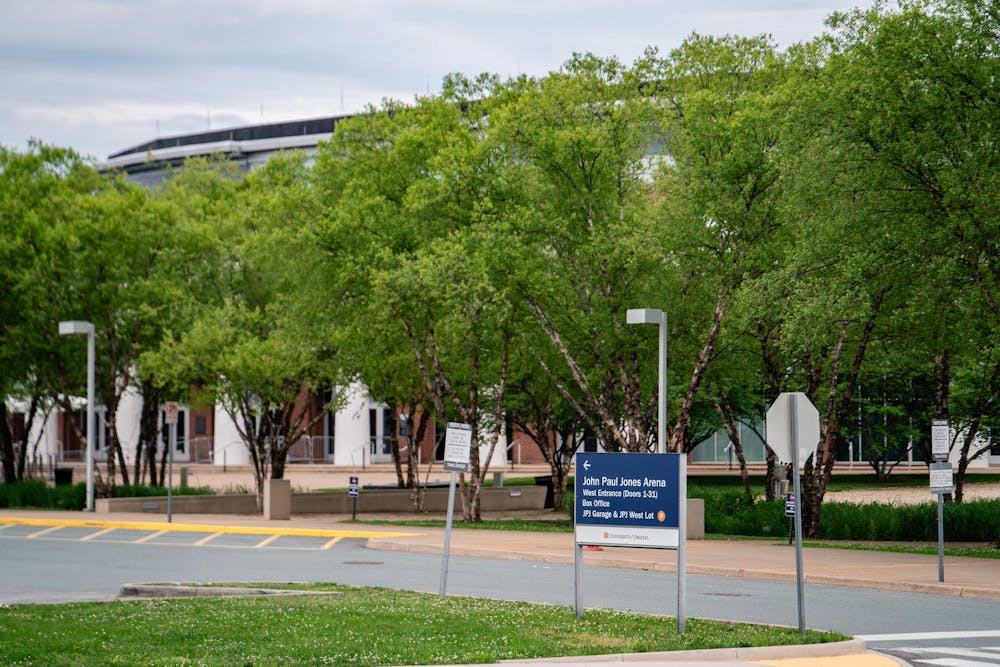
As traffic and parking demand continues to increase around Grounds, the Department of Parking and Transportation's Wahoo Commute program provides cash incentives to University employees for walking, biking, using a scooter, using transit, vanpooling or carpooling. The program aims to reduce the load of single occupancy vehicles on the University’s parking system.
The program is run through the Luum website and app, where employees can register and receive their commute bonuses. Participants receive $1.50 per day walking, biking, scootering or taking the bus, and $1 per day for carpooling and vanpooling. Vanpooling involves larger groups of 5-15 passengers riding in a single vehicle.
Eligible users must be full or part-time U.Va. faculty or staff, be an academic, Medical Center or University Physicians Group employee, be payroll deductible and work primarily at a location that has parking managed by Parking and Transportation. They also must surrender the right to purchase a parking pass for a single occupancy vehicle.
In a statement to The Cavalier Daily, Assistant Director of Transportation Kendall Howell said that the main purpose of the Wahoo Commute program is to maximize overall space on Grounds by minimizing the number of necessary parking areas.
“With a growing University, we want the space that’s closest to Central Grounds to be able to be used for classroom space, gyms, parks [and] things that directly serve students,” Howell said. “In order to accomplish that, we have to reduce the demand for parking.”
According to Howell, the price of building new parking is also a significant factor driving the Wahoo Commute program. Howell said that the University spends approximately $50,000 to build each parking space in a covered garage. The University has recently completed construction of the 1,030-spot North Grounds parking garage and the 1,248-spot Fontaine garage.
“We didn’t want to have to build any more parking, and so to do that, we just needed to reduce the amount of single-occupancy vehicles arriving at U.Va. every day,” Howell said.
Howell said that the Wahoo Commute program currently has over 1,000 active users, with carpool being the most popular form of transportation, and vanpool being the least popular, she believes.
Creighton Coleman, assistant director of undergraduate advising and Richmond resident, said that he often uses the Wahoo Commute vanpool to make his commute feasible. According to Coleman, each van is run by groups of University employees and subsidized by the University. Each member pays a flat monthly fee of $180 which comes directly out of employee paychecks, and drivers receive some money back for their time. Coleman uses the program to lower his commuting and parking expenses.
“The barriers for [commuting] without Wahoo Commute are at least twofold,” Coleman said. “First, the cost of commuting by myself is too high. Gas prices are volatile, and driving as much as I need to creates incredible fuel costs. Second, parking [at U.Va] creates another cost on top of that.”
Coleman said he appreciates how his Wahoo Commute vanpool has built a community through the cooperation needed to make the vanpool run.
Jessica McDermott, director for academic affairs administration in the Dean’s office of the College, is also a member of a Wahoo Commute vanpool from Richmond to the University. She said that she has used the vanpool about four times per week for the past three years, and that the vanpool has saved her a significant amount of money during that time.
“I estimated how much it would cost if I were to drive in every day and get a parking pass compared to what I pay to be in the vanpool, and I’m saving a lot of money,” McDermott said. “There are certain inconveniences of having to stay long enough to be there for when the van leaves or how early we get to Grounds, but those inconveniences are definitely worth it.”
Howell said he believes that the program will continue to grow in the future as parking expenses rise on Grounds.
“Our feeling is that as parking expense rises, it’ll organically drive people to choose an alternative that is less expensive,” Howell said. “Driving a single occupancy vehicle to and from work every day becomes less and less and less financially responsible, [and as we offer] more and more money to not do it, I think there reaches a tipping point for each individual.”
Howell also said that while the program does not currently include students, the Parking and Transportation department still wants students to have more convenient, cheaper options for commuting to Grounds.
“Our approach to students is just from surveys and watching [student] behavior,” Howell said. “We want to build a robust-enough system of alternatives [for students].”
The Wahoo Commute program has continued to operate over the summer term. Howell said that their focus going forward is on making daily parking for members easier in case of emergencies, such as bad weather, appointments and childcare needs. According to Howell, the Wahoo Commute program is also hoping to increase their number of vanpools available to University employees.

Charlotte Gabriel is a second-year student and serves as a staff writer on the news desk. In her free time, she enjoys hiking, painting and being with her dog Buddy.
Read More

U.Va. Health first in Virginia to use a temporary heart pump in a pediatric patient
By Isabela Delgado | 7 hours agoAccording to the National Institutes of Health, the Impella device is a miniature catheter-based device, in which a long tube is “placed in the left ventricle across the aortic valve" to pump blood and maintain a systemic circulation.

Student Council considers reduced 2026-27 academic year budget
By Lucia Gambacini | YesterdayRepresentatives ultimately adopted an amendment to the proposed budget, but tabled consideration of the legislation to this Tuesday’s meeting.

Students pay University Mandatory Fees — what do they cover?
By Isabela Delgado | 3 days agoThe amount a student pays in fees is dependent on several factors, such as a students’ residence in- or out-of-state and their school of enrollment.