Within the tuition bill that students receive from Student Financial Services is a mandatory fee that funds various components of the University. This fee is included in the total cost of attending the University, which is typically decided each spring by the University Board of Visitors ahead of the upcoming academic year.
The amount a student pays in fees is dependent on several factors, such as a students’ residence in- or out-of-state and their school of enrollment. For in-state students that are enrolled in the College of Arts and Sciences, tuition ranges from $16,843 to $20,046, with the mandatory fees amounting to $3,932 for the 2026-27 academic year. For any student that is out-of-state that is enrolled in the College, tuition ranges from $57,432 to $60,656, with the mandatory fees amounting to $4,614 this academic year. The fees change year to year due to influences such as compensation increases, utility costs, personnel costs and contracted services.
Here is a breakdown of the mandatory fees included in University tuition for all “on-Grounds, degree-seeking and non-degree students” enrolled in regular sessions.
Students’ mandatory fees can be broken down into four main buckets — Education & General Fees, Auxiliary Fees, Student Activity Fee and a School Fee — as outlined by U.Va. Finance.
Education and General Fees
According to the University Finance website, components of the Educational and General fees include a technology fee, facilities construction and renovation fee, classroom renewal fee, academic credentialing fee, arts fee and an out-of-state debt service fee that only out-of-state students pay. During the regular academic session — fall and spring semesters — Virginia residents pay $493 in E&G fees, while out-of-state residents pay $1,175 in E&G fees.
Any student that is enrolled in either summer sessions or special sessions are also required to pay E&G fees, although some fees are reduced or taken off completely during these sessions due to limited usage and access to services such as health facilities, on-Grounds academic buildings and recreational facilities.
Technology Fee
According to the Information Technology Services website, the yearly technology fee of $195 is used to fund all of the digital infrastructure across the University, including powering the wifi and high speed network access, IT systems and shared technology services used amongst students, staff and faculty.
E&G Facilities Construction and Renovation Fee
The E&G Facilities Construction and Renovation Fee is used for funding projects and construction across the University to support academic and research projects. The fee is $190 for the 2026-27 school year and has not increased since the previous academic term.
According to a Facilities Management 2024-25 report, about 60 percent of the allotted budget from the mandatory fees is allocated towards projects currently under construction such as the Ivy Corridor and Fontaine Research Park. The rest of the fee is allocated towards purposes like energy and utilities, custodial services and Grounds maintenance.
Classroom Renewal Fee
This fee increased $2 from the 2025-26 academic year, going from $46 to $48 for the 2026-27 school year. In an email statement to The Cavalier Daily, University Spokesperson Bethanie Glover said the fee is administered by the Office of the Provost and is used for the maintenance of on-Grounds classrooms and the modernization of industrial spaces across the University. According to Glover, classroom improvements covered by this fee include audiovisual systems, hybrid-teaching capabilities and accessibility updates to classrooms.
Academic Credentialing Fee
An academic credentialing fee varies between higher education institutions, however at the University, the fee funds the University's system for verifying and issuing a student’s academic credentials. This includes producing diplomas, creating transcripts and maintaining a system that allows employers to verify a student's accreditation from an institution. The fee is $30 for the 2026-27 academic year — the same as it was for the previous year.
Arts Fee
Glover said the arts fee is used to support arts facilities, programming, student performances, exhibitions and interdisciplinary arts programming. The fee for the entire 2026-27 year is $30 — a $2 increase from the previous year.
Out-of-State Debt Service Fee
Students who reside outside of Virginia are required to pay the out-of-state debt service fee of $682 each academic year. The fee is used to support capital-construction and equipment costs that are subsidized by the Commonwealth for in-state students. The fee has not changed in cost since the previous academic year.
Auxiliary Fees
In addition to the E&G fees outlined, the University charges students auxiliary fees, which are used for sectors including student health, athletics, University transportation and more. In total, students pay $3,377 per year for the required auxiliary fees during the fall and spring semesters of the academic year.
Auxiliary fees are for services outside of direct classroom instruction that are offered by the University including healthcare, athletics, recreation and transportation purposes, and they are equivalent for in-state or out-of-state residents.
Athletics
The athletics fee is used to fund the University’s Division I athletic programs and free admission for students to sporting events, as stated by the Virginia Sports website. According to the Virginia Sports website, all undergraduate and graduate-degree seeking students who have paid the athletics fee are granted free admission to all regular season home athletic events.
During the 2025-26 academic year, the fee was $786. However, it has increased by $37 for the 2026-27 academic cycle, and both in-state and out-of-state students now pay a total of $823 each year towards the fee.
Student Health
The Student Health fee also increased between the 2025-26 and 2026-27 academic year by $37. In total, in-state and out-of-state students pay $1,184 per academic year.
According to the Student Health and Wellness billing website, the fee covers the costs of evaluations and management services provided by a medical professional. However, the fee does not include potential medications, lab tests or immunizations and injections that a student may need.
Any charges made by Student Health for services like immunizations and lab tests will be posted automatically to the student’s SIS profile to be charged. At the end of an appointment, students are given a walkout statement — an itemized list receipt of medical services provided by SHW — which contains information that may be used to obtain a reimbursement from an insurance plan.
Recreational Facilities
Since the 2025-26 cycle, the Recreational Facilities fee has increased from $552 to $576 — a $24 increase. According to the University Recreation website, the fee funds on-Grounds recreation facilities that students gain membership to when enrolled as a full-time student including the AFC, Slaughter Recreation Center and North Grounds Recreation Center.
Newcomb Hall
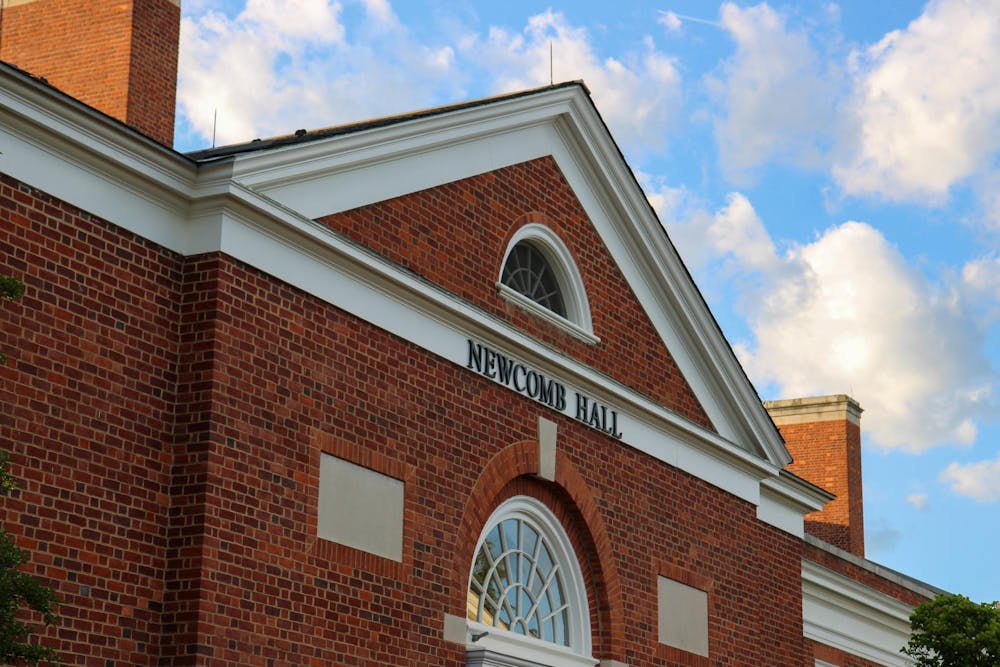
The Newcomb Hall Fee is used to support event and management operations within Newcomb Hall, according to the Student Affairs Event Management website. This includes student programming events, maintenance and student services that are located within Newcomb.
For the 2026-27 school year, the fee is $312 — a $9 increase from the previous academic cycle.
University Transit and Mobility Service
The University Transit and Mobility Service fee allows for students and staff of the University to use a fare-free form of transportation throughout Grounds. Some modes of transportation offered fare-free by the University are the U.Va. Bus lines, U.Va. Ride and Night Pilot and U.Va. FlexRide. The fee is used to fund daily operations and upkeep of the transportation while continuing the fare-free usage.
The fee, according to the U.Va. Finance website, has increased by $32 since the 2025-26 term, making it now $310 for the 2026-27 academic year.
Auxiliary Debt Service
The debt service fee is administered by the Office of Financial Planning and Analysis, and according to Glover, it is used to support debt obligations associated with auxiliary student facilities. The auxiliary debt service fee has not increased since the previous academic term — it remains $61 per academic year.
Student Programming
The student programming fee is used to finance any events on Grounds that promote campus life, student services and organized events for the student population. The fee is administered by the Department of Student Affairs and the cost increased by $1 for a total of $53 during the 2026-27 academic year.
Data Center Fee
The data center fee funds the operation and repayment of the loan associated with the expansion of the Fontaine Computing and Innovation Center, according to Glover. The fee has remained at $24 between the previous academic year and the 2026-27 academic year.
Microsoft Licensing Fee
The Microsoft Licensing fee is used amongst all University students, staff and faculty to power the Microsoft 365 subscription, and it includes access to programs such as Word, Excel and Teams.
The licensing fee increased by $2 since the previous academic term, and it now costs $22 per year.
WTJU
The WTJU serves as a non-commercial, community-licensed public radio station that is operated and owned by the University. The radio station is available throughout the calendar year for students and residents of Charlottesville.
According to Glover, the WTJU fee is designated towards the station’s licensing and daily operations, which totals to $12 per academic year. This is a $2 increase from the previous $10 during the 2025-26 academic year.
Student Activity Fee
The Student Activity Fee is primarily managed by Student Council, and the majority of the fees are allotted for student organizations and contracted independent organizations. According to the Student Affairs funding website, the remaining fee amount goes towards the five categories of “social, educational/academic, cultural, service and other” programming, which are typically events held on Grounds.
The fee has increased $4 since the previous academic year — totaling to $62 for the 2026-27 school year.
School Fee
Students also pay a School Fee as part of their mandatory fees. The School Fee varies by the student’s school of enrollment, with College students paying $8.
Glover explained that all tuition and mandatory fees are approved by the Board before the beginning of each academic year. Members of the University and Charlottesville community may provide their input on the fees in a special tuition and fees town hall meeting that the Board holds prior to making the calculations for the next academic cycle. The Board then typically decides on and votes to approve mandatory fees and tuition in April.
Fees for the 2027-28 academic year are being processed internally and will be presented to the Board for approval during their December meeting.

Isabela Delgado is a staff writer on the news desk who enjoys writing longer form pieces. Most of her work is focused on U.Va. Health and the Honor Committee, although she enjoys writing all types of articles for the paper. Outside of writing, Isabela is also a part of the Photo desk. Isabela is from New Jersey and currently plans to major in Government.
Read More

Honor Committee introduces proposal to change sanction appeal process
By Isabela Delgado | YesterdayThe proposal includes the addition of a governing body that would oversee the appeals process and decide if a student's appeal is deemed legitimate.

From the Archives: 2000s
By Peyton Franz and Alayjah Gillus | YesterdayCavalier Daily writer, John Adams, pranks students with a column stating that a newly installed “no TJ” policy will go into effect, preventing graduates from Thomas Jefferson High School for Science and Technology from attending the University and expelling all current students who graduated from TJHSST.

The School of Data Science announces first-of-its-kind Assured Enrollment program
By Ruby Budetti | YesterdayThe new Assured Enrollment Program allows first-year students interested in Data Science to secure a spot in the Bachelor of Science in Data Science major without having to participate in the traditional admissions that previous classes have undergone.