Each fall, many wide-eyed first-year students visit the Activities Fair looking for an outlet to maintain or reignite a high school passion. For several dancers, that outlet may be the Virginia Dance Company.
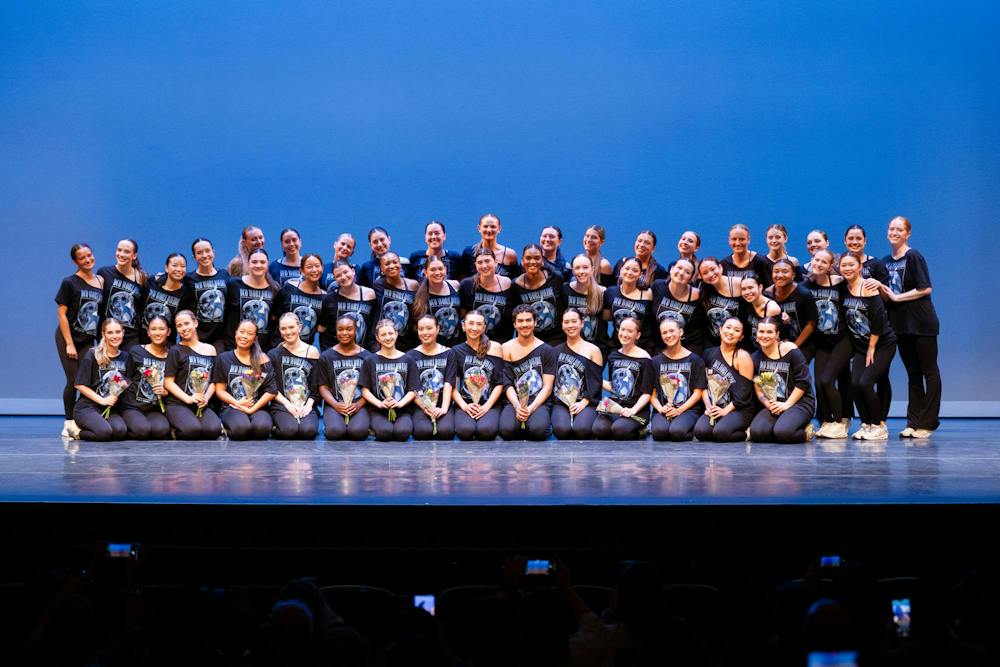
The Virginia Dance Company is composed of a tight-knit group of dancers, most of whom have danced competitively and consistently throughout childhood and high school. This student-run Contracted Independent Organization, unlike some other dance groups on Grounds, operates on a single-audition basis. This feature means that once a dancer is invited to join the company, they have their spot for the entirety of their time at the University without having to audition again if they remain involved with the organization.
Currently, the club includes 52 dancers across all four years of undergraduate students, with 18 new members who joined in early September during the most recent audition cycle. Kendall Falconer, co-president of DCO and fourth-year Batten student, said the executive board aimed to keep the overall company numbers high for the semester by offering spots to more prospective dancers relative to the nine dancers accepted in her first year.
The company holds auditions at the start of each semester to continuously update its roster of dancers. Rebecca Mooney, secretary of DCO and third-year College student, said that she researched dance groups at the University before coming to Grounds and ultimately settled on DCO for the fulfillment provided by its community of dancers.
“I danced all throughout my middle school [and] high school career, and I really wanted some sort of outlet to continue dancing while in college,” Mooney said. “I landed on DCO, and I am so happy I did.”
Several DCO members said they came to the University looking for a way to continue to pursue their artistic interests without the pressures of competition. Falconer said she is fond of the freedom and relaxed environment of DCO created by the ability to tailor one’s own experience in the organization and that she appreciates the opportunity to dance simply for the enjoyment of the art form.
As for their performances, the company showcases a myriad of styles from contemporary and jazz to hip-hop — even including the occasional musical theater song — in their shows, held biannually at the Paramount Theater on the Downtown Mall for the past three years. Each show features dances choreographed by members of the company, which was a new experience to Falconer.
Falconer said that the company encourages each of its dancers to take the opportunity to choreograph, especially those willing to try jazz or hip-hop — traditionally more difficult styles to choreograph — to ensure a variety of numbers make it into the show. According to Falconer, anyone interested in choreographing a dance for the showcase attends a workshop at the beginning of each semester, where each prospective choreographer plays their chosen song and explains their vision for bringing the dance to life.
“I had never choreographed before coming to DCO, so that was a different step in my creative journey,” Falconer said. “I would get to do all of these incredible choreographers’ movements, but I had never been able to explore creating that on my own.”
Prior to placing dancers in each piece, Falconer said that the company holds a showcase where each choreographer performs a snippet of their dance, and the rest of the company watches and considers which numbers they are the most interested in participating in. Each dancer then fills out a ranking form, highlighting their top choice and then listing all other dances they would like to be a part of that fit their schedule for the semester. Falconer explained that the number of dancers per piece is set by the individual choreographer, and each group rehearses for one hour every week.
“The really nice thing about DCO is the flexibility of being able to pick how many dances you want to do based on your course load or what's going on in your life at that time, in addition to deciding whether or not you want to choreograph and contribute to the company in that way,” Mooney said.
Maya Dunham, a member of the company and third-year Architecture student, said that she appreciates the flexibility of the company’s operation, and that she came to Grounds in search of a way to continue dancing without the intense time commitment. She said that DCO, as a fully student-run organization, allowed her to change her hours of weekly time commitment each semester depending on her class schedule.
Beyond the dancer-choreographed numbers, the entire company comes together for a final performance as the finale of every show. The music for this dance is chosen by the co-presidents based on the theme of the show and is choreographed by the newest company members. The music for the finale is mixed by a member of the DCO alumni network, showcasing the degree of involvement that extends beyond a dancer’s time on Grounds.
On their biannual show days, the dancers gather at the Paramount Theater around 8 a.m. and spend the morning in a technical rehearsal. This is a chance for the company to watch all of the dances while working through lighting and spacing before the show that afternoon.
Falconer noted that, after being elected co-president, show days necessitated greater responsibility because the company does not have the staff that a professional dance group would traditionally have. As a result, Falconer said that she has to run around the venue throughout the performance to ensure that each number is cued and operates as intended.
“You feel so much more in control, which is almost scarier because [the other president and I] love DCO more than probably anything else at the school,” Falconer said.
However, despite the competitive backgrounds of the dancers and the thrill of performing, the highlight of DCO for many members of the company remains the community and the freedom to dance for the fun of it.
“Everyone on DCO, we have that bond that we were all dancers,” Dunham said. “It kind of gives you built-in friends, and it’s nice to walk around and see people on DCO and say ‘Hi’ on Grounds … Especially as a first-year, it was nice to have that built-in group of people that you already have a bond with.”
This community does not cease to exist after rehearsal, as the company holds various social events throughout the year. These include a final banquet, a “newbie” party at the beginning of the year — at which the company formally inducts all of their new members — and group outings to the Sunset Series at Carter Mountain. Mooney said that joining DCO is a great way to facilitate connections and meet new people, as well as get a view of the arts community at the University.
“You can really experience all sides of the art form, whether it be the behind the scenes … or just performing,” Mooney said. “But, at the same time, you’re also creating connections and meeting new people — upperclassmen and underclassmen — and really just getting a great view of the overall arts community at U.Va., especially within the dance world.”
It is that sense of community and camaraderie — one that extends beyond individual dances into the lives of the dancers themselves — that keeps DCO and its members united long after the music stops. DCO’s fall performance will be Nov. 15 at the Paramount Theater.
Read More

Hoo’s Watching: Anatomy of a teen TV show
By Caroline Lee | 2 days ago“Crew Girl” is not reinventing the wheel, nor is it particularly interested in doing so.
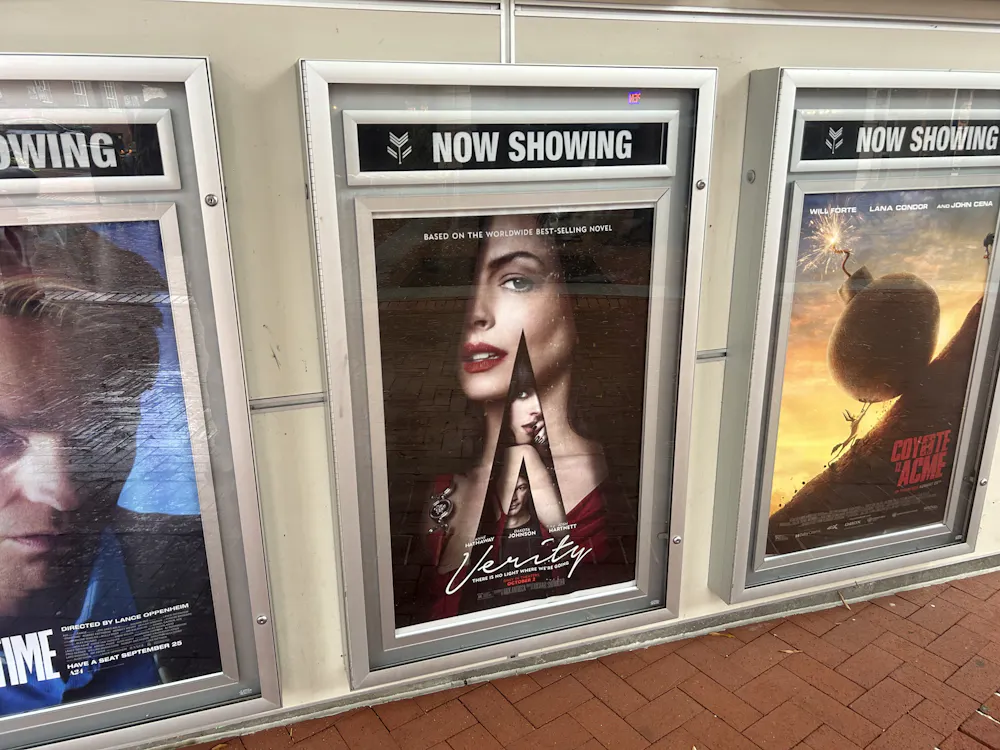
‘Verity’ falls short on its psychologically thrilling promise
By Julia Prevost | 3 days ago“Verity” is entertaining in moments, particularly when its dialogue becomes so outrageous that disbelief gives way to amusement.

Virginia Film Festival unveils full lineup for 39th rendition
By Matthew Wang | 5 days agoThe Festival’s 39th rendition, which will run for five days from Oct. 21 to Oct. 25, will feature a myriad of films from Virginia and across the world, as well as live discussions and panels with celebrated filmmakers and industry professionals.