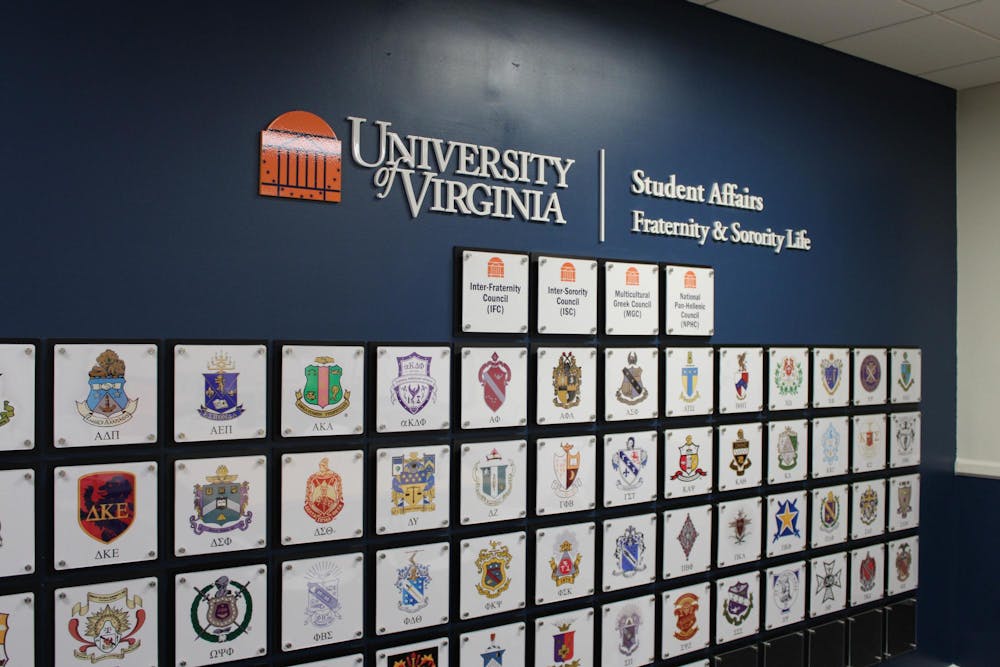
The University Inter-Sorority Council is proposing the addition of a new sorority chapter for the 2027-28 recruitment cycle. According to Cailee Halligan, president of the ISC and fourth-year College student, the proposition comes after the ISC saw the largest sorority pledge class in the University’s history during the 2025-26 recruitment cycle.
“Our recruitment cycle was so successful last year,” Halligan said. “[Our] median chapter size is the biggest it’s ever been.”
According to the ISC website, the University has 14 sorority chapters and all but Sigma Sigma Sigma participated in formal recruitment during the 2025-26 recruitment cycle. The recruitment process consists of four rounds — Round Robins, Philanthropy, House Tours and Preference — where students begin by attending all 14 houses and speak with active members of each sorority. After a round concludes, the potential new member submits a ranking of their preferred houses and may or may not get invited back to houses each round.
Halligan explained that during the 2025-26 recruitment cycle, the ISC had 1100 potential new members that registered for the recruitment process, which is the most the ISC had ever seen. According to Halligan, each chapter that participated in formal recruitment had at least 65 members in their new pledge classes, and the median chapter size is about 230 girls.
Halligan also highlighted that the ISC saw a 10 percent increase in retention — when a student remains in the entire recruitment process without dropping — from the first to last day of recruitment, compared to the previous recruitment cycle.
“We’ve never seen a jump like that, ever,” Halligan said. “Having that much retention [throughout] the whole [recruitment] process … from registration to bid-matching, is crazy.”
To withstand the large number of girls going through the recruitment process, Halligan explained that the extension process would allow for more opportunities for girls to be matched with houses while allowing existing chapters to better manage their new pledge classes.
The extension process — the establishment of a sorority chapter on a campus where previously it had not existed before — began during the first week of classes and has progressed to a second round of voting for approval, Halligan said.
“Going through the process of extension, which is the [process] of adding a [new] chapter … [will hopefully help] during recruitment,” Halligan said. “Because a lot of these houses were overwhelmed, we were sending more girls to houses than they had recruiters … [so] it just becomes too much … I think an extra house would help that.”
According to the National Panhellenic Conference, to begin the extension process, there must be a vote conducted by representatives of each panhellenic chapter. The initial vote decides whether the panhellenic community is in support of continuing with the extension process and if supported, would create an Extension Exploratory Committee — a group of chapter representatives that assist the ISC in the formal extension process.
Halligan explained that the ISC does not vote during the extension process and that votes are left up to the respective representatives of each chapter.
“I think every chapter needs to be represented,” Halligan said. “Different chapters will have conflicting views if this were to actually happen, [so] they need to have their say.”
Along with compliance with the nationals extension process, chapters seeking establishment at the University must follow the guidelines of the Fraternity and Sorority Life (re-)establishment processes.
According to the University Fraternity and Sorority Life website, the (re-)establishment process requires chapters to submit documentation that explain their interests in joining the University Greek life community, plans for new membership education and growth, documentation of financial viability and letters of support from their respective national organization.
If the sorority chapter representatives vote to continue with the extension process, the quickest scenario of implementing the new chapter would include the new chapter being added to the 2027-28 formal recruitment cycle, Halligan explained.
Further, Halligan noted that the Zeta Beta chapter of Gamma Phi Beta — which closed its operations at the University officially in March 2025 — has signed a return agreement to return on-Grounds in 2032. She said implementing a new chapter for the 2027-28 cycle grants time for it to “colonize” before Gamma Phi Beta returns.
“[The chapters] can take as much time as they want,” Halligan said. “But, it is [the] best case scenario because [Gamma Phi Beta] is supposed to return in 2032, so this gives us enough time for a new chapter to colonize and then have Gamma Phi return too.”
Halligan explained that the ISC and the chapter representatives do not yet know which sorority chapter will be implemented on Grounds, however she said the new chapter will be a “great opportunity” for students going through recruitment in 2028.
If any student is looking to go through the recruitment process for the 2027-28 cycle, students may register through the ISC’s website.

Isabela Delgado is a staff writer on the news desk who enjoys writing long-form pieces. Most of her work is focused on U.Va. Health and the Honor Committee, although she enjoys writing about many subjects. Outside of writing, Isabela is also a member of the photo desk. Isabela is from New Jersey and currently plans to major in government.
Read More

U.Va. launches asynchronous pathway for bachelor of interdisciplinary studies degree
By Sophie Smith | 23 hours agoThe BIS degree program offers a flexible way to earn a degree while considering adult life and busy schedules, according to Joshua Katz, senior associate of communications at SCPS.

Miller Center panelists discuss federal debt and its potential consequences
By Solomon Ross-Milligan | 23 hours agoCurrent borrowing, mostly through Treasury securities to both domestic and foreign investors, continues to be a problem MacGuineas said has existed for decades.

Latest compliance report details Community Engagement and Equal Opportunity hiring freeze, Law School anti-discrimination updates
By Grace Little | YesterdayWednesday’s report also includes granular changes in the School of Law, primarily regarding new formal documentation of anti-discrimination compliant policies having to do with recruiting, promotions and admissions.