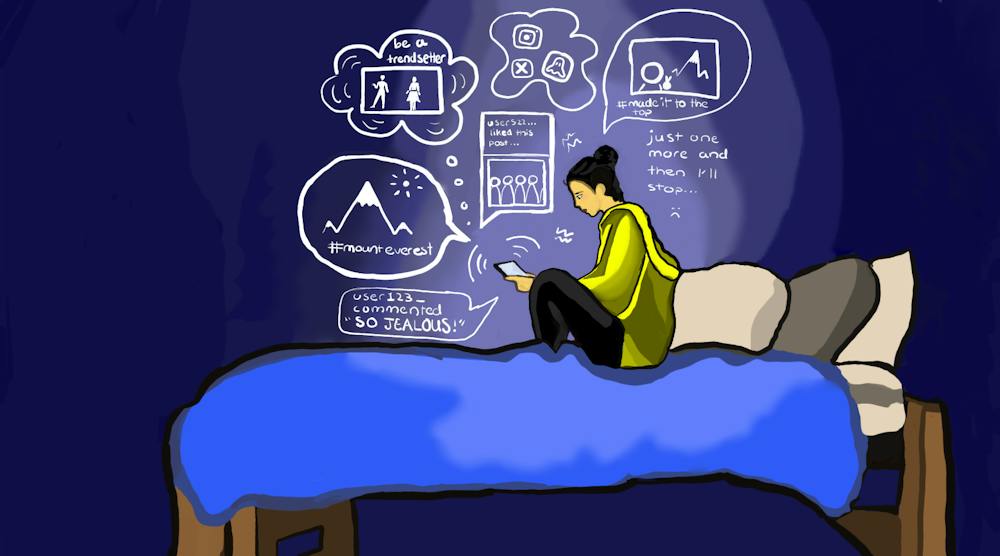
There was nothing I loved more than sinking into the corner of my bed, a blanket pulled up to my chin, letting one video bleed into the next. There was something reassuring about scrolling on social media — something allaying about my reflexive ritual of liking, commenting and refreshing my feed.
It gave me a sense of comfort knowing what all my friends were doing on Friday night, keeping up with the latest trends and always having a relevant, pop-culture-based icebreaker to start new conversations.
Social media made the rest of the world feel within my reach. It was a way to soothe the itch of not knowing what was happening without me.
And while it made me feel connected to the people and world around me, I also felt like that connection was something I constantly had to maintain. If I didn’t check my feed, I was worried I would miss something — an inside joke, a new fashion trend or some piece of information that everyone else would know and I wouldn’t.
But the more I scrolled to stay connected, the more disconnected I felt from myself. I had access to so much information about what other people were doing that I was persistently reminded of the ways I felt I didn’t measure up. I became hyperaware of the way I looked, worried my interests weren’t “cool” enough and whether my personality was secretly off-putting to others.
I found myself subconsciously counting every like and every comment, and would feel a small sting whenever they didn’t come. I’d wonder if I had done something wrong, turning the numbers on a screen into a measure of how people felt about me. Without realizing it, my habit of passive doomscrolling had slowly chipped away at my sense of self.
I knew something was off when I realized opening Instagram or Tiktok felt like a chore — something I had to do to ensure I wasn’t becoming a social recluse. But committing to a break from social media felt truly impossible. Everyone I knew was constantly scrolling, and I was terrified that stepping away would make me seem boring and disconnected. It seemed like social media was so intertwined with how people interacted that leaving felt like voluntarily removing myself from a conversation I desperately wanted to be included in.
It was during one of my usual nighttime scrolls that I realized I wanted to reconsider my relationship with social media. I came across a video of Gabriel Basso explaining why he had deleted Instagram. He described that he saw a video of the top of Mount Everest, and felt like he hadn’t earned the right to see a summit that he hadn’t worked to reach. This realization was enough to make him delete all his social media.
It occurred to me that I was feeling something similar. I had become so accustomed to having all this information at my fingertips that I had never questioned whether I needed access to all of it. I started to consider that maybe there were things I didn't need to see, know or keep up with — whether it was clothes going out of style or events I was missing. Before I could talk myself out of it, I deleted all my social media apps and turned my phone off for the night. I told myself I would see what happened if I stopped trying to keep up, for once.
The real struggle, however, came after I deleted the apps. I never noticed how much I used scrolling on my phone to fill the small, mundane moments of my day. I kept instinctively swiping through my home screen looking for something to open, only to remember that it was all gone. I had no idea how to wake myself up in the mornings without reaching for my phone, or how to fill the odd pockets of time I had in between classes.
For a while, I felt helpless without it. I was impatient and restless, as if I had somehow forgotten how to exist without constantly giving my brain something to consume. I felt like I was missing semester dumps, hard launches, spam stories and all the arbitrary updates that made me feel connected to the people in my life.
Slowly, though, those worries began to fade. I realized that I had built up this fear of missing out into something much bigger than it actually was. I was still seeing my friends, still having conversations and still felt included in other people’s lives. Without social media as a constant reminder of what everyone was doing, I found myself more inclined to reach out to others by making plans or simply asking how they were doing. Instead of checking for updates through a screen, I could just find things out naturally through conversations or stories. My life wasn’t smaller just because I no longer knew everything that was happening online.
Occasionally, someone would mention a meme from “Love Island” or a photo from last weekend’s festivities, and I would have absolutely no idea what they were talking about. But in the grand scheme of things, it didn't really matter to me.
I began to find a sense of peace in not knowing. I felt so much more at ease with myself and my life, all because I deleted a few apps on my phone.
Maintaining that peace doesn’t mean I have given up social media entirely. It has been six months since I first deleted those apps, and every once in a while, I still redownload them to check up on whatever I missed. But for the most part, I am more comfortable having less information at my fingertips. I’ve learned to let some things pass me by, letting relationships and connections reach me rather than chasing them down myself. There is a certain freedom in letting the world carry on without me — but still knowing that I’m a part of it.
Sometimes, certain choices can feel like cornerstones of being in college or youth in general, and it can be hard to discern whether or not those habits are actually self-serving. When everyone seems to be keeping up with the same things, it can be easy to assume that means we have to as well. And while it can be uncomfortable to step away from them, it’s important to make choices that feel right or best for yourself. While my original “social media cleanse” has turned into something more semi-permanent, ultimately, it’s been a decision that's left me more present, fulfilled and just more myself.

Aditi Burra is a staff writer on the life desk. She is a second-year Engineering student, majoring in computer science and minoring in engineering business. Aditi is from Fairfax, Va. and she enjoys writing about student life and well-being. Outside of The Cavalier Daily, Aditi is involved in Women in Computing Sciences and the Indian Student Association.
Read More

College Mentors for Kids instills confidence with friendship
By Claire McGinn | 23 hours agoOn Grounds, this CIO brings together nearly 230 University students and 200 elementary schoolers from five Charlottesville-area schools.

Sarah Deloney’s path to — and from — her diagnosis
By Astrid Cheng | 3 days agoAfter three years of persistent pain, Deloney was finally able to find an answer — Nutcracker Syndrome.
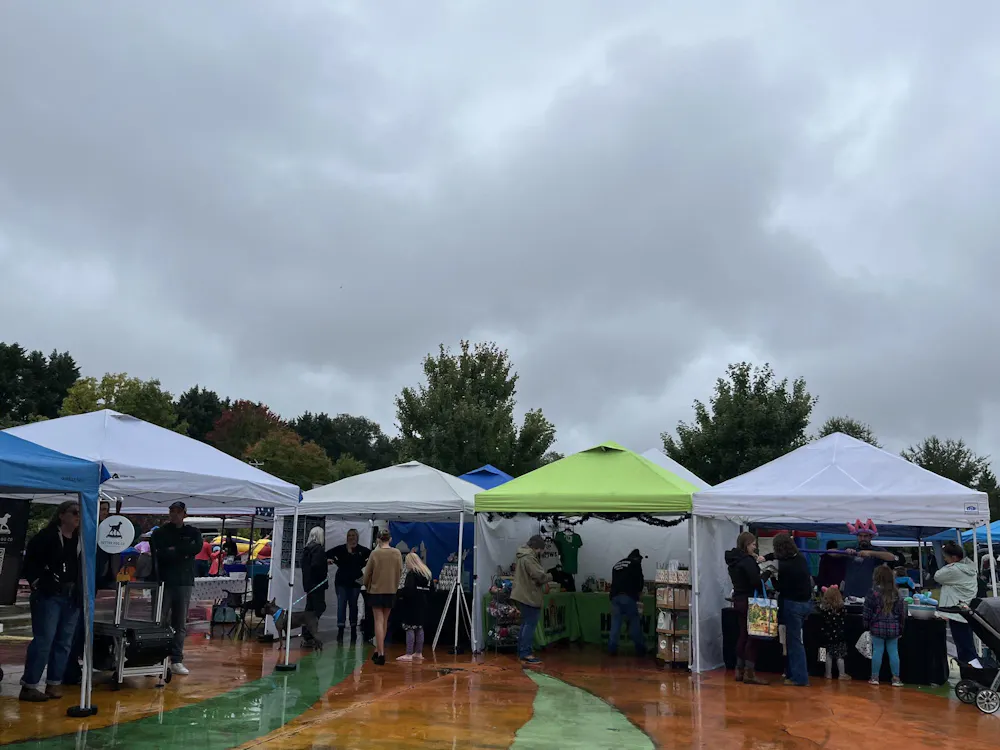
Animal lovers come together at Charlottesville-Albemarle SPCA’s third annual Fall Fest
By Lily Notter | 3 days agoFall Fest is the CASPCA’s largest adoption event of the year.