To ease the heavy congestion on Interstate 81, the Virginia Department of Transportation plans to expand the highway, which probably will result in the institution of tolls, according to VDOT Public Relations Assistant Eric Gorton.
"We think [expanding the highway] will be a prudent thing to do given that when the highway was built and open to the public in 1963, it was constructed for 15 percent truck traffic and now there is 40 percent truck traffic," Gorton said. "The other thing is that traffic in general has increased so much that it needs to be widened to compensate."
Gorton said the two consortiums offering bids for construction are Fluor Virginia and Star Solutions. VDOT's advising committee heard presentations from both consortiums Oct. 2, but the committee has yet to select a group.
"We are still a long way from" construction, Gorton said.
Fluor Virginia Executive Sponsor Herb Morgan said his company's goal is to create a safer highway and decrease congestion.
"The basis of the proposal is the addition of one lane in each direction," Morgan said. "In heavily congested areas such as Roanoke and Harrisonburg, there will be additional lanes to meet traffic demands. Also, there will be 10 truck driving lanes."
Fluor's projected date of completion is 2014, and the total cost is estimated at 5.9 billion, Morgan said.
Morgan said tolls on cars and trucks are necessary to fund the construction given the state and federal financial situation.
"Looking at our state and federal deficit, we are pretty limited. Our costs [for tolls] are in line with similar toll rates," Morgan said.
Cars would pay $.05 per mile, and trucks would pay $.17 per mile if the Fluor plan is adopted.
Jimmy Mills, special programs leader for Wilbur Smith Associates, which is associated with Star Solutions, outlined their company's proposal which also includes additional lanes.
"Our vision is to build a minimum of two extra lanes in each direction called dedicated truck lanes for all 325 miles of the highway," Mills said.
He said Star Solutions' projected date of completion is 2019, and the project would cost $7.9 billion.
Star Solutions plans to fund the project with $1.6 billion from the Federal Highway Association because the project is a pilot program. Tolls will cost trucks $.27 per mile and will generate the additional required funds, Mills said.
According to Gorton, VDOT is not certain when construction will begin since it depends on which consortium VDOT selects and an environmental study.
"Independently of this process, we also have to do an environmental study required by the Federal Highway Administration," Gorton said.
The study needs to be completed because the federal government has specific guidelines for road expansion. VDOT must comply to receive funding.
"To do the study over 325 miles, it could take up to five years," Gorton said.
VDOT can not yet determine the impact the construction will have on drivers.
"It is possible that [construction] will cause delays, but we do not know when or how [the construction] will take place," Gorton said.
If VDOT selects either company, funds for construction will come from a combination of tolls and federal funding.
Gorton said VDOT does not have an opinion on the tolls.
"We are really neutral," Gorton said. "That is not our arena. We are in the transportation business, and we are doing the best thing for the road."
Read More
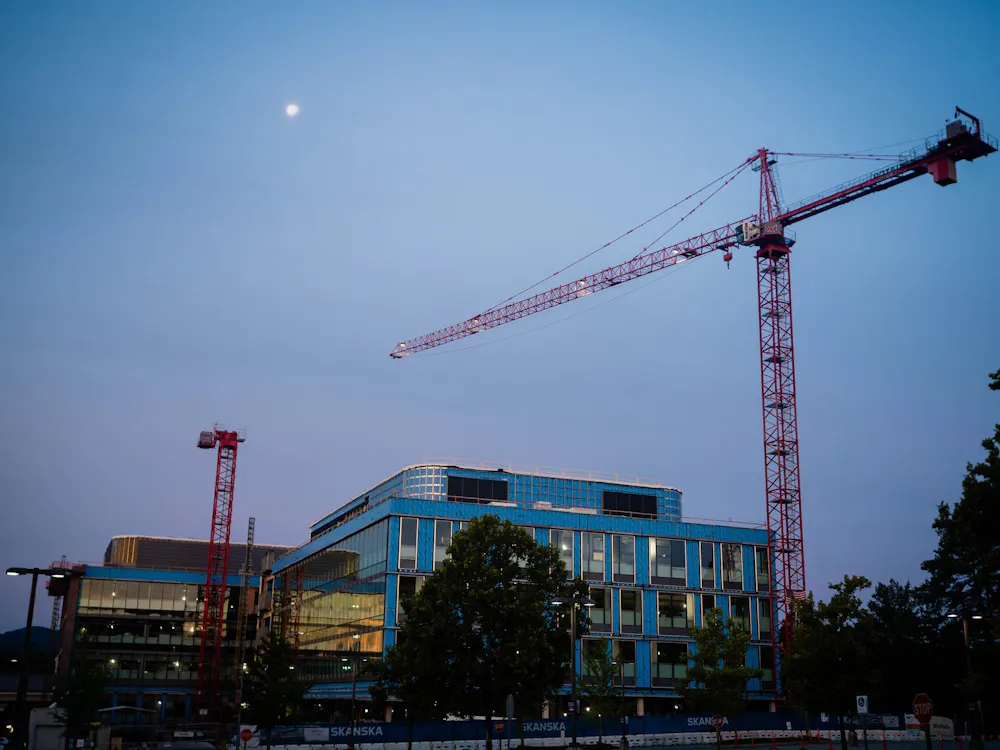
U.Va.’s planned data center expands $30 million amid statewide debate over energy use
By Jaylynn Perez | 8 hours agoThe project has grown since it was initially approved by the Board of Visitors in June 2025 as a $72 million, two-story data center facility.
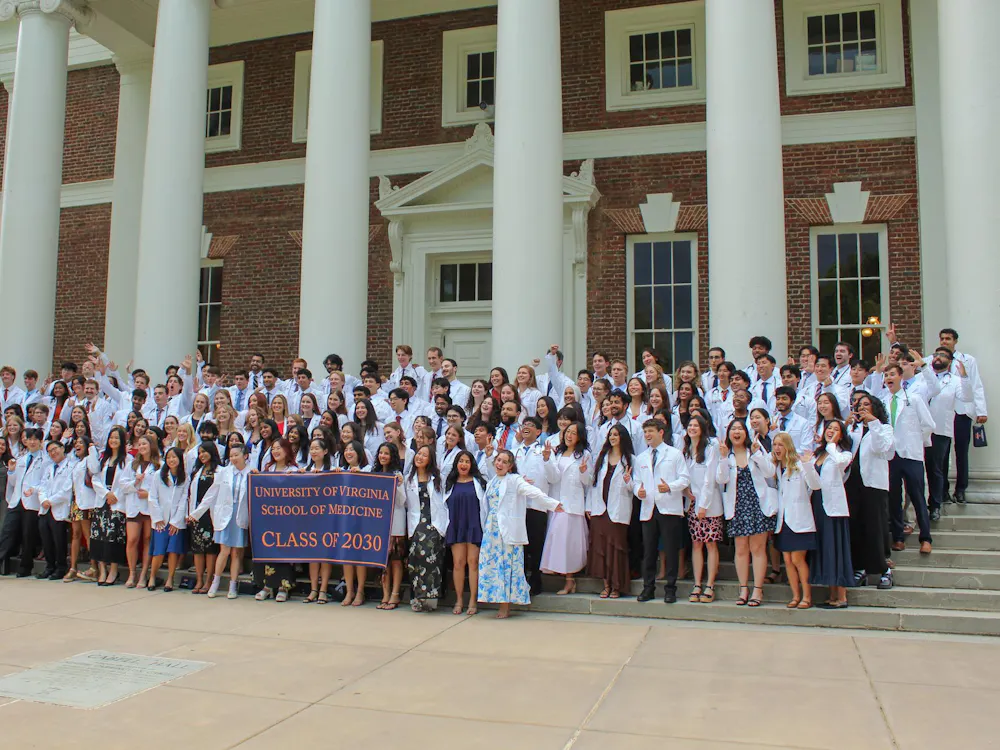
School of Medicine welcomes Class of 2030 with annual White Coat Ceremony
By Michael Racz | 8 hours agoThe ceremony is a longstanding tradition in medical schools across the country in which incoming first-year medical students receive their first white coat as they enter the medical profession.
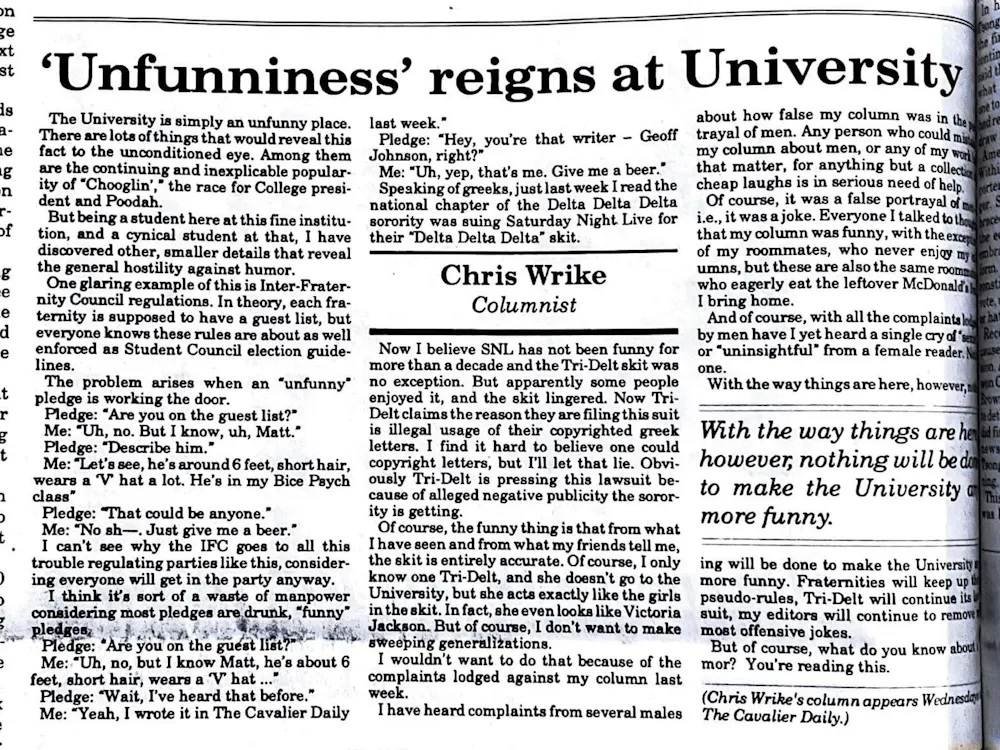
From the Archives: 1990s
By Tori Vonderheid and Livia Shrednick | YesterdayUniversity physician Dr. Joel Trugman discovered that some children who had been diagnosed with cerebral palsy, an incurable movement disorder, instead have a rare biochemical disorder that is treatable.