From finding a solution to world hunger to discovering new treatments for sexually transmitted diseases, the research conducted by the University's biology department has practical applications in many sectors of daily life.
"Almost everybody that is in this department," said Prof. Douglas Taylor, chair of the biology department., "if you ask them what they're doing, they're doing something fundamental and pretty important."
Prof. Martin Wu's work sequencing the microbial genome, for instance, may impact our understanding of the common cold. Prof. Lei Li also studies genetics, and his research centers on increasing the food supplies of third world countries by creating a form of rice that will produce higher yields for farmers. He is working to create a genetic cross for the two strains of rice he is studying, forming a hybrid that yields 25 percent more crop. That hybrid cannot be sustained, however, and Li is working to stabilize it and determine how it initially forms.
"One of [the] things they [Wu and Li] are both doing is breaking down the boundaries between disciplines," Taylor said.
The 45 professors who make up the biology faculty split time between teaching and conducting research on a wide range of topics that often intersect with other disciplines.
Nevertheless, each of the disciplines in the subject, he said, are fundamentally interrelated, with one concept often influencing and overlapping with another.
"As an undergraduate, you may not know these huge fields exist," he said. "Many biologists may have more in common with chemistry majors or psychology majors or environmental science majors. I like to think of it as life sciences, and biology touches on each area in the life sciences."
Often, the research of professors can have far reaching effects on how societies function. Prof. Janis Antonovics, who teaches an undergraduate course called Biology of Infectious Disease, conducts research on the spread of sexually transmitted diseases, which have detrimentally affected human populations for centuries.
"There's a lack of understanding of the impact [of these diseases] in natural communities," he said.
His research, he said, informs his work in the classroom and lays the basis for his knowledge as a teacher.
"I love doing both [research and teaching], and I could do research without teaching, but I don't think I could teach without doing research," Antonovics said. "You cannot teach properly unless you're really in the middle of the subject."
Professors often collaborate globally during the course of their research, as well. During the coming year, Antonovics will be in Germany examining what keeps these diseases from spreading.
"I will be heading up a study group of four or five scientists from around the world - England, Switzerland, Germany, the U.S.," he said. "It is a kind of think tank to ask why there are limits to disease. It's going to be from several perspectives - one is why some organisms get diseases and others don't, and why that varies between and within species."
This research is important, he said, because his field is one whose scientific advances have lagged behind those in other realms of disease research.
"There were 28,000 people in attendance at the [last] American Society of Microbiology meeting. With that many people studying microorganisms, why haven't we got any farther?" Antonovics said.\nUndergraduate students in his class or others majoring in biology, Antonovics said, can conduct research in the department with the tutelage of professors and perhaps solve these problems that have nagged biologists for decades. These opportunities also extend to the realms of evolutionary biology and ecology. Two satellite research centers, the Blandy Experimental Farm and the Mountain Lake Biological Station, are mainly devoted to research in these fields. Blandy allows for ecological study, while Mountain Lake also allows for research in evolutionary biology.
Although research is most often conducted during the summer at the facilities, some research projects are active year round. Undergraduate students at Mountain Lake have the opportunity to be laboratory and field assistants, or to apply for the Research Experiences for Undergraduates paid fellowship to conduct independent research.
Regardless, Taylor explained that Blandy and Mountain Lake are generally underused by undergraduate students. The faculty there tend to work on more esoteric research, he said, such as the social structure of beetles living on fungus.
"There are terrific faculty [at the centers], and you really get to know a professor. It's wonderful for learning and getting excited about biology," Antonovics said.
Graduate Arts & Sciences student Stesha Dunker, who is working toward her doctoral degree, conducts research at Blandy for her dissertation. Her research focuses on changes in carbon dioxide fluxes during secondary succession, a stage in the life cycle of plants. Her work is part of a field known as ecosystem ecology, which focuses on the wider aspects of ecosystems taken as a whole. This field still falls within the realm of biology but is considered to be distinct, she said, from studies of species-level interactions, or other fields such as microbiology and genetics, which other researchers, like Wu, Li and Antonovics, devote their lives to studying.
"The major areas of biology are arbitrarily defined," Taylor said. "They'll be in the areas of genetics and molecular biology, cell biology, development biochemistry, and ecology and evolution. But that really doesn't do it justice"
Read More
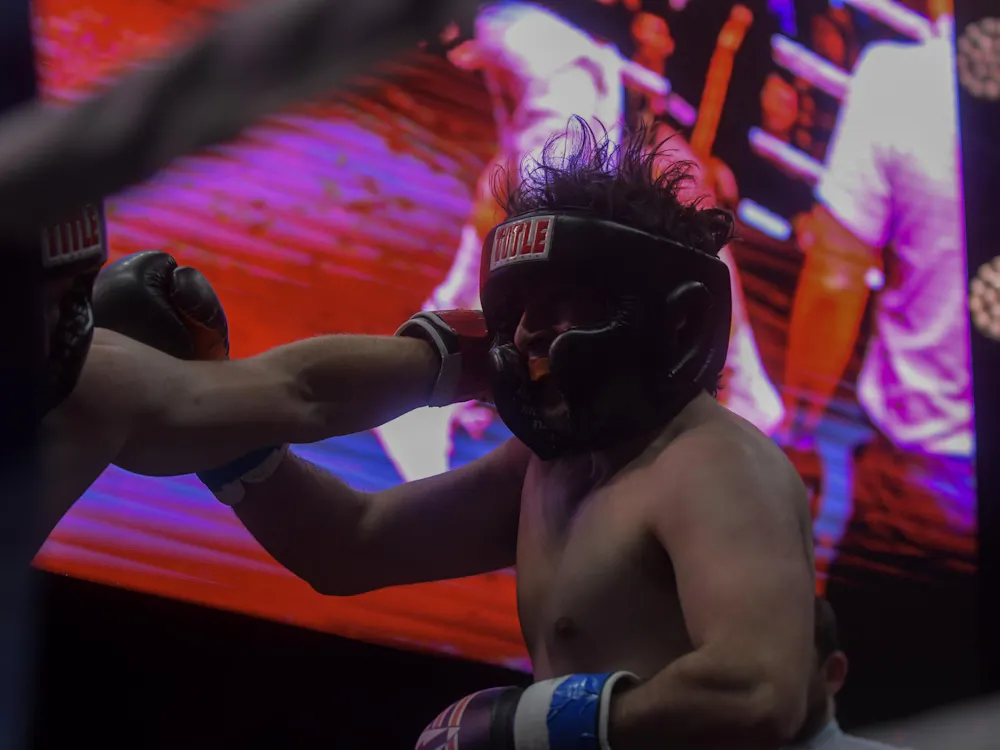
‘The Fight Against Suicide’ rings in support from University students
By Lucy Larsen | April 19, 2026The Fight Against Suicide is a student-led initiative that has been introduced at southern schools across the country, using organized boxing events to raise awareness and funding for mental health resources.

U.Va. students and physicians team up for another year of free kidney screenings
By Merrill Hart | November 5, 2024Saturday’s screening marked the first by KDSAP at Portico Church, near IX Art Park.
U.Va. Health sees a spike in COVID-19 cases
By Emily Horn | September 4, 2023U.Va. Health ended their vaccination requirements in August, and masks were made optional in most hospital areas in early April.