After a limited theatrical release, including a premiere at the Virginia Arts Film Festival Oct. 22, Park Chan-wook’s “No Other Choice” is now set to have a wide release later this month. The film blends absurdist humor with dark undertones to comment on the disruption and instability unemployment can cause to one’s psyche and family life.
Based on Donald E. Westlake’s 1997 novel, “The Ax,” the adaptation’s South Korean setting is fitting, considering the country’s notoriously arduous work culture. However, Park believes that the theme of economic pressure is a universal one.
“Whenever I told people about the story, no matter the time period or country they came from, they would always say how relatable it was,” Park told The Hollywood Reporter.
The story follows You Man-su, played by Lee Byung-hun, a veteran manager at a South Korean paper company. He lives happily with his wife, their moody teenage son and young neurodivergent daughter. As the breadwinner of the household, his life is upended when his company lays off dozens of workers, including him. To make ends meet, his wife picks up part-time work at a dental clinic, the family cuts back on activities like tennis and dance classes and they send their two dogs to live with his wife’s parents.
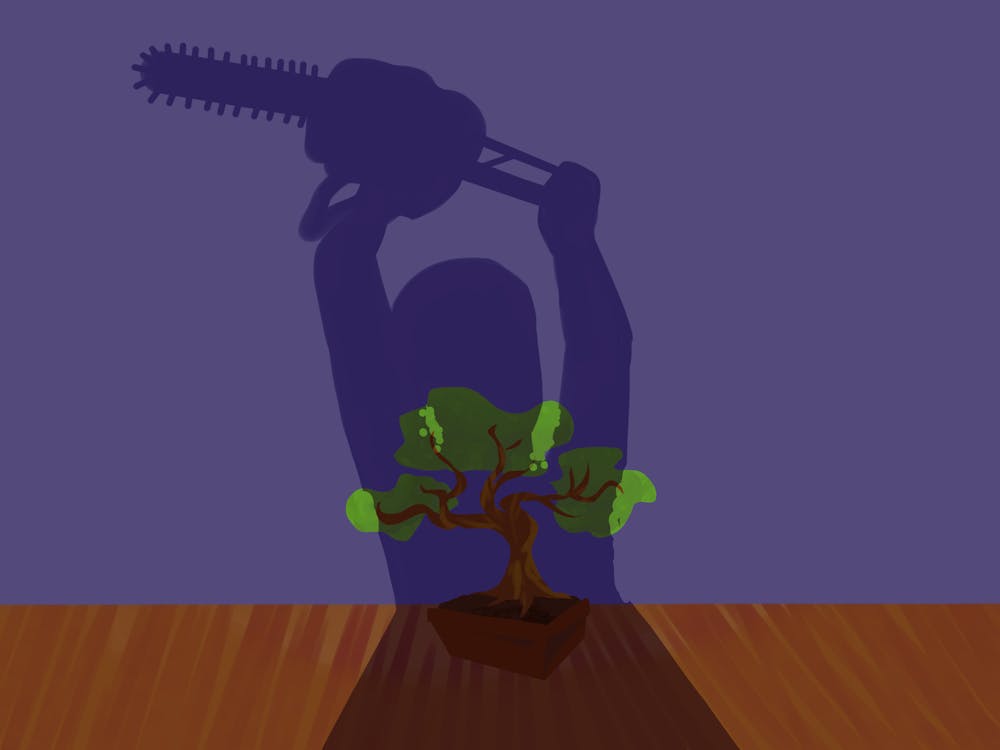
After 13 months of failing to secure another job as a paper company manager, Man-su is struck with an epiphany — eliminate the competition. He launches an advertisement for a fake paper company in order to trick his only superior candidates into giving him their personal information and attempts to murder them one by one, feeling as if it is his only way to rise above his competition.
Throughout the film, his wife Mi-ri, played by Son Ye-jin, often suggests for Man-su to look for employment in other sectors. He refuses, believing that paper is what he is meant for, based on his 25 years in the industry. This mindset is mirrored by his first target Beom-mo, played by Lee Sung-min, who is equally stubborn. When Beom-mo is introduced, he has been laid off and as a result spiraled into depression, isolation and alcoholism.
This plot could make for a bleak thriller, but the writing and acting in the movie instead satirize the circumstances surrounding Man-su’s unemployment. The dialogue is witty and tongue-in-cheek, and the acting — especially Lee’s — is heightened, at times to the point of slapstick. He is brilliantly funny as Man-su, portraying him not as a ruthless killer, but as a prideful, bumbling man. Man-su’s first murder attempt culminates in one of the funniest scenes in the movie, in which Man-su, his target and his target’s wife flail around fighting over a gun while a Korean rock song blasts in the background.
At the same time, the movie is unafraid to embrace the darker reality of unemployment and the toll it takes on a person's mental state. Man-su projects his deception onto his wife and accuses her of cheating, which climaxes in a raw and emotional confrontation between the couple. Meanwhile, his son Si-one, played by Kim Woo Seung, steals phones from his friend’s father’s office to resell. He gets caught by the police, adding to the family’s already stressful situation.
Additionally, Park employs stellar cinematography to illustrate Man-su’s moral erosion. Some standout shots include one from the bottom of a beer glass as Man-su polishes off his first drink in nine years, as if diving deeper into Man-su’s psyche. Similarly, near the end of the movie, a quick shot of an exhausted, withered-looking Man-su before he snaps back to his normal self, showcases his deteriorated conscience.
Another key element of this movie is its take on employment’s relationship with masculinity, pride and sense of self. When Man-su and Mi-ri first met, Mi-ri had a very well-paying job, but gave it up after the couple got married, suggesting a cultural expectation for Man-su to be the breadwinner as the man. Mi-ri only gets a job again out of necessity, and is met with confusion when her friend sees her working at the clinic, further bringing awareness to the stigma around a working wife and mother.
In this movie’s world, employment is clearly tied to a sense of manhood — to be unemployed is to fail as a man and head of the household. But for both Man-su and Beom-mo, it goes a step further. Both have attached their identities to working in the paper industry and that industry alone, and the possibility of working elsewhere feel like affronts to who they are fundamentally.
Many people around the world resonate with this affront from the encroachment of artificial intelligence on the workforce. As AI reduces jobs across industries and around the world, the movie recognizes the threat that new technologies pose and the potential for unemployment crises, as well as how that can affect those who lose their jobs. Park is aware of this, but believes that human nature still offers room for advancement in the midst of AI’s growth.
“The way technology is evolving and coming at us with such speed … I think we’re going to face crises that humanity has never experienced before,” Park said. “But it’s still too early for us to completely give up. Despite our many tragedies and mistakes, we have to believe that humankind has the potential to make progress.”
Park Chan-wook uses a combination of sharp dialogue, slapstick humor and beautiful camera work to explore the depths that a man might go to save his family and his pride. The result is a dark comedy centered on identity and desperation that feels particularly relevant given the current labor market landscape.
Read More

July Book Club: Three unconventional beach reads for steamy summer days
By Amelia Lucien | 2 days agoWhile darker themes set these beach reads apart from the typical rom-coms that usually come to mind, the freedom of summer may be just what is needed to dig into a thought-provoking story.
‘Minions & Monsters’ is bananas
By Kelsey McIntyre | 4 days agoAnimation studio Illumination released “Minions & Monsters” July 1, which revolves around an entirely new cast of Minions from those in any of the previous six movies.

A multimedia prelude to an incoming first-year’s time in Charlottesville
By Alice Oakey | 5 days agoWhile no piece of media may truly capture all of the magic found on Grounds, the stories explored in these pieces can be applied to one’s time in Charlottesville.