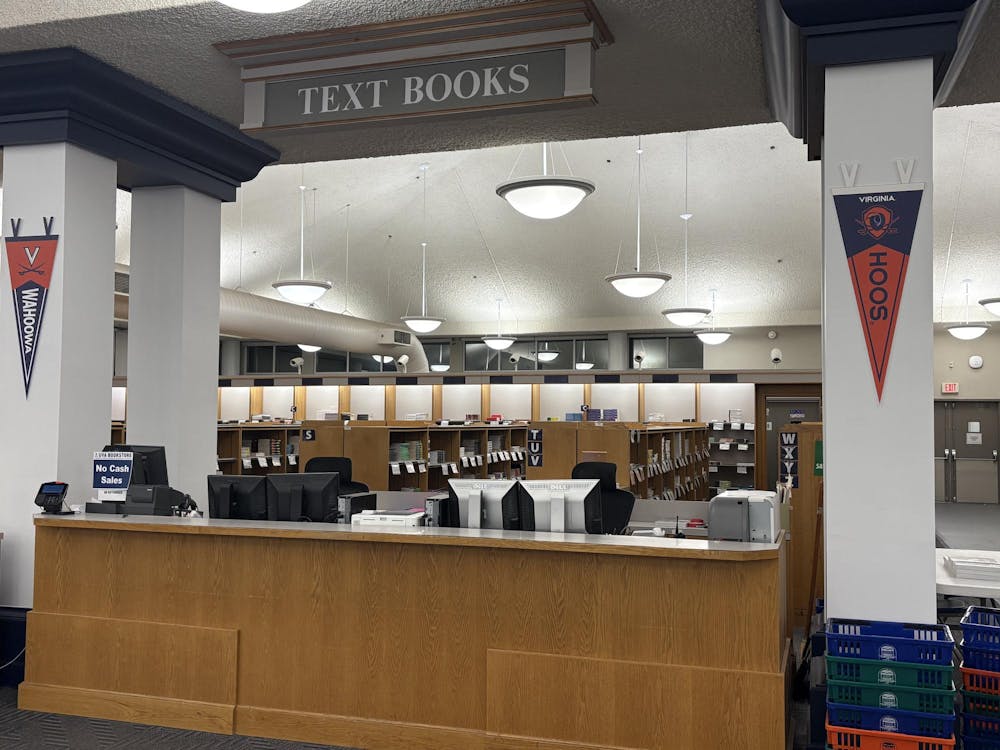
The University Bookstore is working on implementing a new textbook program for undergraduate students called One Access, which will provide a more developed version of the current program — Inclusive Access. One Access will potentially offer a one-stop portal for students at a flat rate to access all necessary course materials, such as textbooks.
The University Bookstore promotes the program for four reasons — affordability, convenience, academic success and sustainability. However, some faculty members have expressed concerns with various aspects of the flat-rate program and its effects on both students and their own curricula.
In a memorandum sent to the Faculty Senate Research, Teaching and Scholarship Committee from Carmelita Pickett, Associate University Librarian for Scholarly Resources and Content Strategy and ex officio member of the Faculty Senate Reading, Teaching and Scholarship Committee, these concerns are consolidated in five categories — cost equity, student agency, data privacy, institutional risks and faculty agency.
Huiwang Ai, chair of the RTS Committee and School of Medicine professor, reported in a letter addressed to University Bookstore Leadership and Gheretta Harris, Associate Vice President for Business Services, that there were 185 responses to a recent faculty survey about the new textbook program overseen by the Faculty Senate. Ai wrote that most of the responses emphasized similar concerns One Access – cost equity, student and faculty agency and user privacy.
Ai’s letter further detailed the RTS Committee’s formal request that the Bookstore pause their plan to move ahead with the program until they are able to provide more concrete solutions to faculty concerns.
“After careful review of all responses, the RTS Committee concludes that faculty do not support the One Access program as currently proposed. The concerns raised were widespread, consistent across disciplines and often strongly stated,” Ai stated. “Accordingly, the RTS Committee formally requests that the Bookstore discontinue consideration of the One Access proposal at this time.”
One Access is considered a “digital preferred” program, as opposed to “digital adoption” — Inclusive Access’ classification. According to University Spokesperson Bethanie Glover, this means that One Access promotes primarily the use of digital materials, but also includes hardcopy materials for the same price if students choose. Glover also said that faculty may adopt printed course packs or physical textbooks that will be encompassed by the flat rate that every student would pay.
All course materials will be accounted for under a flat fee offered by One Access for all students regardless of specific course enrollment, though it remains unclear how the fee will be determined and how quickly it may increase.
Judith Thomas, Director of Faculty Programs at the U.Va. Library, explained that despite the flat fee feature of One Access being a financially beneficial option for some students, it may have the opposite effect for others.
“For some students … who are accustomed to having to pay hundreds of dollars for their science introductory textbooks … this may represent a good deal. For other students, it will not. … It is kind of a continuation of the course cost issue,” Thomas said.
Thomas explained that students studying the humanities may be entering into a less desirable financial position with One Access. Given the varying costs across subject areas, with STEM-based courses typically coming with a higher price tag, One Access may leave humanities students with an increase in their typical course costs as they help finance the program at large.
“The memo … brought up the question of whether the humanities courses, for instance, those where the overall price tage for courses is fairly low, will end up subsidizing the part of the curriculum that includes very high priced resources,” Thomas said.
Chemistry and Astronomy Prof. Robin Garrod has also expressed concern with the possibility of steep price increases. Garrod explained that the flat rate could rise like textbooks continue to do after students are enrolled, leaving students locked into an expensive program if they chose not to opt out.
“The other thing I think is going forward, I wouldn't want this to be a sort of a mechanism for getting this program in the door and then prices ramping up. If that does happen, then I think the benefits will evaporate,” Garrod said.
Further concerns have been expressed in Pickett’s memorandum to the RTS committee and by faculty members about professors’ agency in choosing course curricula under One Access. According to the memo, it is not guaranteed that a professor’s chosen course material will be offered through the One Access program, which would lead faculty members to adjust their curriculum around the availability of specific books as selected by One Access.
“The intention of the publishers is to increase and make concrete the reliance of the curriculum on these materials [already offered],” Thomas said. “[A concern] is what materials are being distributed by the publishers, to the potential exclusion of the others.”
According to dissenting faculty, One Access also raises a key concern around student privacy and data collection. With regard to the current system, Glover explained that Inclusive Access collects some personal data from student users — but less than One Access — to affect the program’s function and the student’s experience as a user. Inclusive Access collects a student’s name, email and unique identifier in a secure network to provide access to the correct course materials and bill the student’s Bookstore student charge account, according to Glover.
Faculty currently understand that the One Access program, in contrast, collects data on all aspects of how a student interacts with it including how, when and for how long they read or use a material — which is more data than Inclusive Access currently collects. Thomas explained that despite data collection being a standard part of students’ lives by some measure, they should still be made aware of the potential effects of One Access monitoring their behavior on the platform.
“It is not only who you are, it is your learning behaviors, it is how you are accessing the materials, what amount of time you are spending on them. A whole range of behavioral data is collected,” Thomas said. “I think students have to be aware that this is going on and they have to be able to opt out as they would like.”
In the College’s English Department, 54 professors signed a letter to Brie Gertler, Interim Executive Vice President and Provost, Jeri Seidman, Chair of the Faculty Senate and Commerce Prof. and Ai expressing similar concerns around cost equity for students in the new program. The letter also included specific concerns around data and privacy collection through VitalSource — a corporate partner of One Access. The signatories agreed that introducing an additional external post with access to student user information should cause more hesitation as the University moves forward.
“The administration should weigh carefully what it means that rights and access for One Access will be handled by a corporate partner named VitalSource. … According to an online self-description, VitalSource is dedicated to ‘redefining what it means to study in the era of Al,’” the letter wrote.
Pickett also mentioned a concern around the opt-out process in her memo. The memorandum to the RTS acknowledges that students may opt-out, but it also says that the financial consequences — including a steep price increase — of making that choice are not entirely clear.
“While students can opt out and select textbooks individually, the financial implications of doing so remain unclear,” the memorandum stated. “Opt-out processes can be confusing, particularly for incoming students unfamiliar with University systems.”
Aware of such concerns, the University Bookstore has claimed that all students have the option to participate in the One Access program once it is implemented, or instead opt out and continue acquiring their books in print through the Bookstore.
The 54 English professors also explained in their letter that with One Access, students will no longer have access to reading materials for a course after it concludes — with Inclusive Access, students can access past course reading material.
“We are further concerned that despite the name, ‘One Access’ denies students access to texts after the course concludes,” the letter stated. “By making students pay a mandatory fee, without guaranteeing them future possession of the materials they have purchased, the University will be choosing to enrich a small number of billionaires at the public expense.”
One Access was originally set to be implemented in Fall 2026, though that timeline has since been readjusted and the new date has not yet been determined. Students should expect to continue using Inclusive Access or another method of obtaining their course materials through the end of this academic year and likely through next semester.
Read More

University organizations come together to celebrate Black History Month
By Jaylynn Perez | 14 hours ago“Our basic philosophy is that the Woodson Institute practices the principles of Black History Month year-round,” Vinson wrote. “Black History Month simply provides an opportunity to demonstrate this daily work to the broader University and Charlottesville-Albemarle community.”

UJC has processed three cases this semester, prepares for Judiciary Week
By Melody Yuan | YesterdayThe University Judiciary Committee has adjudicated three cases and has 11 pending cases on the docket as the first month of the spring semester comes to an end.

Karsh Institute director Melody Barnes addresses U.Va.’s Jefferson Society
By Luca Bailey | 2 days agoThe Society hosted Barnes as the first in a series of events for its Distinguished Speaker Series — a series in which experts in politics, law and history will address the Society on the importance of their work.