
Correction: A previous version of this article incorrectly titled Nici Cumpston, Barkandji people, Australia, and Kluge-Ruhe director. The article has been updated with the correct title.
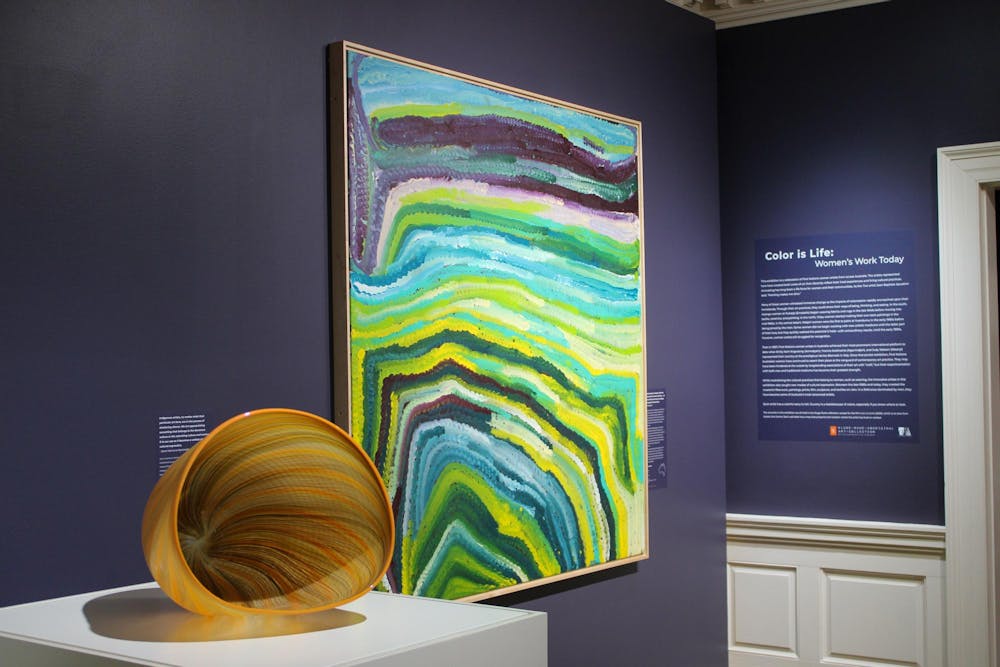
“Color is Life: Women’s Work Today” opened at the Kluge-Ruhe Aboriginal Art Collection March 28, highlighting female Aboriginal expression through a variety of mediums. Beginning at the heels of Women’s History Month, the exhibit tells a colorful history of women’s contributions to the world of contemporary art. The Kluge-Ruhe works in tandem with the University as the only museum outside of Australia to focus on specifically Aboriginal work, showcasing the different forms of Aboriginal art through various exhibits and educational events.
Aboriginal art takes on many forms towards cultural preservation and expression, with some pieces as historical artifacts and others made in the modern day to tap into the over 50,000-year history of indigenous Australians. The new display immediately greets visitors with striking and traditional paintings — true to the exhibit’s color-graced title, the works boast a kaleidoscope of vibrant hues. One painting titled “Yarla Dreaming” portrays an up-close view of a flower with shades of pink, purple, yellow and blue throughout. “Wantili” is a more abstract, contemporary acrylic painting of more traditional earthy colors.
Kluge-Ruhe curator Eleanore Neumann said that she hopes visitors take a moment to consider the exhibit’s title as more than a description of its contents. She explained that the name “Color is Life” itself is an artistic statement.
“Color is associated with powerful creation ancestors. So women using color in their work is a way of embodying that ancestral power and expressing their creativity,” Neumann said. “They have very colorful stories to tell, whether those are ancestral stories or personal stories about the lives that they've lived … Their work expresses all of those things simultaneously.”
In addition to its curation of paintings, the exhibit highlights the art of craft. Visitors will notice woven baskets and wood carvings interspersed with mounted artworks, each with a placard explaining their creation and history. In an entirely separate room of the exhibit, the short film “Kala Kunbolk” (2023) — on loan from the Injalak Arts Centre, a non-profit in Gunbalanya, Northern Australia — plays on repeat. The video portrays Aboriginal women from the Gunbalanya region as they use leaves to weave baskets, honoring ancestral traditions.
In mixing mediums, the museum is able to highlight the unique creativity that Aboriginal women bring to their artwork. Women in traditional cultures are often relegated to the position of a homemaker, in turn forming intimate knowledge of handcrafting, according to Neumann.
“Women’s ability to work across media is ultimately the thing that has led them to be celebrated in the ways they are now,” Neumann said. “Their ability to be experimental … to work intermediately, to try new things, to create new forms, has somehow become their biggest strength.”
The multimodal nature of the exhibit highlights diversity across media, but also celebrates the diversity across Aboriginal people as a whole. Nici Cumpston, Barkandji people, Australia, and Kluge-Ruhe director, explained how the museum achieves this.
“As Aboriginal people, we’re all unique ... we’re not a homogenous group,” Cumpston said. “So we want the work to reflect that and to show people that, to break down the stereotypes of what people might think Aboriginal and Torres Strait Islander art is and to show them what it really is.”
The exhibit itself is composed almost entirely of pieces that the Kluge-Ruhe already has in their collection with a focus on those crafted by Aboriginal women. The short film is the only work sourced from outside the Kluge-Ruhe’s collection, allowing the museum to utilize on-hand pieces. Neumann discussed how curating an exhibit with pre-owned works presented a unique opportunity.
“It allows us to showcase really beautiful works from our collection, many of which have never been on view before,” Neumann said. “It’s creating a platform for those artists and even when they’re no longer with us in the world, their art still speaks for them.”
Most placards corresponding to each art piece contain a quote from the artist themselves, giving each artist the opportunity to speak to their pieces. Cumpston explained that as the only museum highlighting exclusively Aboriginal art outside of Australia, it is imperative to attribute original Aboriginal voices to their art.
“Our value system is really around being able to support and promote Australian Aboriginal and Torres Strait Islander art through the voice of the people themselves,” Cumpston said. “There's a quote by each of the artists, and that is something that we find helps people to get the sense of the person in their mind as they're looking at the work.”
The exhibit weaves together an often underrepresented story — that of female Aboriginal artists and their numerous contributions to the art world. By taking in contemporary artistic expression and traditional folklore, the exhibit blends a variety of tales into a singular vibrant presentation. “Color is Life: Women’s Work Today" will be on display for almost an entire year, and admission to the museum is free and open to the public.
Read More

Le Marché du Soleil stitches together a community, rain or shine
By Nritho Halima | YesterdayThe event marked the fourth collaboration between Le Marché du Soleil, a vintage and secondhand pop-up shop and Cou Cou Rachou, a Charlottesville bakery known for its close-knit local following.
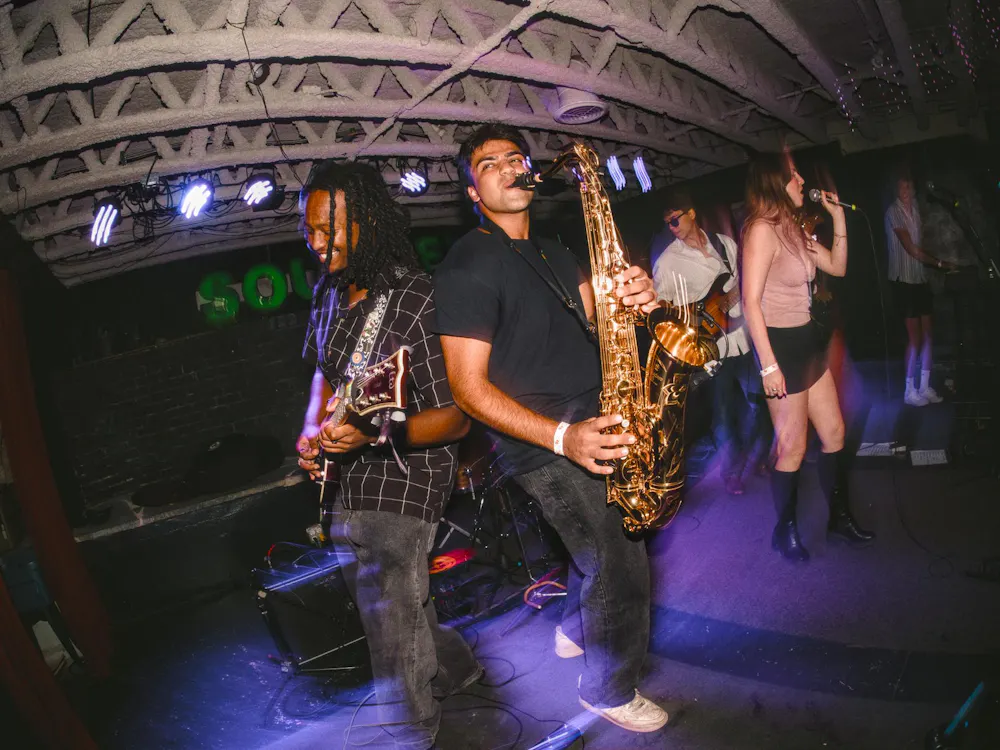
The Southern’s showcase reintroduced student bands on the right note
By Kelsey McIntyre | 2 days agoThe Southern’s concert presented a moment for bands to come together and perform in front of an audience of dedicated music lovers.

Hoo’s Watching: Fall films to embrace the autumn spirit
By Bridget Baile | 4 days agoHere are three essential watches for any reader as they prepare to witness the leaves outside their windows change from green to orange.


