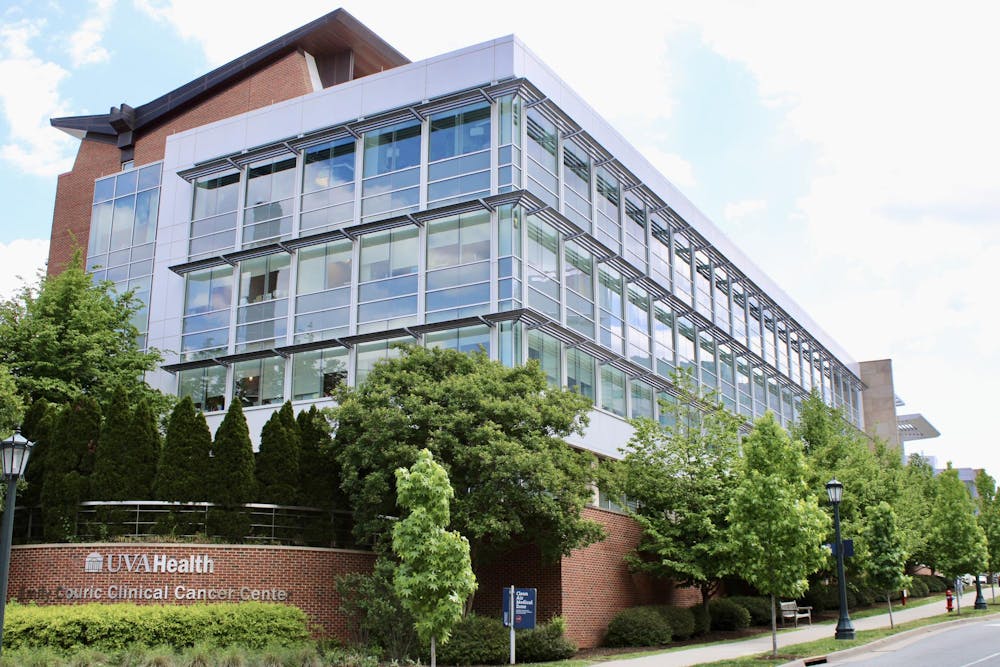
U.Va. Health launched its new Virtual Primary Care On Demand service May 11 — a service that connects patients 18 and older with a U.Va. Health clinician by video from anywhere in the Commonwealth. This service is available Monday through Friday from 6 a.m. to 9 p.m., Saturday from 8 a.m. to noon and Sunday from 1 to 5 p.m.
A media briefing was held Friday over Zoom where U.Va. Health leaders behind the initiative spoke on the program’s details and impact. John Bennett, U.Va. Health’s chief service line and ambulatory operations officer, said the service was created in direct response to a nationwide primary care access crisis that has resulted in patients waiting months to establish care with a professional.
“Emergency departments are crowded, and patients who could have gone to see a primary care physician for their care aren’t able to do so because they have a hard time getting in,” Bennett said in Friday’s media Q&A. “This new offering is designed to meet patients literally where they are.”
Part of the access crisis stems from a growing shortage of primary care providers. According to Rebekah Compton, chief operating officer of the U.Va. Physicians Group, the new virtual initiative has already seen high initial demand to combat this crisis, filling between 15 and 30 appointments every day in its first week and allowing many patients to be seen within an hour or two of booking.
Compton said the service is currently staffed by U.Va. Health clinicians — four full-time nurse practitioners alongside additional part-time providers, including physicians and physician assistants. Providers can treat a wide range of patient needs virtually, according to Compton. This includes preventative care, prescription refills, mental health concerns and chronic disease management, as well as same-day and after-hours availability for minor illnesses, injuries and acute concerns like ear or sinus infections.
According to Compton, insured patients will pay standard primary care co-pays. She added that the service is billed as a significantly cheaper alternative to traditional urgent care or emergency room visits. Patients can be seen regardless of insurance status, and those that qualify for U.Va. Health’s financial assistance programs can access financial support for virtual visits.
As the program grows, Compton said U.Va. Health plans to expand available specialties to include pediatricians and behavioral health therapists to create a “wide variety [of care offerings] to meet patient care needs.” The video format also allows patients to include their support system in their care journey, as the platform allows clinicians to send a join-access link directly to a parent or caregiver for a live appointment.
According to Bennett, the service is designed to function as a long-term primary care option as well as a temporary bridge for patients who have not yet established care with an in-person provider. However, because the staffing is dedicated entirely to the virtual setting, patients who require a physical check-up or follow-up will be referred to the nearest appropriate facility — whether that is a U.Va. Health location or another provider within their community.
Compton noted that for care that requires an in-person component — such as lab work, imaging or physical procedures — virtual providers will connect patients with nearby in-state facilities. These include U.Va. Health labs as well as national diagnostic partners such as LabCorp or Quest.
Care for patients who are temporarily out-of-state can still be accessed, though Bennett clarified that if a prescription is needed, it could be “more complicated” to get that outside of the Commonwealth.
Virtual Primary Care On Demand is a key component of U.Va. Health’s 10-year strategic plan, which, according to Bennett, focuses on access to care as a defining institutional priority.
Compton noted that the breadth of patients using the service in its first week speaks to the scale of the access gap that U.Va. Health is working to fill.
“[Patients] have been coming from all over the state, which is really beautiful,” Compton said. “It just underscores the need for access to care.”
Looking ahead, Compton said the program’s data will serve a purpose beyond simply delivering care — it will help U.Va. Health better understand where accessibility gaps exist across the Commonwealth, including demand for specialist referrals, which will allow U.Va. Health to grow as an institution.
“It gives us more of a pulse on the need for access and locations [in] … need,” Compton said. “We're going to be able to utilize that information to better serve our community and grow strategically as a system."
Beginning July 1, U.Va. Health will extend these services to children aged five and older as specific pediatric providers are integrated into the system.
According to Compton, patients can schedule appointments through MyChart, online through the U.Va. Health website or by calling any U.Va. practice. Additionally, individuals with no affiliation to the University can still make appointments.
Vrinda Vashisht is a staff writer on the news desk. She is a second-year College student studying Neuroscience.
Read More

U.Va. reports increases in rape, aggravated assault and liquor law violations in 2025
By Jaylynn Perez | 3 hours agoThe report has been published annually since 1991 under the federal Jeanne Clery Campus Safety Act.

Yael Grushka-Cockayne discusses artificial intelligence and future of business education
By Jaylynn Perez | 4 hours agoThe webinar — titled “Why Darden? Our Next Chapter” — brought together prospective, admitted and deferred students across Darden’s Master of Business Administration programs.

At rare three-way meeting, City, County and University officials discuss regional coordination
By Luca Bailey | YesterdayThe meeting also gave City, County and University officials an opportunity to discuss areas of mutual concern.