Gov. Abigail Spanberger (D) signed House Bill 6 into law April 8, codifying the right for Virginians to obtain and use Food and Drug Administration-approved methods of contraception. The Right to Contraception Act, which took effect July 1, prohibits the state and local governments from restricting the sale or usage of contraceptives, expanding access to reproductive care.
HB 6 was sponsored by Del. Marcia Price (D-85), and the Senate counterpart, Senate Bill 596, was sponsored by Sen. Jennifer Carroll Foy (D-33).
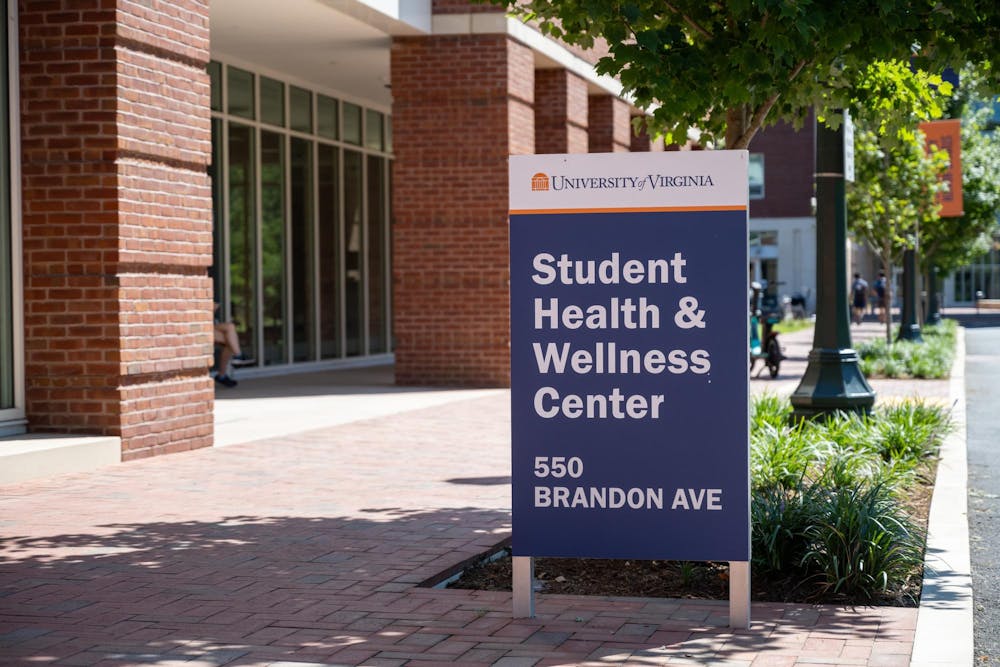
As for how HB 6 impacts the University, Dr. Diane Rozycki, associate director of reproductive and gender-related health at Student Health and Wellness, and Danielle D’Andrea, director of marketing and communications at SHW, said the law will not change how it provides contraceptive services to students.
For U.Va. Health patients, Eric Swensen, public information officer for U.Va. Health, said in a statement to The Cavalier Daily that the bill could potentially improve insurance coverage for its patients in the near future. Insurance companies are required to cover the cost of contraceptives under Senate Bill 361 and House Bill 1182, which Spanberger signed into law April 22 — just two weeks after HB 6.
SHW provides medical and well-being support for University students, while U.Va. Health is the integrated academic health system affiliated with the University.
At the ceremonial signing of the bills June 17, Spanberger said Virginia is the only Southern state where women have the same freedom to make their own healthcare decisions as they did before the Supreme Court’s 2022 Dobbs v. Jackson Women's Health Organization decision.
“Today, we are making sure that is not a matter of political circumstance — it is a matter of law,” Spanberger said June 17.
Different versions of the legislation passed the General Assembly in 2024 and 2025, but were vetoed by former Gov. Glenn Youngkin (R), who said the bills failed to adequately protect the religious freedom of medical providers who opposed prescribing contraception.
“After two vetoes from the previous governor, we now finally have the Virginia Right to Contraception Act,” Price said at the ceremony. “While some seek to undermine the progress we as a nation have made, we are working to protect your power, rights and freedoms.”
HB 6 writes the right to obtain and use contraception into the Code of Virginia, preventing state and local governments from restricting access in the future. Under Virginia law, forms of contraception covered include oral contraceptives, long-acting reversible contraceptives such as IUDs and hormonal implants, emergency contraceptives, condoms, injectables, vaginal barrier methods, transdermal patches and vaginal rings.
The push to codify contraceptive access at the state level came after the U.S. Supreme Court Justice Clarence Thomas wrote in his 2022 Dobbs concurrence that the Court should reconsider its 1965 ruling in Griswold v. Connecticut, which established the right to contraception nationwide for married couples. In 1972, Eisenstadt v. Baird established the right to contraceptives for single individuals as well.
Swensen said that U.Va. Health already provides comprehensive contraceptive services and will continue to do so. He added that the bill could affect how patients access that care going forward.
“One potential impact of the bill is that it may improve insurance coverage for contraceptive services for our patients in the months and years ahead, helping them access the care they need,” Swensen said.
At SHW, Rozycki and D’Andrea also said that the law does not change how the office provides or communicates about contraceptive care.
“SHW providers have been and remain committed to providing contraceptive care and contraception-related information,” Rozycki and D’Andrea wrote in an email statement to The Cavalier Daily.
Rozycki and D’Andrea said SHW offers prescriptions for oral contraceptive pills, patches, rings, injections and other methods, as well as long-acting reversible contraceptives including IUDs and implants. Emergency contraception is also available at SHW. Providers can place IUDs — a birth control device inserted into the uterus — and prescribe ulipristal acetate — an emergency contraceptive pill taken to prevent pregnancy following unprotected sex or failed birth control. Plan B — another emergency contraceptive pill that can be taken to prevent pregnancy following unprotected sex — is also available through the SHW Pharmacy.
In October, Student Council announced a pilot program to provide free Plan B to students through SHW, aiming to reduce cost and access barriers to emergency contraception. The program launched in January.
“Through a partnership with Student Council, U.Va. students are currently eligible to receive one free Plan B per semester by presenting their U.Va. ID at the SHW Pharmacy, helping reduce barriers to timely access,” Rozycki and D’Andrea wrote.
The Affordable Care Act — a federal law signed in 2010 that expanded health insurance coverage to millions of uninsured Americans — requires most private health insurance plans to cover FDA-approved contraceptives without any out-of-pocket costs. However, because SHW does not bill insurance directly, some students require referrals to “community partners” outside of SHW for long-acting contraceptives. SHW providers can help facilitate these referrals for students, according to Rozycki and D’Andrea.
Reproductive health appointments at SHW are typically available same-day or next-day, and there is no cost to meet with a provider. Students can schedule appointments via their HealthyHoos portal or by calling 434-982-3915.
Vrinda Vashisht is a staff writer on the news desk. She is a second-year College student studying Neuroscience.
Read More

At rare three-way meeting, City, County and University officials discuss regional coordination
By Luca Bailey | 20 hours agoThe meeting also gave City, County and University officials an opportunity to discuss areas of mutual concern.

Federal judge upholds Virginia law allowing immigrant students to receive in-state tuition
By Jaylynn Perez and Ruby Budetti | 20 hours agoSenior U.S. District Judge Robert Payne of the U.S. District Court of the Eastern District of Virginia ruled Oct. 5 that Virginia can continue allowing immigrant students to receive in-state tuition at public colleges and universities.

The Faculty Senate discusses international student visa policies, parking challenges
By Jaylynn Perez | YesterdayAdditionally, the Faculty Senate heard from Brie Gertler, interim executive vice president and provost, who gave updates on the ongoing dean searches as well as resources for faculty members with concerns regarding online harassment and academic freedom.