Light weights, lots of reps. Build muscle tone, not muscle mass. Do cardio. Do not do cardio. For those part of the nearly 60 percent of young women who receive health and wellness information from social media, this daunting list of fitness dos and don’ts may sound hauntingly familiar.
Studies have shown that regular weightlifting is tied to numerous health benefits, including increased brain function, a healthier heart, stronger bones and improved overall mental health. However, especially when entering a new gym environment, it can be hard to know how to embark on a fitness journey the “right” way. Add the pressure of being a University student busy with classwork, extracurriculars and resume-building, gym consistency can seem downright impossible.
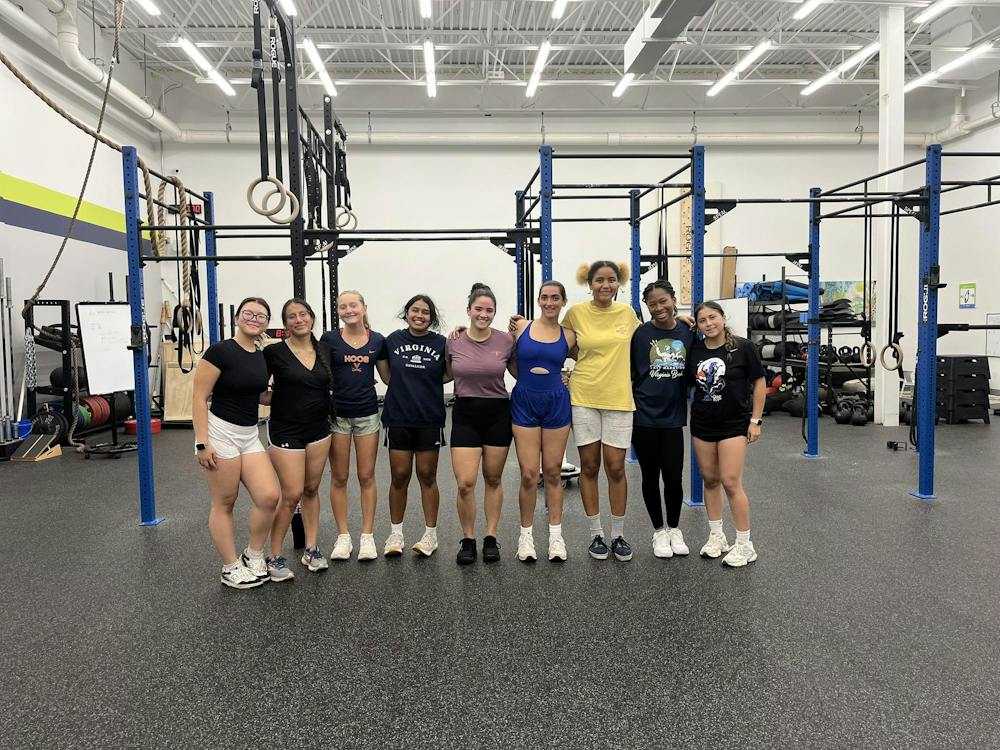
In 2025, four women at the University identified this problem and created a solution, founding the Contracted Independent Organization called Girls Who Lift. Inspired by their own struggles with consistency and finding a wellness community amongst gyms typically packed with male gymgoers, Riya Soni, Girls Who Lift co-founder, president and third-year College student, said Girls Who Lift strives to build a fitness community exclusively for women at the University.
Soni recalled her first time navigating the Aquatic and Fitness Center as a first-year — an intimidating rite of passage for many University gym-goers. She recalled that many of the machines were occupied, the floor was crowded and most discouraging of all — the patrons were primarily male.
“[The gym is] particularly scary for women because lifting and that aspect of sport has always been a boys' club, and it’s really always been for men,” Soni said.
The environment, the equipment and the subsequent feeling of disempowerment were all new for Soni, but she was not ready to give up weightlifting. Inspired by her own experience as an intimidated first-year in a new place, Soni wondered if she could transform the gym into an uplifting experience for women at the University, especially for those just starting out.
In the early months of 2025, Soni recruited three of her friends, third-year students Angel Jiang, Jaya Kinley and Katerina Seal, to help bring the vision to life. A couple of months and many conversations later, Girls Who Lift was born.
“I thought [Girls Who Lift] would be a great way to congregate and make new friends, get a group of girls in the gym together and we can inspire one another,” Soni said. “And the utility of it all is also great. We can hold each other accountable, you can stay consistent.”
By providing this safe space in the gym, Girls Who Lift encourages more women to take up weightlifting as a hobby. According to Soni, creating an all-women space in the gym can also help decentralize the emphasis on fitness for aesthetics, which Soni said is based on beauty standards designed for the male gaze. According to CBC, online rhetoric targeting a female audience often focuses on harmful, unrealistic standards instead of emphasizing the physical and mental benefits of exercise.
Expanding on this topic, Soni said that she is tired of seeing fitness influencers using their bodies as “credentials.” In her CIO and in the lifts she leads, Soni said she emphasizes lifting for utility and function instead of thinness.
“My philosophy is just to prioritize your health and your emotional well-being as opposed to passing fads and what's chic right now, because if there's one thing we know about the feminine beauty standard, it's that you can never be perfect and you can never keep up with it,” Soni said. “Skinny is in one week, bigger and curvier is in another week, and it fluctuates and changes all the time.”
Soni said she believes that although fitness communities exist for women, women are not truly able to exist as themselves within them. According to her, fitness and body standards are created by men, for men, and women are expected to conform to those standards. For her, this CIO changes that.
“Just from a health standpoint, having more muscle as a woman is hugely advantageous,” Soni said. “What's so fascinating about women in lifting culture is that it fundamentally has misogynistic undercurrents. And even though there [are] female communities, or communities for women, predominantly on social media, they are still tailored towards men.”
In their workouts, Girls Who Lift tries to challenge that narrative. Each week, lift leaders — chosen members with more gym experience — send out when they are going to the gym and which muscle group they are hitting. Each lift leader has different workout styles, priority muscle groups, gym times, exercise orders and a preferred on-Grounds gym. All members are invited to each lift, with group sizes varying drastically based on the time and chosen gym location.
One lift leader is Jiang, who began lifting after her sophomore year of high school. She shared that at her hometown gym, patrons were split relatively evenly between men and women, but at the AFC, Jiang found that was not the case. She said she wanted to find a group of like-minded women to make the new gym environment feel less daunting and more fun, and Girls Who Lift was her answer.
When lifting is fun, Jiang said she feels more compelled to go to the gym, a habit that allows her to feel more confident in her own skin.
“I think mental benefits [of lifting] outweigh physical benefits, obviously,” Jiang said. “I think if you feel good, you look good. Even if you don't see a change immediately, you still have that accomplished feeling after you walk out of the gym.”
Beyond the boost in self confidence, other members flock to the CIO for its “beginner-friendly” draw. At each workout, Girls Who Lift strives to create a safe space for beginners by ensuring there is an experienced lifter always available.
According to Raha Montazeri, lift leader and third-year College student, lift leaders primarily assist in correcting form, explaining machines and answering questions to help beginners feel more comfortable.
“To be able to share something that I have loved doing for so long with a group of girls who haven't gotten the experience … or haven't had the opportunity to start lifting has been really rewarding,” Montazeri said.
Soni said that lifting can be intimidating for beginners, especially for women in a male-dominated space.
“I think there's also a lot of stigma around being a beginner. If you look like you're a beginner in the gym, people are going to look at you funny,” Soni said. “I think that is only compounded for women, right? Because you're automatically going to get looks if you're one of the only women in a very male-dominated space.”
Additionally, members can choose to either stick to the lift leader’s workout regimen during workouts or follow their own plan and use the meet-ups for familiar faces in the gym rather than instruction. Each day has at least one scheduled lift, and members can attend as many or as few as they desire. According to Soni, this flexibility is the biggest draw for University students.
“I don't want to waste people's time, and I also want to permit people the ability to get in a good workout whenever they want to, however they want to,” Soni said. “And so there's no dues, there's no commitment requirement, there's no nothing.”
Unlike other on-Grounds group fitness, like U.Va. Recreation classes at the AFC and North Grounds that cost at least $30 a month, Girls Who Lift provides a group fitness environment entirely for free. Occasionally, the club offers group classes at Charlottesville non-University gyms that do cost extra, but all regular weekly lifts are cost-free.
When Kinley first arrived on Grounds, the AFC gym environment was uncharted waters. Kinley did Olympic weightlifting in high school, which requires heavy barbells that are banned at University facilities. Although she was well-versed in free-weight technique, she did not know how to use the AFC machines.
When Soni approached her with the idea for Girls Who Lift, Kinley said she was thrilled to spearhead a space where she could both learn from other women and share her expertise from years of CrossFit and Olympic weightlifting.
For Kinley, Girls Who Lift became an uplifting community that transformed a gym experience that she dreaded because of the intimidating learning curve of navigating how to use machines.
“I was lonely,” Kinley said. “I was bored. So going with a group of girls just immediately helped me be so much more motivated, so much more committed to the gym and lifting was so much more fun.”
It is this camaraderie, Soni said, that she cherishes about Girls Who Lift. For her, having a gym space that is meant for women is essential to de-centralizing the culture of weightlifting.
For students interested in joining Girls Who Lift, more information can be found on their official Instagram and GroupMe — all fitness levels are welcome.

Sadie Adams is a senior associate on the life desk. She is a second-year College student, planning on majoring in Public Policy and Leadership. Sadie is from Crozet, Va., and she enjoys writing about local restaurants and community organizations. Outside of The Cavalier Daily, Sadie is involved in the Civic Cornerstone Fellowship, Undergraduate Women and Law and is a workout coach at Formula Complete Fitness.
Read More

Cville Sabroso Festival brings a taste of Latin American cultures to the Ting Pavilion
By Summer Hoffman | 2 days agoInside the Ting Pavilion, a sea of Latin American artisans, food vendors and performers greeted festivalgoers.

Three syrup recipes that will let you skip the coffee line all semester
By Eshani Patel | 3 days agoWhile it may sound intimidating, making your own latte syrup is remarkably easy — and will save you plenty of time and money.

My affliction of cougar-ism
By Madigan Wirkus | 5 days agoAlthough a fourth-year dating a third-year may seem like a minor discrepancy to most, I find myself subconsciously justifying the age gap constantly.