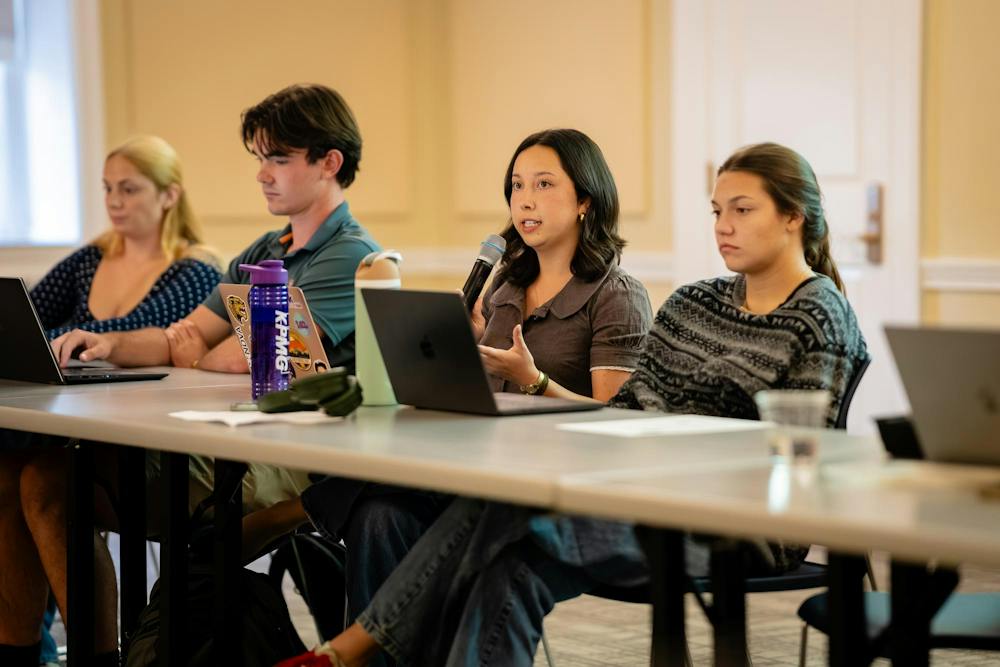
Student Council met Tuesday for its fifth general body meeting of the academic year. At the meeting, Council members took part in a roundtable discussion with University administrators to share their input on the University’s next strategic plan. The Council also heard updates from Executive Board members regarding the upcoming Fall 2026 elections and new investments in free Sexually Transmitted Infection testing kits for students.
The Strategic Planning Committee was appointed in July by University President Scott Beardsley to compose the University’s next long-term strategic plan. Members of the Committee include faculty, Board of Visitors members, staff, students and several University alumni. By conducting surveys, interviews and meeting with student organizations and other community members, the Committee aims to gather extensive community input as it drafts this document.
Representing the Committee were Marc Johnson, vice president for strategic initiatives in the Office of the President, and Lucas Fuller, presidential fellow in the Office of the President. Johnson led a roundtable discussion to gain student input, stating that feedback he heard Tuesday would be reported back to the Committee, and that a number of other listening sessions will take place with students and student leaders across Grounds, including with the Class Councils and CIOs.
“As you've hopefully heard, one of the things we're really seeking to do at this stage is listen a lot to the community,” Johnson said. “[To] get your sense both of where U.Va. sits today and what we should maintain about the university, and also start to look to the future, and we want to make sure that we have a student voice as part of that.”
As part of the discussion, Johnson asked members of Student Council to discuss amongst themselves which elements of the current student experience should be “strengthened, built on or protected.” Key themes that came across as part of this segment were the importance of upholding high standards of student self-governance, encouraging strong student-professor relationships and providing adequate support for student-athletes.
Representatives taking part in the discussion then reorganized into different small groups to consider areas where they believe the student experience leaves room for growth. One central topic of this segment was ensuring the University is equipping students with the adequate skills to succeed in a post-graduation environment heavily impacted by the advent of artificial intelligence.
Ian Travis, co-chair of community concerns and fourth-year College student, said that he would like to see the University update its guidance to embrace the technology to a greater degree, noting that he believes clearer guidelines would be helpful for students heading into midterm exams.
Other speakers noted that expanded usage of AI requires strengthened local electrical grids due to higher demand, or it could otherwise lead to higher electrical costs for residents, including students living off Grounds.
Travis also noted that he would like Counseling and Psychological Services to expand their student care resources. He further noted that advising within each school could be more engaging to help students achieve personal goals.
“A lot of us have not necessarily [had] the best advising experiences,” Travis said. “They don’t know our major or anything like that. So trying to make U.Va. not the self-help capital of the world. That would be really great.”
Grace Blake, chief of cabinet and fourth-year College student, raised concerns about the accessibility of courses within the core disciplines — general subject areas that all undergraduates must study, regardless of their major. She pointed to the Department of Politics, where courses within the department that fulfill core disciplines are “phenomenal,” but have been decreasing in number over the past few years.
“[The lack of options] makes it really hard to get classes even in the third year,” Blake said. “[It] is disheartening to see such a strong department with really wonderful faculty start to struggle.”
Michael Mitchell, Student Council president and fourth-year Commerce student, also expressed excitement for Fall Student Elections, in which the Class of 2030 will elect a First Year Council president, First Year Council vice president and three First Year Student Council representatives. Voting will also open for two International Student Council seats, a Transfer Student Council representative, the School of Medicine Student Council representative, the Graduate McIntire School of Commerce Student Council representative and the Graduate School of Data Science representative. Campaigning is set to begin Monday and voting will occur from Oct. 7 to Oct. 10, with results released the day after voting closes.
Mitchell said that he anticipates many candidates will run in the elections, encouraging students to spread the word to classmates whom they hope to see contest these seats.
“There’s a lot of excitement about student self-governance,” Mitchell said. “We have a lot of different options [and] if you know anyone who would be interested or would be a good fit, please pass that along.”
In addition to elections, representatives shared updates regarding financial resources for student initiatives. Blake shared that Student Health and Wellness is matching the $20,000 which the Council allocated to fund free STI testing for students in this year’s budget.
Further, Blake shared that Student Council has developed a new Financial Accessibility Net Cost Calculator, which allows students to calculate housing, books and general costs such as tuition. Blake said that the calculator must be updated to include the most recent cost estimates for the 2026-27 school year, and that it will then be made available on the Council’s website.
In other financial updates, the comment period for the proposed raise in Student Activities Fees is in week two of three. Students and community members can comment on the legislation during the public comment period of regular Student Council meetings. The proposed raise will increase student fees by $2 — or 3 percent — increasing the current fee from $62 to $64 for the 2026-27 academic year.
As part of her updates, Law School Rep. Stephney Tucker said she requested follow-up information from Vice Dean Ashley Deeks regarding a Composting and Waste Management Proposal to bring composting to the Law School. According to Tucker, students put forth the proposal last spring, and are hoping to receive information about the “next steps” towards implementation in early October.
Student Council did not entertain any new legislation to make time for committee breakouts, according to Mitchell. It will reconvene Tuesday at 6:30 p.m. for its regularly scheduled general body meeting.

Lucia Gambacini is a senior writer on the news desk covering Student Council and other topics pertaining to student life and government. She is a third-year College student from Richmond studying Political and Social Thought.
Read More
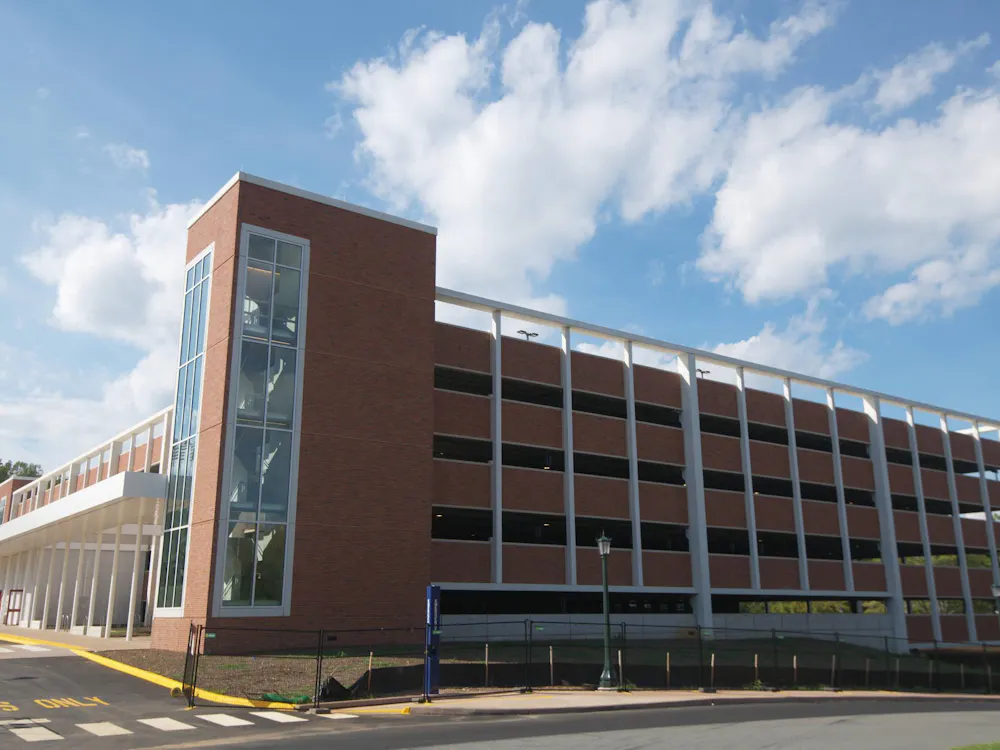
Parking on Grounds — what has changed this semester?
By Charlotte Gabriel | 1 hours agoAccording to University students interviewed by The Cavalier Daily, several expressed frustration with high parking prices on Grounds, as well as the difficulty in finding available parking in general.
Virginia colleges workshop three-year bachelor’s degrees
By Luca Bailey | 1 hours agoIf the effort is successful, participating schools in Virginia and Ohio will join at least 70 higher education institutions across more than 26 states that have already adopted three-year programs in some capacity.

How is the University preparing for its 2027 accreditation reaffirmation process?
By Jaylynn Perez | YesterdayThe University submitted its Compliance Certification in September, according to University Spokesperson Bethanie Glover.