Over the summer, the State Council of Higher Education for Virginia announced that it would convene a working group composed of representatives from Virginia’s and Ohio’s higher education institutions to workshop a model for three-year bachelor’s degrees in their respective states. The announcement comes amid a national trend of rapidly escalating tuition costs at both public and private universities, and currently, the University is not a representative of the SCHEV working group.
Bob Spieldenner, SCHEV’s senior associate for Communications and Outreach, outlined the group’s goals in a press release June 25. Spieldenner wrote that over the next year, faculty, administrators and other representatives from both state’s colleges and universities will work with national experts and organizations to consider how “policy, accreditation, curriculum and program design” will square with the existence of these new degrees.
The goal of the meetings over the next year, Spieldenner wrote in the press release, is that SCHEV hopes all participating institutions across Virginia and Ohio will be able to adopt two 90-credit, three-year bachelor’s degrees in programs of their choice by spring 2028, and that the programs they design will serve as a national model for three-year degrees in the U.S. moving forward.
If the effort is successful, participating schools in Virginia and Ohio will join at least 70 higher education institutions across more than 26 states that have already adopted three-year programs in some capacity. Axios reported in July that 11 public Virginia universities had expressed a “preliminary interest” in establishing such programs once the group completes its efforts. These schools include Virginia Tech, Virginia Commonwealth University and the College of William & Mary.
Spieldenner told The Cavalier Daily in an email statement Sept. 9 that the University is not among the schools which have sent representatives to develop this new framework, nor has it expressed preliminary interest in the initiative. In a separate written statement to The Cavalier Daily, University Spokesperson Bethanie Glover confirmed this, but indicated that the University is closely monitoring the working group’s findings to inform its future decision-making on the issue.
“If any of U.Va.’s 12 schools express interest in exploring a three-year undergraduate degree program, we will be glad to build on what the working group learns as we consider how this could complement our degree offerings,” Glover wrote.
Regarding the current trend of rising tuition, figures from the Education Data Initiative — an organization that compiles data on higher education in the U.S. — indicate that between 2010 and 2025, the average cost of tuition rose by nearly 37 percent. Advocates of the addition of three-year, 90-credit bachelor’s degrees argue that by compressing the traditional timeline and graduation requirements, this change could mark a meaningful step towards making degrees in certain fields more affordable and accessible.
In the June press release, Spieldenner wrote that SCHEV’s new initiative will “better [align] higher education with student and employer needs,” helping to realize goals in the Commonwealth’s higher education strategic plan to decrease the cost of college attendance. In Virginia, the 2025-26 Tuition and Fees Report by SCHEV indicated that the average price tag of the cost of attendance — including tuition, fees, room and board — for in-state students rose to $29,538 in the 2025-2026 academic year, a 3.1 percent increase from the year prior.
In the three years since the idea of an abridged bachelor’s degree has gained traction, however, it has also drawn opposition. Shortly after SCHEV released its statement June 25, the American Association of University Professors put out a statement June 28 in which it strongly criticized the concept of an abridged, three-year bachelor’s, citing its potential to “devalue” the educational experience without addressing “the root cause” of the college affordability crisis.
“Higher education should be affordable for all. This will require expanding and strengthening Pell, TRIO and other federal and state-level programs — not asking students to accept less education for the same credential,” the AUUP statement reads.
Notably, the University also has several measures aimed at ensuring its degrees remain affordable for the vast majority of students. On his first day in office in 2018, Jim Ryan, School of Law professor and former University president, announced that the University would pledge to meet 100 percent of the demonstrated financial need of all in-state and out-of-state students. Under Ryan’s plan, the University covered tuition costs for those whose families made less than $80,000 per year, while those from families making less than $30,000 per year qualified for free room and board as well. Ryan announced the expansion of this tuition assistance pledge in late 2023, raising the thresholds for free tuition to $100,000 and for room and board to $50,000.
At a meeting of the Board of Visitors June 5, University President Scott Beardsley also outlined continued investments in the University’s financial aid programs as a key priority as his administration works to develop a proposal for the next strategic plan.
What does a three-year degree look like?
The working group must reconcile this new model with a variety of factors, including the standards of accreditation agencies — independent organizations which certify that higher education institutions are meeting certain qualitative standards, thereby enabling them to receive federal aid. Inside Higher Ed reported in 2025 that accreditation agencies had been averse to the idea of altering their standards and allowing institutions to award bachelor’s degrees to students for less than 120 credit hours of completed coursework.
As many accreditation agencies come around to the idea of altering their standards and allowing for three-year programs, they have laid out clear requirements which these programs must follow in order for schools to remain accredited. The Commonwealth’s new model is no different, and will be heavily shaped by the standards of its accreditation agencies.
The vast majority of higher education institutions in the Commonwealth — including the University — seek accreditation from the Southern Association of Colleges and Schools Commission on Colleges, which released a set of guidelines for its schools to offer reduced-credit-hour bachelor’s degrees in late 2025. These guidelines state that SACSCOC-accredited institutions may offer three-year degrees “only in specialized or applied disciplines” which prepare students for the workforce, among other requirements. The press release did not elaborate further what these disciplines include.
The University of Lynchburg — a private institution — was the first to receive the organization’s accreditation for two three-year degrees in December 2025. Lynchburg now offers these “MaxImpact” abridged bachelor’s degrees in education and public health, for which it began accepting students in March 2026.
SACSCOC also prohibits institutions from moderating their general education requirements for those in abridged bachelor’s programs. Georgetown University wrote in an April 2 post that for most three-year programs, the 30 credit hours which students lose are typically elective courses.
The three-year program also has the potential to limit prospective graduate school opportunities, according to one organization that encourages implementation of the programs. A January 2026 study by The College-In-3 Exchange found that the majority of graduate school admissions leaders across nine selected institutions did not believe an applicant would qualify for their programs if they received less than the traditional 120 credit hours as undergraduate students.
Notably, some schools like Lynchburg expressly guarantee eligibility for corresponding master’s degree programs to those who complete three-year degrees. At Lynchburg, those who earn the Abridged Public Health degree can apply for the Master of Public Health program. Those who complete the Abridged Educational Studies Degree can apply for the Master of Education in Curriculum and Instruction program.
What can the University do moving forward?
Spieldenner maintained that even without respect to the ongoing efforts of the working group, any public university can independently submit a 90-credit bachelor’s curriculum to SCHEV to request its approval. While he said this is something no public institution is currently doing, the University will have this option moving forward as it monitors and learns from the working group’s findings and eventual model.
“The final roadmap will provide guidance to all institutions,” Spieldenner wrote.
Since SCHEV’s announcement over the summer, other states have made similar progress towards establishing three-year degree frameworks. The Oklahoma State Regents for Higher Education approved four accelerated degrees across three schools Sept. 3. New three-year degrees across these schools include an accelerated bachelors in applied social work at the University of Oklahoma and accelerated applied science degrees in artificial intelligence and business essentials and applications at Oklahoma State University.
Texas Gov. Greg Abbott also announced a similar working group that will develop a statewide three-year-degree framework in his state Sept. 16.
Spieldenner said that the working group in Virginia has been meeting regularly since SCHEV made the announcement, but that there were no major updates on its progress thus far at the time he provided his statement.

Luca Bailey is a third-year College student majoring in politics from Free Union, Va. As a staffer on the news and video desks, he has covered topics ranging from the General Assembly and state elections to local politics and University governance. He is also The Cavalier Daily’s beat writer for the Charlottesville City Council.
Read More
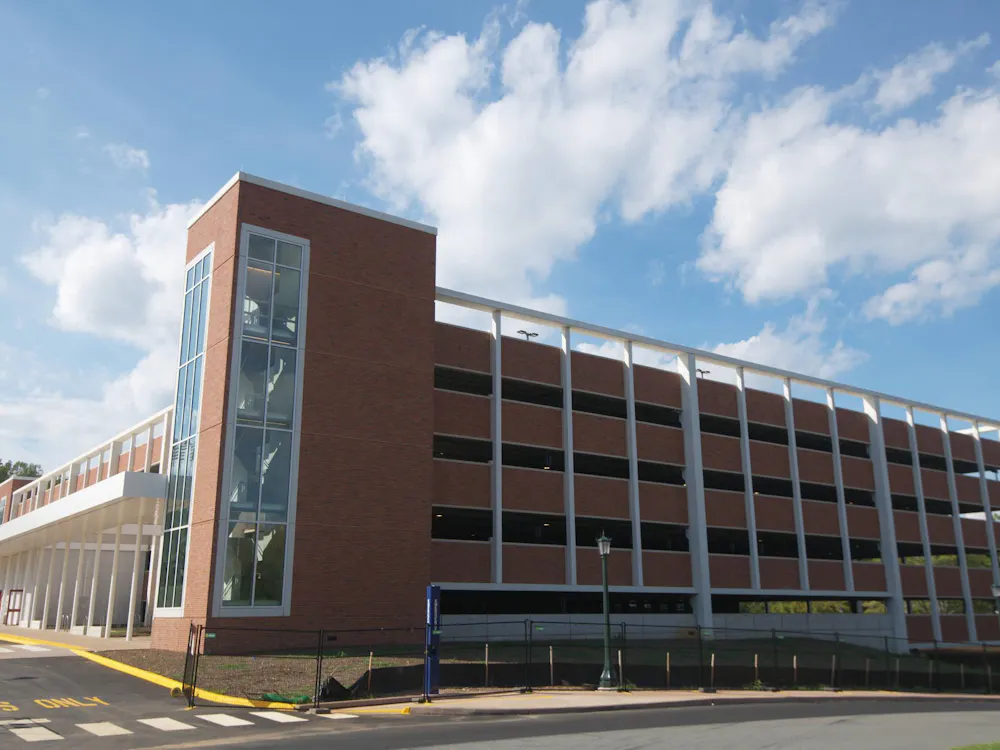
Parking on Grounds — what has changed this semester?
By Charlotte Gabriel | 5 hours agoAccording to University students interviewed by The Cavalier Daily, several expressed frustration with high parking prices on Grounds, as well as the difficulty in finding available parking in general.

Student Council connects with University’s Strategic Planning Committee
By Lucia Gambacini and Reilly Auld | 5 hours agoThe Council also heard updates from Executive Board members regarding the upcoming Fall 2026 elections and new investments in free Sexually Transmitted Infection testing kits for students.

How is the University preparing for its 2027 accreditation reaffirmation process?
By Jaylynn Perez | YesterdayThe University submitted its Compliance Certification in September, according to University Spokesperson Bethanie Glover.