Editor’s note: This article contains mentions of sexual assault.
Here we are again.
Another alleged sexual assault case on a college campus. This time it is Cornell’s turn in the headlines. But it could have been UCLA. Or Indiana. Or Dartmouth. Or USC. Or Penn State. Or us.
In fact, it has been. At all of them in the last dozen years.
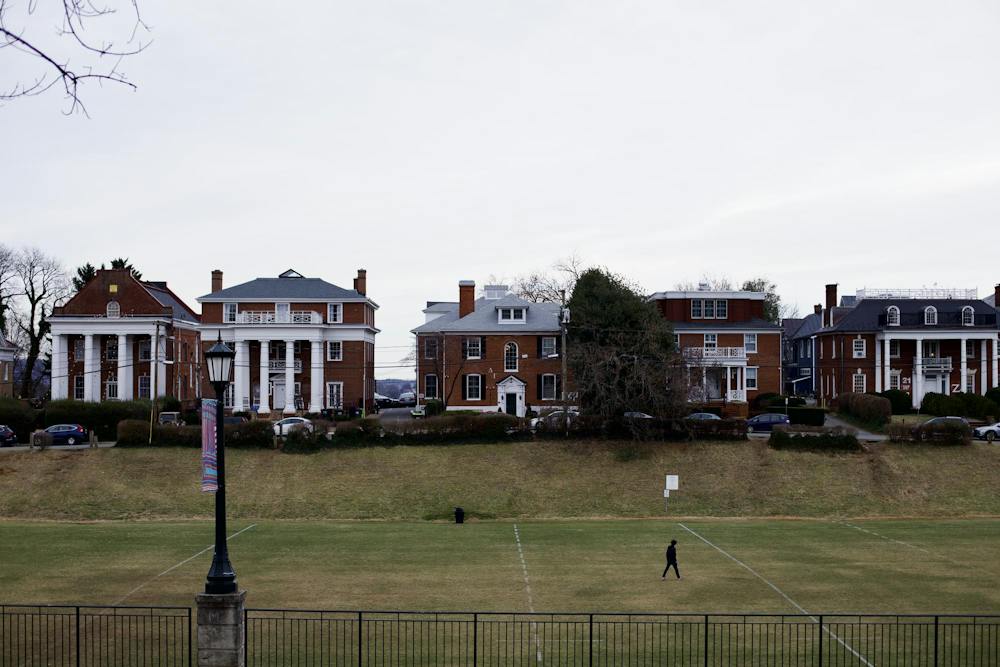
And the common denominator is that the venue of the alleged crime in all of them was a fraternity house, or an extension thereof. And these are just the ones that have been exposed and reported.
The University, though, separates itself from the rest in that the 2014 accusation published in Rolling Stone proved to have been fabricated. In that case, the accuser’s story simply collapsed under the weight of its preposterous details. I recall relying on my journalistic instincts to surmise that it was bogus almost immediately upon reading it, at a time when, according to what the wonderful then-University President Emeritus John Casteen told me, everyone on Grounds was taking it at face value.
But why were they? Very simple — because most people know what really goes on in many, if not most, fraternity houses. At first glance, it was not the least bit hard to believe that such a heinous act could happen.
Of course, in response, the University trumpeted new rules and regulations that fraternities would have to follow. And, of course, none of those lasted more than a millisecond.
Still, that is longer than the nanosecond that effective oversight to prevent hazing ever lasts. Anyone who tells you that hazing no longer occurs during initiation of new “brothers” is either ignorant of it or is lying. Nothing is as repugnant as sexual assault, but hazing comes close.
As a first-year student at the University in the spring of 2016, my younger son joined a fraternity and quit that fall, disgusted by the debauchery and hazing that continued to exist less than two years after the University’s supposed post-Rolling Stone crackdown.
Has the situation improved on Rugby Road since then? Well, in the last two years alone, at least five — count them, five — fraternities at the University have received suspensions or other sanctions for hazing, the most recent of which was Sigma Nu less than a month ago.
In 2024, Kappa Sigma made it impossible for the University to ignore the hazing that was going on in its house after a new “brother,” or victim, was hospitalized with life-threatening injuries because of it. The fraternity’s Fraternal Organization Agreement was terminated, forcing it to leave its house and cease operations, with reinstatement not an option to be considered until 2028. Sounds quite harsh on the surface, does it not?
But, brazenly, Kappa Sigma has continued to operate out of a house just off Grounds and has participated openly in inter-fraternity sports, competing with recognized fraternities and even winning the “fraternity basketball classic” last spring and the fraternity intramural soccer league in 2025.
In a recent newsletter of theirs to member alumni that I gained access to, there is not even a hint of humility. They boast of their achievement in recruiting “an excellent group of 27 gentlemen” for their 2026 pledge class and cheerfully report that “The annual zoo party kicked off the second semester with a bang. The brothers were excited to decorate the house and buy goldfish.”
Wait a second. Is this not the fraternity that is supposedly being punished for almost killing someone? Let’s get real. No way that the University administration does not know that it is pretty much business as usual at Kappa Sigma. So much for the “tough” punishment it hit them with.
So why do universities look the other way? Why do they endlessly tolerate the gross conduct of fraternities that operate in a despicable manner right under their administrations’ proverbial noses?
The unvarnished truth is exposed by John Hechinger in his 2017 book, True Gentlemen: The Broken Pledge of America’s Fraternities. Sadly, as is so often the case, it comes down to money, specifically the fear of losing large donations from the vast network of fraternity alumni if a university were to take the type of action that is needed to truly put an end to the egregious excesses that define so many of the houses. Decades of now-affluent or wealthy fraternity members wield the power.
“Money should never be a reason for not doing what is right” was a frequent refrain of a late friend of mine. Obviously, he was out of step with the prevailing mentality of today’s college administrations, and ours is no exception. In fact, after last year’s disgraceful capitulation to a corrupt Department of Justice, the University may well be on the “most notorious” list of institutions that prioritize money over integrity.
The thing is, pretending to be blind to the repeated atrocities perpetrated by fraternities, or to only dole out easily circumvented punishments to them, such as the seven-month ban on fraternity parties that Cornell announced this week, is nothing new. It has been going on for as long as I can remember.
And the increasingly pressing question is how many more hazing hospitalizations, forced alcoholic stupors and — let’s be blunt — rapes and deaths must there be before universities finally take real action to stop it, regardless of financial consequences?
I fear that we, and Godot, all know the answer.
Stephen Wells was the Editor-in-Chief of The Cavalier Daily in 1972-73. He can be reached at opinion@cavalierdaily.com.
The opinions expressed in this guest column are not necessarily those of The Cavalier Daily. The guest column represents the views of the author alone.
Read More

ADDISON: Criticism without introspection is a waste
By Lucas Addison | 23 hours agoThe Community of Trust must be more than a phrase we invoke to describe ourselves. It must be a standard by which we hold ourselves accountable.

HAWKINS: Florida gets education affordability right — Virginia does not
By Joshua Hawkins | 2 days agoFlorida already has better weather — we do not need to let them beat Virginia at education affordability as well.

ANDERSON: Why I am ‘dark woke’ — and you should be too
By Beckett Anderson | 3 days agoArising from an internet meme, dark wokeism offers Democrats a youth-powered way out of the hole they find themselves in.