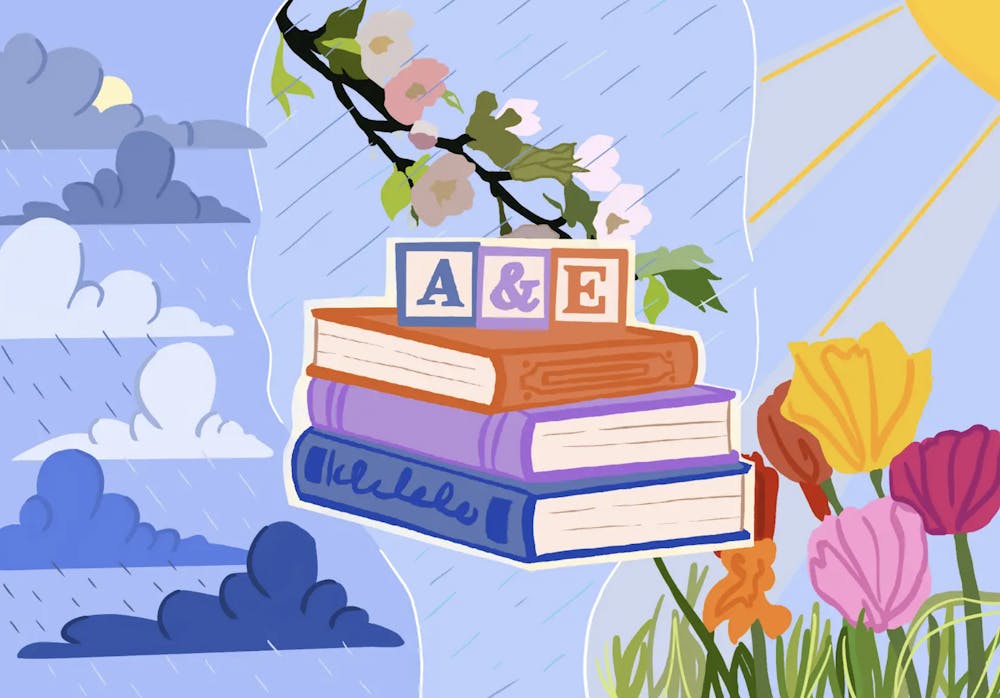
Nearing the end of the spring semester, students are finally able to feel the warmer weather after months of snowball fights, puffer coats and icy roads. With the spring equinox March 20 and summer officially starting in June, March, April and May are a triad of spring and, by default, April is the “middle child” of the three.
The common saying of “April showers bring May flowers” cements April’s status as a neglected month, especially relative to its spring siblings. It is not the beginning of spring, nor the end. It is not a stepping stone to summer, but rather a reminder that final exams are approaching. This list features three popular stories that can relate to April’s spot in its spring family — tales with prominent middle-child characters who, much like the month of April, tend to be less of a focal point in their respective families.
“Little House in the Big Woods” by Laura Ingalls Wilder
Published in 1932, “Little House in the Big Woods” is the first in the nine-book series of “Little House on the Prairie” novels, widely known for their themes of resilience, family and change. Laura Ingalls, the book’s primary protagonist, is based on the author, Laura Ingalls Wilder, who drew primary inspiration for the series from her own childhood experiences. The family also consists of Ma and Pa, the girls’ parents, Laura’s older sister Mary and her baby sister Carrie, making Laura the middle child of the family.
Throughout the first book — and the entire series — there is an evident sibling rivalry, specifically between Laura and Mary. Since Laura is the middle child in her family, she feels a sense of inferiority compared to her older sister. Laura constantly tries to mirror Mary and prove herself to Ma and Pa without being categorized alongside the immaturity of Carrie, emphasizing the angst and uncomfortability of Laura’s role as the middle child.
There is a character with whom many readers can identify with in the “Little House on the Prairie” series, whether that be an oldest child, a youngest child or an April-esque middle child like Laura, whose relatability is amplified by her drawing the focus of the novel’s perspective.
“Harry Potter and the Chamber of Secrets” by J.K. Rowling
Most people who have been introduced to Harry Potter are familiar with the Weasley’s, the family of eight eclectic members with bright red hair. Ron Weasley, Harry Potter’s best friend and a prominent character in Rowling’s books, is the fifth of seven siblings, making him one of several middle children. In the second book in the series, “Harry Potter and the Chamber of Secrets,” Harry spends the summer with the Weasley’s, allowing readers to see their family dynamic, with Harry fitting in as an additional middle child alongside Ron during these few months.
The entire environment of the Weasley household is extremely busy and chaotic, with each of Ron’s older siblings representing distinct, strong personalities. Ron’s brother, Percy, is a prefect at Hogwarts and Fred and George — Ron’s twin older brothers — are extremely mischievous and comical. Ron also has two other brothers — Bill and Charlie — who are older than Fred and George and are less present in the books, but their age and wisdom further draw the family’s attention away from Ron. Moreover, Ron’s younger sister, Ginny, is the only girl in the family, making Ron feel the need to earn his place amongst his siblings. Ron’s role relative to the rest of his family is one of a quintessential middle child, often overshadowed by older and younger siblings, making the need for him to make his presence known in a large family filled with dominant personalities.
“To All the Boys I’ve Loved Before” by Jenny Han
Han’s novel introduces readers to the character of Lara Jean, a hopelessly romantic 16-year-old trying to deal with the pressures and social expectations of high school. Also well-known for writing “The Summer I Turned Pretty,” the author crafts the story of the Song Covey family, with Lara Jean being a middle child in her family of four. The book begins with Margot, the eldest sister, going to college, leaving her father — a widower — alone to take care of her two siblings.
Since Lara Jean is the middle child, still at home with her younger sister Kitty, Kitty feels comfortable interfering with Lara Jean’s personal affairs and feelings. Lara Jean has to deal with the repercussions from Kitty’s decisions, while also taking on more responsibility in the household with Margot away at college. Lara Jean wants her father to see her like an adult, able to think and make decisions for herself, but her immature decisions make it hard for those beliefs to surface as she navigates the line between childhood and adulthood. Han writes the novel in the first-person perspective, allowing readers to feel as if they are personally on this intense journey with Lara Jean. For anyone looking to revisit their inner 16-year-old self, this book is the perfect opportunity.
April may be a month full of rain and apprehension, as students approach the end of the academic year without having reached the finish line quite yet. Still, the April showers are necessary in order to produce the May flowers. April is a crucial period of growth, providing time for the season to fully develop and for individuals to distinguish their own identities. One should never underestimate the middle child, in any medium, because they have meaningful and important messages to share, using their strengths — and even their insecurities — to impact the people around them.
Read More

The world kept scrolling
By Aditi Burra | 11 hours agoI began to find a sense of peace in not knowing. I felt so much more at ease with myself and my life, all because I deleted a few apps on my phone.

Writer’s Eye brings vivid ekphrastic writing and reflective art education to the Charlottesville community
By Cecilia Sherman | 11 hours agoThis fall marks the 40th annual Writer’s Eye competition presented by the Fralin Museum of Art at the University.

On Repeat: Throwback songs for a killer fall playlist
By Madeline Unkel | 11 hours agoFrom psychedelic rock to post-punk, these four throwbacks sound as though they could have been pulled straight from a cult classic horror film, bringing that same sense of suspense to the season without relying on traditional Halloween hits.