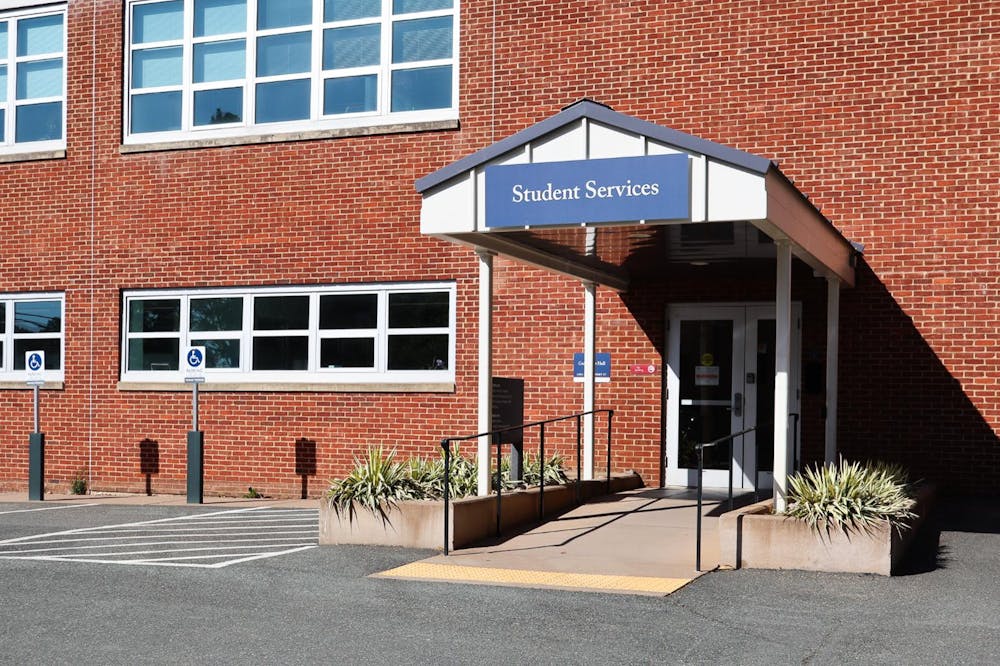
The Board of Visitors Finance Committee unanimously approved an increase in tuition, dining rates and other mandatory fees for the 2026-27 school year April 16. The Finance Committee is responsible for the University’s financial affairs and business operations, and the Committee manages the budget, tuition and student fees.
At the meeting, Jennifer Wagner Davis, executive vice president and chief operating officer, explained the reasons behind the raise in tuition and fees. Specifically, Davis cited salary increases for professors resulting from legislation passed by the General Assembly as a key factor in the tuition increase. She also cited the minimum wage increase, collective bargaining and inflation as contributing factors.
On average, the tuition rate for all undergraduate schools at the University is set to increase by 3.6 percent for both in-state and out-of-state students. Some additional changes include a $152 increase in mandatory fees — $4 to address increasing education and general needs and $148 to address increasing non-E&G needs. Some non-E&G needs include the growing volume of students using counseling and psychological services and expanding access to mental health services. The Committee also approved a 4.8 percent average increase in meal plan costs and a 5 percent increase in the cost of double-room housing.
The Cavalier Daily spoke with six students about their reactions to the increase in the cost of attendance. Students shared that they are combatting the rising cost of attendance by seeking outside financial assistance, seeking employment opportunities at the University or graduating early. Many of the students said they did not know that the Board was planning to increase the cost of attendance, and, at the time of their interviews, five did not know that the change had been approved April 16.
Students noted that the cost of attendance has steadily risen over the past years, and fourth-year College student Coco Clement said since her first year, the tuition has increased every year. In December 2021, the Board approved a 4.7 percent increase in base undergraduate tuition and fees for the 2022-23 school year, and a 3.7 percent increase for the 2023-24 school year. In December 2023, the Board approved a 3 percent increase in base tuition for both the 2024-25 and 2025-26 school years.
“Coming from an out-of-state student, I pay around $77,000 per year, which actually goes up every single year because of inflation and [other factors],” Clement said. “I know that for in-state students, [the University] gives a lot of financial aid, but especially for out-of-state students, we find that it’s a lot harder to both apply for aid and receive that aid.”
Clement said that as an out-of-state student, she already finds paying for college to be a heavy financial burden, making the increased cost of attendance “very concerning.”
According to an email statement from University spokesperson Bethanie Glover, the University is the only public university that practices need-blind admissions and meets 100 percent of demonstrated financial need for all undergraduate students. Additionally, Glover said there are “ample opportunities” for out-of-state students to reduce their cost of attendance, like through scholarships, grants and work-study programs.
“As was shared in the Board of Visitors Finance Committee meeting last week, 72 percent of the Class of 2025 completed their U.Va. undergraduate degree with no debt, reflecting the University's strong commitment to protecting affordability and providing opportunities to reduce costs,” Glover said.
First-year Engineering student Ryan Liu is an out-of-state student who receives financial aid from the University, which was a main reason for his decision to commit to the University. Liu noted that there are other students paying a significant amount to study at the University, so further increases in the cost of attendance impose an additional burden on those students.
“College ultimately is an opportunity that not many people have, and unfortunately, this may cause some people to not choose U.Va.,” Liu said. “One of my reasons for choosing U.Va. was that it was one of my most affordable options, even as an out-of-state Engineering student, because [of] the very generous financial aid package that U.Va. gave me.”
Liu said he is not sure how much of the new cost of attendance will be covered by his financial aid package.
Second-year Engineering student Rowan Mueller said he is aware that tuition is already about $10,000 more expensive for students in the School of Engineering and Applied Science compared to those in the College of Arts and Sciences. He added that the growing tuition cost further supports his decision to graduate one year early.
“I am graduating a little bit earlier, so I’m only paying for three years of college, and part of the reason I’m doing that is because the tuition is so high,” Mueller said. “It makes more financial sense for me to graduate earlier, so I can get into the workforce a year earlier and start making money.”
As for the $152 increase in mandatory fees, Mueller said he does not see that increase as being problematic because the fees are only rising by a small amount and are being used to address student needs.
First-year College student Alice Zhang pays in-state tuition, but does not receive any aid from the University, and is planning to take out student loans and work to help pay for the tuition. Zhang said the tuition increase adds to the burden of her current efforts to pay for her tuition.
As for the increase in mandatory fees, Zhang said she understands these fees are being raised to address student needs, but wishes the University was more specific about where the fees are being allocated. For example, the agenda from Thursday’s Finance Committee meeting listed “increases in student health volume for counseling and psychological services and expanding access to mental health services” as a reason for $37 of the $152 increase in mandatory fees. The agenda also listed “operational needs in student programming and Newcomb Hall” as a reason for $10 of the increase in mandatory fees.
“I have had to utilize the CAPS resources, so I understand the influx of students [using those resources] and why they may have had to increase prices … but I wish U.Va. was a little bit more specific on the other purposes that [the fees] are allocated towards,” Zhang said.
Other students are seeking opportunities within the University to alleviate the cost of attendance — for example, becoming a resident advisor. For RAs, housing and meal plans are covered by the University.
Second-year Engineering student Riley Meana said one of the reasons she wanted to become an RA is for these cost benefits. Meana noted that her peers similarly look outside of the University for financial assistance in order to cover the cost of attendance, specifically through scholarships or other forms of aid.
“A lot of my friends [are] first-generation students, and they’re applying to a lot of scholarships and trying to seek a lot of aid [to help with tuition],” Meana said. “I’m the youngest of three siblings, so I’m trying to do the most to help my parents pay for tuition.”
Students also said they were concerned about their lack of knowledge about the tuition increase. Third-year College student Annabelle Huang said that she believes students should have been notified about plans to increase the cost of attendance, so they can make informed decisions about living arrangements and meal plan options. Housing for double rooms is set to increase by 5 percent for the 2026-27 academic year, and Huang emphasized that students should have known about this change prior to the on Grounds housing selection period, which occurs from November to February of each academic year.
“I already made plans to live off-Grounds for next semester, but knowing about this increase makes me feel like I have made the right decision,” Huang said. “As a student here, having to pay for housing is already a financial burden … it seems a little bit unfair to have this increase every year without the general [student body] knowing about all these changes happening.”
Additionally, Huang said that learning about the 4.8 percent average increase in meal plan prices further reaffirms her consideration to not purchase a meal plan for the next school year. Huang said she did not anticipate that the price of meal plans would change.
“It would be common decency to let the student body know of the changes [the Board is] making, just because everyone deserves to know what is happening, and not after they see the tuition pages pulled up … wondering why there are such slight differences,” Huang said.
According to the agenda of the Finance Committee meeting April 16, the average increase of 3.6 percent to undergraduate and graduate tuition and the increases to fees for the 2026-27 year “are consistent with … [financial] planning efforts and seek to balance access, affordability and educational quality.”
Read More
3TP Ventures recommends increasing fees for student housing at City Council meeting
By Luca Bailey | 1 hours agoThe report suggested increasing the fees private student housing developers pay to support affordable housing in the City.
Spanberger signs legislation raising Virginia’s minimum wage to $15 per hour by 2028
By Vrinda Vashisht | 2 days agoThe legislation is set to incrementally raise Virginia’s minimum wage from its current amount of $12.77 per hour to $13.75 per hour on Jan. 1, 2027 and to $15 per hour on Jan. 1, 2028.

Honor Committee discusses upcoming events for final exams and goals for new term
By Isabela Delgado | 3 days agoSahasra Molletti, co-chair for the Faculty Advisory Committee, Batten representative and second-year College student, was elected to serve as the new vice chair for the graduate community for the term.