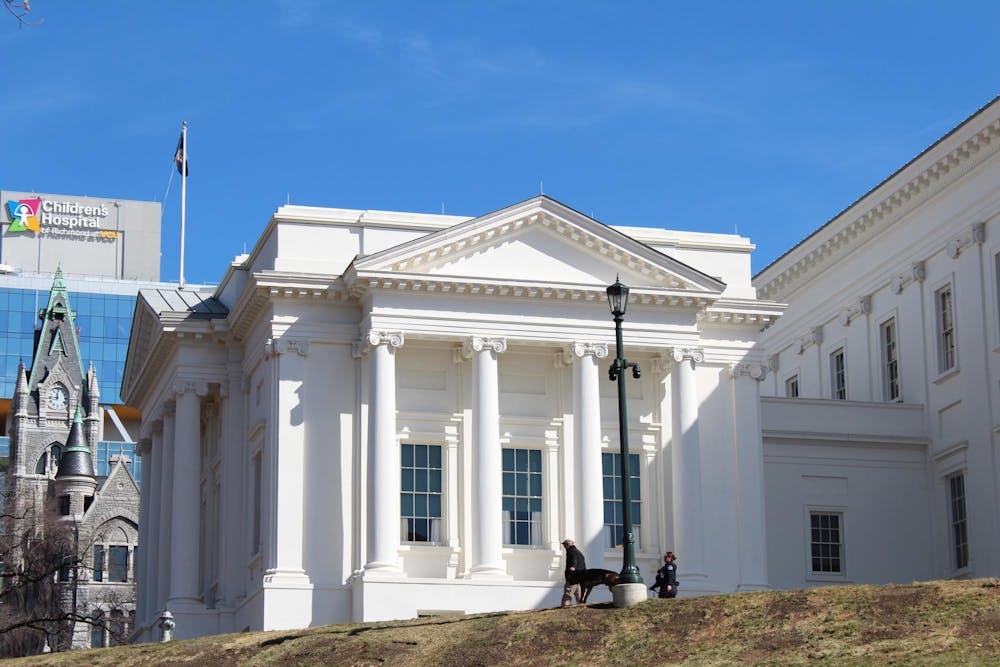
Virginia’s minimum wage is slated to rise to $15 per hour by January 2028 after Gov. Abigail Spanberger (D) signed House Bill 1 and Senate Bill 1 into law April 9. The legislation is set to incrementally raise Virginia’s minimum wage from its current amount of $12.77 per hour to $13.75 per hour on Jan. 1, 2027 and to $15 per hour on Jan. 1, 2028. Spanberger also signed House Bill 20 and Senate Bill 121, which extended the state’s minimum wage to farmworkers by eliminating a previously held exemption.
HB 1 was sponsored by Del. Jeion Ward (D-87), and SB 1 was sponsored by Sen. L. Louise Lucas (D-18). HB 20 and SB 121 were sponsored by Del. Adele McClure (D-2) and Sen. Jennifer Carroll Foy (D-33), respectively.
The bills were part of a larger catalog of workforce legislation Spanberger signed April 9, which also included measures to expand high school apprenticeships and bring new workers to Virginia’s offshore wind industry.
“Today, we are putting more money in the pockets of Virginia workers,” Spanberger said in a press release April 9. “If you work full time in Virginia, you should be able to afford to live in Virginia. You should be able to keep up with your rent or mortgage, fill your medications and save for your kids’ futures.”
This legislation eliminates a longstanding exemption that had excluded farm laborers and farmworkers from Virginia’s minimum wage law. This exemption traces back to the 1938 Fair Labor Standards Act, which excluded farmworkers from federal minimum wage protections. While Congress later extended the federal minimum wage to farmworkers, Virginia did not, and the state kept it in place when it raised its minimum wage in 2020. McClure introduced a similar bill in 2024 that passed the General Assembly but was vetoed by former Gov. Glenn Youngkin (R).
Spanberger also said in the press release that her administration worked with the Virginia Farm Bureau to “strike a balance to protect farmworkers and our vital farming industry.”
The wage increases will directly affect the University, which employs approximately 33,000 people in total, according to University spokesperson Bethanie Glover. At the University, 1,478 student Academic Division employees and five student Medical Center employees currently earn more than minimum wage, but less than $15 per hour.
Glover further noted the minimum student wage at the University is $13 per hour — higher than Virginia's current minimum wage. Other institutions of higher education pay higher starting wages to their students, but those states largely have higher minimum wages. The University of Illinois Urbana-Champaign and Northwestern University both pay student workers a starting wage of $15-16 per hour, which matches Illinois’ state minimum wage of $15 per hour for adult workers. At Princeton University, entry-level student jobs earn $15.92 per hour, which also matches New Jersey’s statewide minimum wage of $15.92, effective since Jan. 1.
Jordan Scott, an undergraduate library assistant at Edgar Shannon Library and fourth-year College student, said that while a pay jump to $15 per hour would be a small increase for her current wage of $14.50 per hour, it would make a bigger difference for her peers in other low-wage jobs who are making less than $14.50 per hour. She added that she doubts that the University would have raised wages to $15 per hour on their own, without any legislation.
“It’s not anything against U.Va., but I just think [that] how the world works, no one [at the University] was like, ‘let me spend more money, give out more without a requirement,’” Scott said.
Areeb Khan, an undergraduate library assistant at Shannon Library and third-year College student, agreed with Scott, stating that while the University may have eventually given wage increases, it likely would not have happened beginning this year without the legislation. Khan also echoed the sentiment that the legislation will make a bigger impact for lower-paid workers than him.
“I think maybe eventually [the University] would have gotten around to [raising wages], but probably not by 2028,” Khan said. “People would have to ask for it, and eventually U.Va. would, but I don’t think on their own there’d be any rush.”
Andrew Simon, assistant professor at the Batten School of Leadership and Public Policy, said that the 2027 increase to $13.75 per hour is less of a real raise than it appears. Virginia has only tied its minimum wage to inflation since 2025, Simon said in an email statement to The Cavalier Daily, meaning the 2027 bump is making up for ground lost during years when the wage stayed flat.
Simon said that the 2028 increase to $15 per hour, by contrast, will show a substantial increase in wages.
“The second year increase in 2028 to [$15] will more meaningfully increase the inflation-adjusted minimum wage,” Simon said. “Many credible estimates of the effects of higher [inflation-adjusted] minimum wages on employment find small negative effects, although there is no consensus on the magnitude.”
Asst. Economics Prof. Emma Harrington echoed similar sentiments to Simon’s assessment. While raising minimum wage can pose risk for some job loss, Harrington said that research shows these effects are consistently modest.
“There’s lots of studies finding absolutely no negative employment effects,” Harrington said. “Something like a 10 percent increase in pay [reduces] employment on the order of about 1 percent so even relatively large increases in pay [are] not causing that many people to lose their job.”
For University employees specifically, Harrington said they are especially unlikely to face layoffs as a result of the wage increases. Larger employers tend to absorb minimum wage hikes better than smaller “mom and pop type stores,” Harrington said.
“My guess is for the University employees and contractors who are affected by this, it’s almost entirely just going to be on the benefit side for them,” Harrington said.
Harrington pointed to two reasons economists believe minimum wage increases do not lead to the widespread layoffs that employers warn about. The first is that firms have a “wage-setting power,” leading to them often paying workers less than what their productivity would warrant — raising the minimum wage threshold pushes pay closer to that true value. The second, she said, is that research — including her own — finds that paying workers more makes them more productive.
Harrington also noted that Virginia’s minimum wage is low in relation to Washington, D.C. and other states. D.C. has a minimum wage of $17.95 per hour, and she said it is "sort of surprising” that Virginia’s current minimum wage is $12.77 per hour. Beyond D.C., many states — especially Democrat-led states — far exceed the federal minimum wage of $7.25. Washington, Connecticut and California have minimum wages of $17.13, $16.94 and $16.90 for 2026, respectively.
“Any little bit does help,” Khan said. “Especially [for] students who make less than [undergraduate library assistants], it would be a big difference.”
Vrinda Vashist is a staff writer on the news desk. She is a second-year student in the College.
Read More

After Supreme Court upholds birthright citizenship, students express relief and disappointment
By Jaylynn Perez and Luca Bailey | 1 hours agoStudents at the University are expressing a range of emotions, with two who spoke to The Cavalier Daily signaling relief at the Court’s decision, and one expressing opposition.
Welcome back, Hoos — here’s what you missed this summer on Grounds
By Grace Little | 1 hours agoLooking to late August, classes will commence Tuesday, and various University groups will reconvene after adjusted summer schedules.

U.Va. School of Medicine names two new department chairs, explains selection process
By Michael Racz | 4 days agoIn an interview with The Cavalier Daily, Colin Derdeyn, interim dean of the School of Medicine, explained the selection process of the two chairs and the new chairs’ plans for their departments.