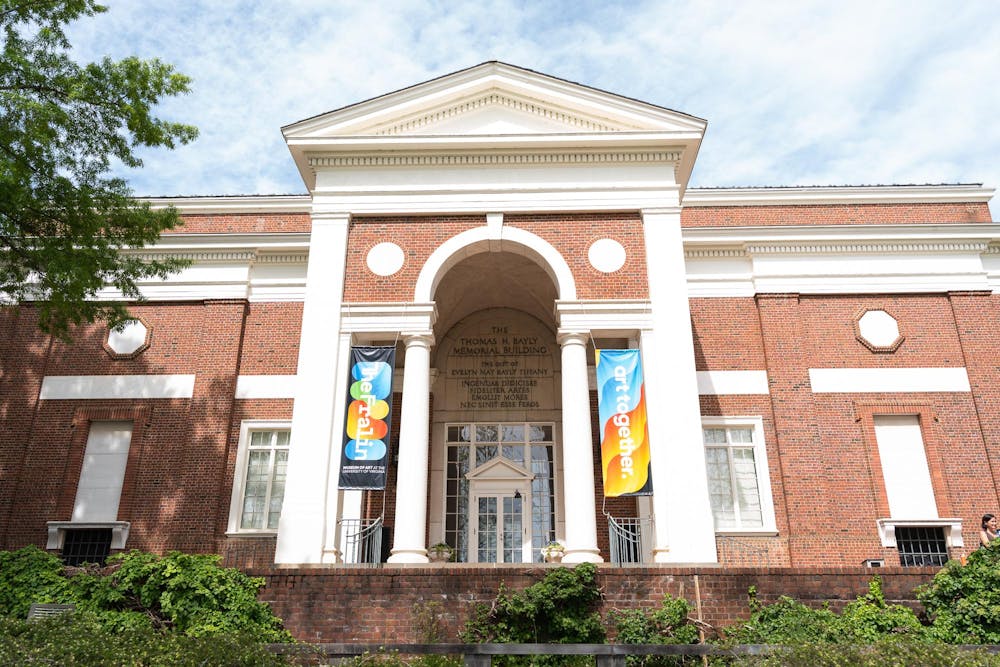
Each fall, the University’s art history department — in collaboration with the Fralin Museum of Art — enrolls select students in a year-long, hands-on program called the University Museums Internship. Ranging from 10 to 13 students per year, the program provides pre-professional experience to undergraduate students deeply interested in the world of art.
The class operates like a seminar, meeting once every other week, and is supplemented by internships across various University departments. These internships include opportunities with the curatorial, education, development and marketing departments at the Fralin, the curatorial and education departments at the Kluge-Ruhe Aboriginal Art Collection, the historic clothing and costume archives in the drama department and conservation in the special collections department.
The course began in 2011 to give students opportunities for hands-on museum work at the University’s two museums, the Fralin and the Kluge-Ruhe. Since the two are smaller collections with limited funding for paid internships, this program allows students to receive course credit for their work and provides museums extra sets of hands.
The yearly culmination and major focus of the class portion of the course is an exhibit fully curated by the students — independent of their individual internship work — on display each spring at the Fralin. This component of the class was introduced by M. Jordan Love, Carol R. Angle academic curator in the education department of the Fralin. She took over the class at the start of the 2014-15 academic year — when it was still a single-semester initiative — and changed it to be a year-long course.
“I realized that it takes an entire semester just to plan an exhibition, and then an entire semester to install it,” Love said. “I just felt like [curating an exhibition] was such a unique opportunity … It was important to me to keep that available, because it's not an opportunity most students get at other universities.”
This year’s exhibit, titled “Printed Stories: Tales in Black & White,” focuses on the stories of printmaking, displaying pieces from the University's collection. In addition, this year’s exhibit features works gifted by Dr. Janet D. Greenwood, former president of Longwood University with a passion for the arts.
“[Greenwood] really wanted to have her works, if she was going to donate them to us, to have students be able to work with them right away,” Love said. “She was very excited about that prospect.”
Greenwood bequeathed six works — one by Pablo Picasso, three by Rembrandt van Rijn and two by Albrecht Dürer — all of which are included in this exhibit. They are currently on loan but will join the Fralin’s permanent collection at some point in the future. Love said that these works offered students a unique opportunity to engage with artifacts of art history and to present them to a localized audience at the Fralin.
“[The students] were very excited about it, and I was glad to be able to offer up such significant artists, for them to be the first people writing about it here at the Fralin,” Love said.
Love said that this is only the second time students have worked with pieces outside of the museum’s permanent collections — the first of which was during the 2015-16 academic year when students chose from works gifted by collector Ray Graham. According to Sarah Dowling, fourth-year College student and curatorial intern at the Kluge-Ruhe Collection, using specific works was an unusual and exciting aspect of the program.
“That was also a really cool component, getting to work with crazy, famous artworks that as an undergraduate student, you certainly don't expect to be working with at this point in your life, let alone perhaps ever,” Dowling said.
Due to this year’s donation, Love explained that the collaborative process began differently than in years prior. Usually, the students came to the first class of the year after looking through the museum's online catalogue for inspiration. Then, each student would contribute two to three potential ideas for the exhibition theme.
This year, however, Love presented the students with the Greenwood works and challenged them to make connections with pieces already in the museum’s collection. After noticing commonalities among the pieces donated by Greenwood, the next objective was to comb through the University’s collection and pull pieces that aligned with that visual and formal narrative the students noticed in the donated collection.
Each student made their own suggestions for additional works from the University’s collections to be included in the final show. Works were selected by voting until the list was complete, ensuring that every student got to voice their opinion and was excited about the final product.
“Because it was an exhibition that we were curating together, the work was necessarily collaborative, and I think the exhibition and all of our experience of the class is much better for it,” Dowling said.
The students then went through the final proposed list for the exhibit with a professional curator at the museum who provided insight into the logistics and feasibility of the proposed exhibition, Love said. For example, the curator may note that a piece might be in need of repair or be too large for the small gallery where the exhibit is displayed. Dowling said that the selection process was an enlightening experience by pulling back the curtain on how museums direct the story of an exhibit to a wider audience.
“Ultimately, how it all kind of came together was an exhibition focusing on storytelling and printmaking,” Dowling said. “I think we realized very quickly that the Fralin has a really large print collection that, at times, doesn't get the light that it deserves.”
The student-curated show is divided into three sections — Biblical, Mythological and Quotidian — with each highlighting works that tell stories in their respective category. The stories range from biblical narratives — such as those of the Four Horsemen of the Apocalypse and Saint Jerome — to aspects of daily life — including card games and elements of human struggle — to images of classical Greek figures and myths.
Love explained how the show is mainly put on by the students themselves — as opposed to helping a professor with their show. This is a rarity for undergraduate students, Love said, and a unique aspect of the UMI program.
“We try not to limit them as much as possible, because it's their show,” Love said. “And, if they're in love with an object, and the theme is almost really around that key object, we want to try to make that happen for them.”
This method of selection of the works allowed for full student autonomy in the makeup of the exhibit, and gave each student an opportunity to dive deep into a work that piqued their interest, Dowling said. The comprehensive research was consolidated into a brief wall label to be displayed next to the work. Dowling said that the unique challenge posed by writing labels for each work both helped her distinguish the pieces from one another and contextualized them within the exhibit.
“Label writing is its own arduous, endless process,” Dowling said. “We tried to figure out how to inform our viewers about our pieces, while also pairing them with the themes of the exhibition, all the while being approachable and not overly wordy.”
In addition to the individual labels, the students were responsible for designing the physical layout of the space, thinking about lighting, and writing the wall text — a few brief paragraphs that serve as an introduction to the exhibit as a whole — which Dowling said was an intense collaborative process with the education team.
“We also worked as a group … on our wall text, which is, of course, what shapes and guides everyone's approach to an exhibition,” Dowling said. “We realized that it is a process. And luckily, the education team was immensely helpful in helping us prioritize the information that we wanted to get out and also find[ing] a way to actively engage the visitors.”
Beyond the curation of their exhibit, students attended workshops in other departments and heard from speakers and industry experts during class meetings, as well as work[ed] in their individual internships. Dowling said that her experience in the program enlightened her to the breadth of components that contribute to the function of a museum and the collaborative, interactive environment that work in museums can offer.
According to Dowling, her curatorial internship at the Kluge-Ruhe provided an opportunity for a deeper dive into historical art research. From information about the works to the exhibition’s themes and the artists involved, Dowling played an integral part in not just the UMI class exhibit but also in the exhibits at the Kluge-Ruhe. She said the same was true of her fellow students in their respective internships, including two of her classmates whose work in the historic clothing and costume department recently helped put on an exhibit at Culbreth Theatre.
“The primary reason I took the class was for the internship … I've really appreciated getting to see the way that not just the [Kluge-Ruhe curatorial] department I'm in, but all of the teams of each museum work together to create these shows,” Dowling said. “I've loved curatorial work, but also that there's so much more that goes into a museum and so much more that interests me that I might want to pursue in the future, which I found particularly valuable.”
The student’s exhibit is on display at the Fralin until May 31. Information on the UMI application is available on the program’s website.
Read More
‘Tony’ sincerely builds an unlikable Anthony Bourdain worth rooting for
By Cecilia Sherman | 6 days ago“Tony” is a tasteful standout that gracefully foreshadows Bourdain’s complicated life of adventure and discovery.

On Repeat: Nostalgic songs to celebrate the waning of summer
By Kelsey McIntyre | August 11, 2026With less than a month until students return to Grounds, this soundtrack can be used to rest and relax before the stressful semester by reminiscing on familiar times.
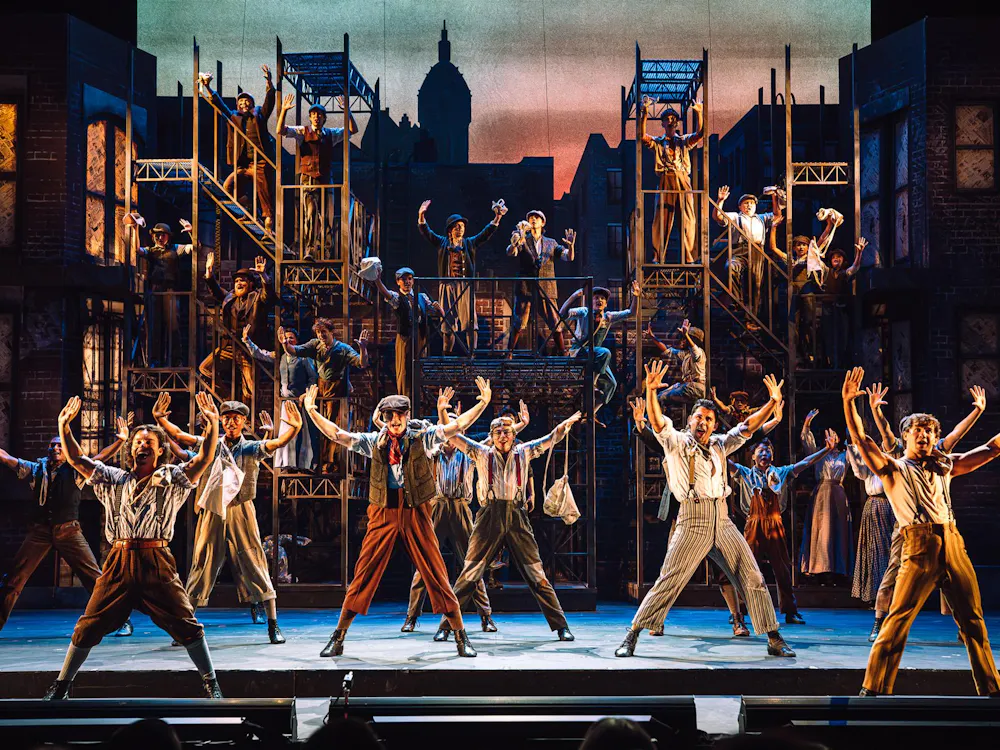
Virginia Theatre Festival unites Charlottesville and Broadway talent
By Carter Horner | August 8, 2026The Virginia Theatre Festival began in 1974 as a University semi-professional drama program and recently returned to Charlottesville for its 52nd iteration.