Two years ago, the McIntire School of Commerce moved its application deadline from the end of students’ second year to the end of their first year. Consequently, for many incoming first-years who intend to apply to McIntire, the time to contemplate their academic trajectory or develop their application for this opportunity is halved. While McIntire’s decision to shift this deadline is in part a product of increasingly early professional recruitment timelines, this acceleration incentivizes a harmful behavior — strategizing one’s application from day one at the University.
McIntire’s expedited admissions timeline could incentivize prospective students to treat their first semester less as an opportunity to explore and broaden their horizons, and more as an exercise in optimizing their resume and strategizing for academic success. Indeed, McIntire’s recent jump to a three-year program produces measurable results — more applicants and an increased mean GPA. On paper, those statistics signal a more selective and prestigious program. But admissions statistics do more than measure competitiveness — they shape behavior. The pressure to optimize for success, created by McIntire's new admissions timeline, deserves just as much attention as the numbers themselves.
The compressed application timeline changes the way students approach the classroom. Consider what is incentivized when students apply with one less year of experience at the University — students may become less inclined to enroll in courses that challenge them. Instead, it could become easy to focus on which courses best protect their GPA and enrich their chances of a successful McIntire application. Students risk viewing difficult classes as an admissions risk, rather than an opportunity. Every assignment, every grade and every transcript decision becomes another calculation in an increasingly competitive admissions process.
Consequently, these incentives put constraints on student life outside the classroom. Organizations that are designed to enrich the learning experience and foster community become reduced to a distinct form of prerequisites for McIntire. Business fraternities and commerce-related organizations, for example, are widely perceived and advertised as signals of future McIntire admission. In accordance with the change to the McIntire application, some business fraternity leaders report swelling numbers of applications. Students act on incentives in accordance with the application timeline, and many arrive believing they have only weeks to secure opportunities that could determine the trajectory of their next four years.
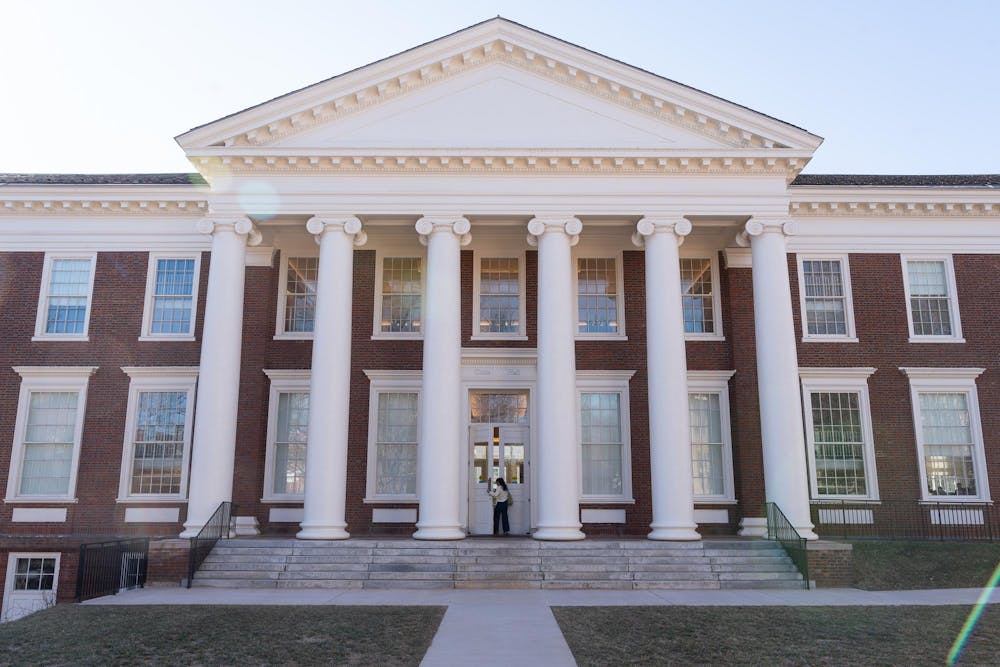
From an institutional standpoint, the accelerated admissions process — despite what the higher mean GPA may suggest — tangibly weakens the applications themselves because students have limited time to hone academic interests and explore co-curricular opportunities. Under the previous timeline, applicants had the opportunity to reflect on nearly two years of academic growth, leadership experiences and personal development that guided them to Rouss-Robertson Hall. Conversely, today's applicants have little opportunity to build that story, applying with only eight months on Grounds and with capped leadership or academic experience. McIntire is evaluating students earlier, but it is also evaluating less complete versions of them.
The positive aspects of an extended Commerce program do not need to come at the cost of an admissions culture which promotes an incomplete version of academic exploration at the University. Following in the footsteps of other commerce schools, the University might consider a direct admit program with opportunities for students to transfer in or out during their first years. In fact, the University has already demonstrated the ability to create a similar program through their new Assured Enrollment program in the School of Data Science. In doing so, the University could dramatically reduce the McIntire mentality that keeps students calculating instead of exploring, peeling back the stress of a competitive applications process. To deliver a transformational business education, McIntire must let students themselves be at the helm of their academic trajectory — not at the mercy of an expedited deadline.
The Cavalier Daily Editorial Board is composed of the Executive Editor, the Editor-in-Chief, the two Opinion Editors, two Senior Associates and an Opinion Columnist. The board can be reached at eb@cavalierdaily.com.
Read More

KING: A University Board of Elections that cannot take a hint
By Michael King | 21 minutes agoThere is still time to avert its current course — extend the time limit for submitting post-election complaints, open hearings to the public and honor the JRB's avenue of review.

LOPEZ: Breaking the chains of the two-party system — America needs real solutions
44 minutes agoThat is why I decided that if I was going to run for Congress, I would not simply tell people what is wrong. I would put actual proposals on the table.

EDITORIAL: The Virginia General Assembly must step up for western Virginia
By Editorial Board | 2 days agoThis reality is only set to get worse after newly-effective Trump administration cuts to Medicaid and Medicare reimbursement rates.