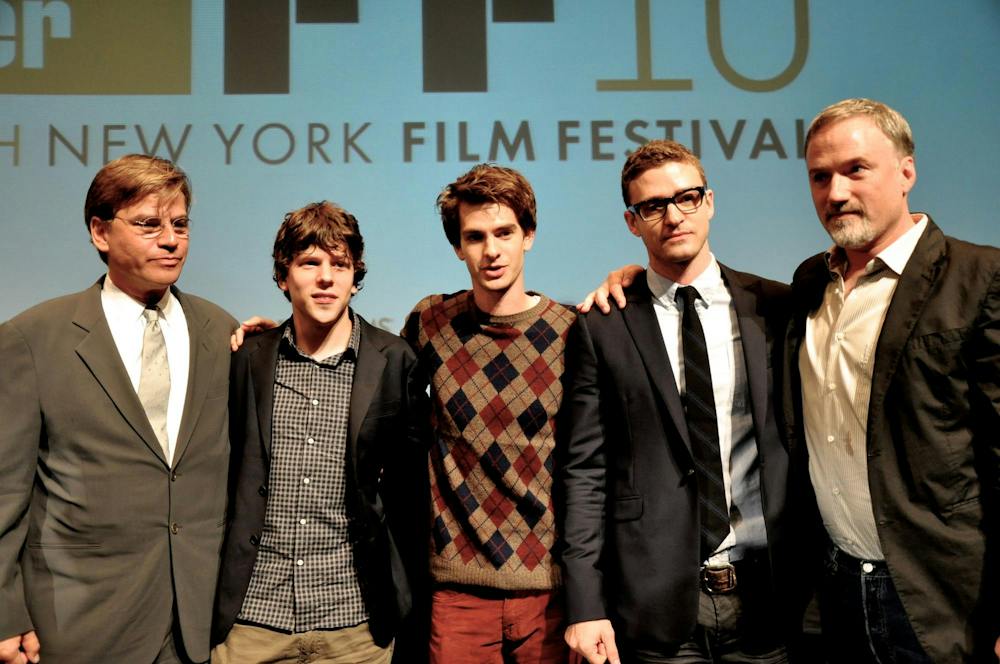
The 2010 Academy Award winner “The Social Network” ends on a wide shot of Mark Zuckerberg, played by Jesse Eisenberg, left alone in an empty conference room, staring at his laptop screen open to Facebook. Alienation is at the core of the film, which was written by Aaron Sorkin and tells the story of two bright young Harvard University students who, both striving to stake their claim to the world, happen to do so by founding Facebook. A decade and a half later, Sorkin has returned to the world he built, this time as both writer and director.
If “The Social Network” was a forewarning, “The Social Reckoning” is an I-told-you-so, an exclamation point on the cautionary tale of power and authenticity that Sorkin first wove so beautifully. With this script he continues to weave, a master at work with a style that is clever and earnest and irritating only if given too much credence, but nonetheless marvelous to watch and be washed over with.
Where “The Social Network” is clear in its identity as an origin story, “The Social Reckoning” takes a moment to find its footing. The film comes out swinging with a cold open chapterized “White Girl Wasted” depicting a hostile confrontation between a young white woman and two Black and Latina police officers and, in doing so, making provocatively clear, “Toto, I’ve a feeling we’re not at Harvard anymore.”
The woman records on her phone as she hurls racist hate speech, and later uploads the footage to a white-supremacist Facebook group –– a group which it is later revealed she was radicalized to join by the platform itself. In this roundabout way, Sorkin arrives at the subject of his scrutiny –– “The Facebook Files,” a series of investigative features published in The Wall Street Journal, and exposing willful and harmful negligence, on behalf of the social media platform and its algorithms, resulting in such displays of hate.
The series’ author is Jeff Horwitz, played by Jeremy Allen White, a political-beat-writer-turned-tech-reporter who prefers paper maps to GPS and does not have Facebook. Sorkin scripts necessitate an almost musical flow between the actors and their words, and White thrives under the percussive pace and quick-twitch rhythmic quality of the dialogue gifted to him.
Horwitz’s partner in literal crime is Frances Haugen, played by Mikey Madison, a member of Facebook’s civic integrity team. Haugen is introverted and awkward and drawn to Facebook out of genuine desire to foster human connection, but she also cannot help but be aware of the negative side effects that it is causing, a conscience which compels her to come to Horwitz as a whistleblower.
So begins the story of their building a story. The plot pinballs between 2019 and 2021, continuing the bizarre cuts to black and chapterizations that may take a viewer out of the film more than they might help orient them. Sorkin employs a niche dialect of repetition and references that layer atop one another in concentric circles, a language that works well for Madison and White as they intrepidly strive to help good prevail over evil.
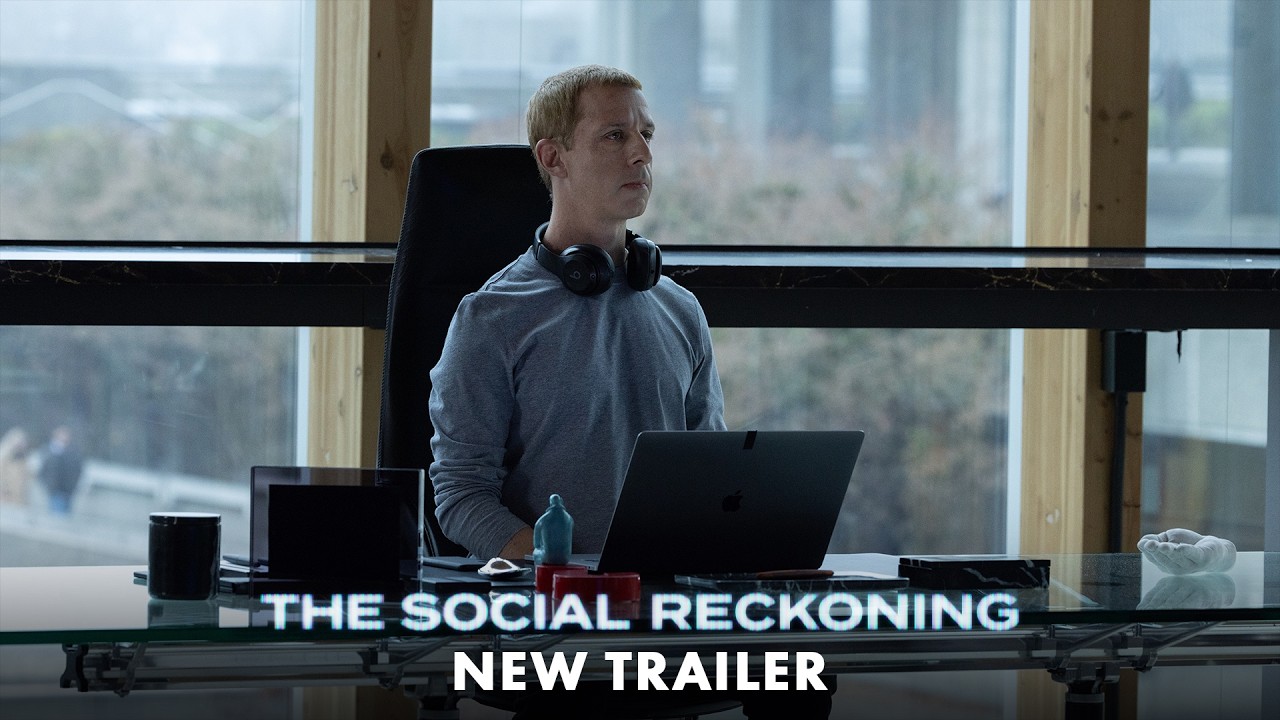
The personification of this evil, even more transparently than in “The Social Network,” lies within Mark Zuckerberg, played by Jeremy Strong. Strong’s rendition of the character is a supervillain with a Julius Caesar haircut, who sits ramrod straight like a child in a high chair at dinnertime waiting for his food to be fed to him. It is no fault of Strong’s the altitude of the bar set for him –– for his performance is unable to be consumed without comparison to Jesse Eisenberg’s in "The Social Network,” of a loathsome yet deeply pitiable college-age Zuckerberg. But such comparison nonetheless changes the composition of his character, which rings slightly empty without the singular spark of genius Eisenberg infused into it.
Zuckerberg’s lack of centrality also makes it sometimes easy to forget that “The Social Reckoning” is about Facebook. Indeed, in this movie, the character of Zuckerberg and the company of Facebook feel almost entwined into one entity, a larger-than-life looming threat hanging over the work of Horwitz and Haugen. But such decentralization also leaves “The Social Reckoning” less confident in its own identity.
The film’s strongest parts see a 90s-era Grisham-esque legal thriller, as Horwitz and Haugen take up disguises and burner phones in dimly lit hotel rooms to craft their own “Pelican Brief.” So, too, does Sorkin fall back to his work on “The Newsroom” with newsroom sequences of White and a strong Betty Gilpin as his boss Kris that pay an earnest tribute to the value of journalism –– a strangely prevalent trend in 2026 releases. But there are also moments of tonal misalignment, most notably with a recreation of the Jan. 6 Capitol riots in a strange and not entirely successful provocation.
More broadly, none of these ingredients make a sequel to “The Social Network.” The 2010 film was unique because it found both Sorkin and director David Fincher at the peak of their craft, and found a delightful synergy between them. In the sequel, Sorkin’s script still soars, but its execution often falls flat, choppy cuts and over-the-shoulder isolated shots making the audience too conscious of the nature of the production. Fincher’s light touch and almost mystical dynamism made his setting simultaneously hopeful and mysterious, but the scenes under Sorkin’s camera often feel like just that –– words put in action rather than brought to life.
It is for this reason that “The Social Reckoning” may ultimately disappoint viewers, not the weakness of the movie so much as the strength of its predecessor. That “The Social Network” exists as a seminal, indelible relic of cinema where every party involved was punching above their weight, leaves a viewer anticipating its sequel yearning for misty regattas and Gothic architecture instead of greyscale conference rooms and static close-ups. Sorkin must discover that his pen is mightier than his camera, but “The Social Reckoning” might be collateral damage.
Read More

October Book Club: Spooky stories with frightening film adaptations
By Zoe McFarland | 9 hours agoWith the corresponding screen adaptation of each selection, pairing these page turners with their corresponding films invites one to turn an evening read into a cozy fall occasion.

Writer’s Eye brings vivid ekphrastic writing and reflective art education to the Charlottesville community
By Cecilia Sherman | YesterdayThis fall marks the 40th annual Writer’s Eye competition presented by the Fralin Museum of Art at the University.

On Repeat: Throwback songs for a killer fall playlist
By Madeline Unkel | YesterdayFrom psychedelic rock to post-punk, these four throwbacks sound as though they could have been pulled straight from a cult classic horror film, bringing that same sense of suspense to the season without relying on traditional Halloween hits.