
One of the many entertainment hubs in Charlottesville’s Downtown Mall is the ever-growing Decades Arcade, home to over 30 pinball machines and over 100 retro arcade cabinets dating as far back as 1957. Owned and founded by Assoc. Medicine Prof. Paul Yates, the business began as “Paul’s Pinball Palace” in 2018, a small home for Yates’ pinball collection before scaling to its current state. It stands out among other popular spots downtown for its nostalgic appeal and rare game collection. Currently overseen by Arcade Manager Lindsey Daniels, the arcade is open from Friday through Monday weekly from 12:30 p.m. into the night.
In addition to owning Decades Arcade and being a doctor of Ophthalmology at the University, Yates has a bachelor’s degree in electrical engineering from California Polytechnic State University. This skillset allows him to tinker with and repair old machines and arcade game cabinets — an aspect of operating a game room that often flies under the radar, according to Yates. He explained his appreciation of the unique opportunity to preserve and share these classic gaming experiences with the Charlottesville community as a motivating force for balancing work as a University professor, doctor and business owner.
“Each of us gets a very limited amount of time on this planet,” Yates said. “And the goal … certainly for me, and I think for a lot of people, is to do as much good as you can in whatever way that you can … Each of those things that I do bring some aspect of who I am … to make some small, tiny, little bit of difference somewhere.”
Down a dark staircase lit by blacklight is the pinball room, which rests in a former underground bomb shelter that is over 100 years old. The glowing pinball machines are laid out in order of their release dates, which range from 1957 to what will soon be 2026 when the newest Pokémon machine arrives.
Each pinball machine features a short blurb above it describing its technology and significance. As the decades progress, the evolution of components such as computers, sound effects and digital screens is evident. Decades’ first machines featuring computers come from 1977, before they started to also incorporate sound systems and high definition screens. Many machines are evidently products of social trends at their time — 1976’s “Pioneer,” for instance, depicts an astronaut, reflecting the space-race focused politics of the era.
While it started with just pinball, Decades Arcade quickly began acquiring video games as well, striving to preserve the art form’s history through its robust collection. The rest of the arcade is composed of arcade cabinets ranging from the original 1978 version of “Space Invaders” to their most recent, 2021 acquisition, “Sound Voltex: Exceed Gear.” The games are separated into several rooms by theme, which serves to highlight the historical evolution and importance of each era of gaming history and technology.
“You can see how games change,” Daniels said. “Not only the gameplay, but the artwork. We talk a lot about the history of video gaming and computing.”
One room hosts the classic games ranging from the late 1970s to early 1990s. These include popular cabinets like “Pac-Man” and “Dig Doug” as well as several lesser known titles mixed in. The mid-to-late 1990s have their own room to highlight the jump in graphical capabilities and controls between the 1980s and 1990s, with more complex, higher resolution games that enhanced their players’ experiences.
Games with categories that do not fit the traditional arcade cabinet mold also have individual rooms throughout the space. These include racing, shooting and rhythm games, most of which include an unconventional control scheme such as a physical gun, steering wheel or dance pad. Decades is also home to a handful of active games such as air hockey, skeeball and shuffleboard.
Beyond cataloguing video game history, Decades allows those who lived that history to reexperience it by providing the unique opportunity to play these games. Daniels said that when Yates started the arcade, he was able to tap into a customer base of nostalgic millennials before the arcade market became oversaturated with competitors.
“He would not start an arcade right now because they've gotten so popular, and there are so many,” Daniels said. “Back in 2019 it was the beginning of this resurgence that was really based on people my age, the millennials … wanting to do this nostalgic thing from our childhood.”
According to Yates, one motivation for starting the business was providing another kid and family-friendly entertainment environment in downtown Charlottesville. Based around retro entertainment, Decades gives parents the chance to introduce their children to the games they played growing up.
“When it first started, there were very few entertainment options in the Charlottesville area for kids,” Yates said. “And if there were, they weren't terribly affordable. And so part of the goal of Decades was to create a space that added to the community.”
His efforts have proven successful, with Daniels noting that she sees a much larger variety of age ranges visiting the arcade than she initially expected.
“I'll mostly see people bringing in their kids,” Daniels said. “And then the kids get turned on to it, which is great, because the kids who are born in the 2010s or even 2020s, they don't know about any of this stuff yet…they don't have access to it out in the wild like they used to.”
Yates and his team employ an affordable pay-per-hour or all-day pass system, where customers can play an unlimited number of games for 2 hours for $12, or $17 over an entire day. Most pay-to-play arcades, in contrast, charge for single uses of each machine. In this way, a trip to Decades makes for an appealing outing, where families and University students can enjoy classic games without worrying about sinking in too much money.
“The idea is not making a ton of money,” Daniels said. “The idea is really to be a steward of video gaming and pinball and STEM education and gaming history and all that. So that's what we focus on. And, of course, building community.”
Yates echoed that idea, noting how almost all profit is turned around and reinvested into the arcade, enabling it to grow to severalfold its original size. This evolution has created a staple of downtown Charlottesville, capturing decades of gaming history in a soulful and vibrant arcade accessible to all.
Read More
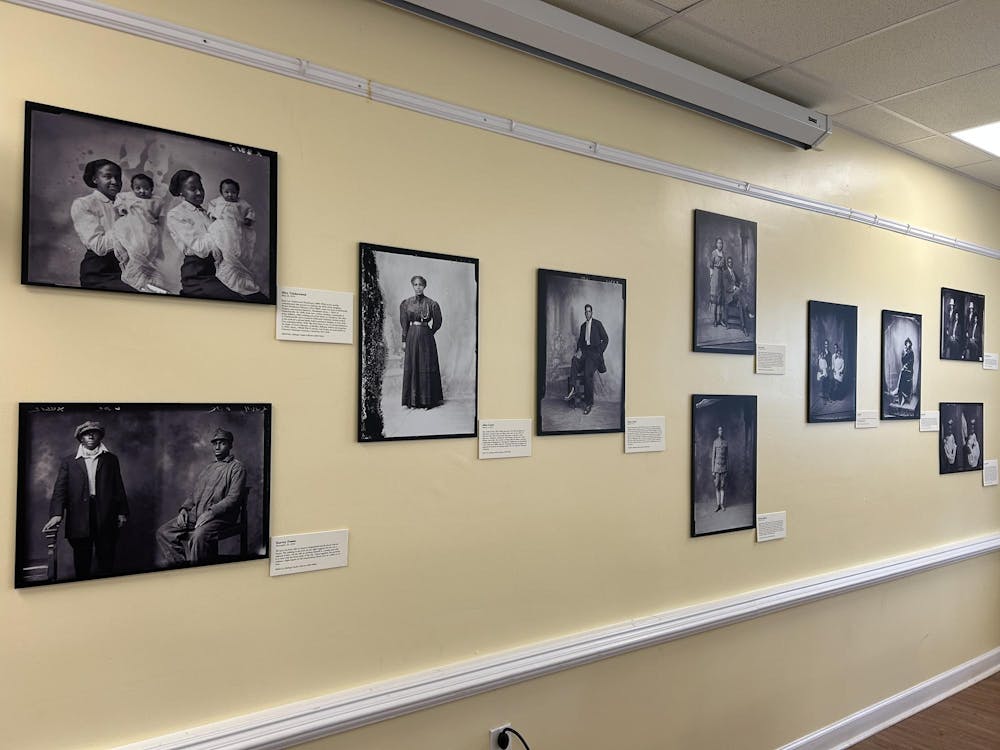
‘Visions of Progress’ photographs 1920’s Black Charlottesville residents
By Maxwell Mitchell | 2 days agoThe “Visions of Progress: Portraits of Dignity, Style and Racial Uplift” exhibit is on display at the local Trinity Episcopal Church until Mar. 11.
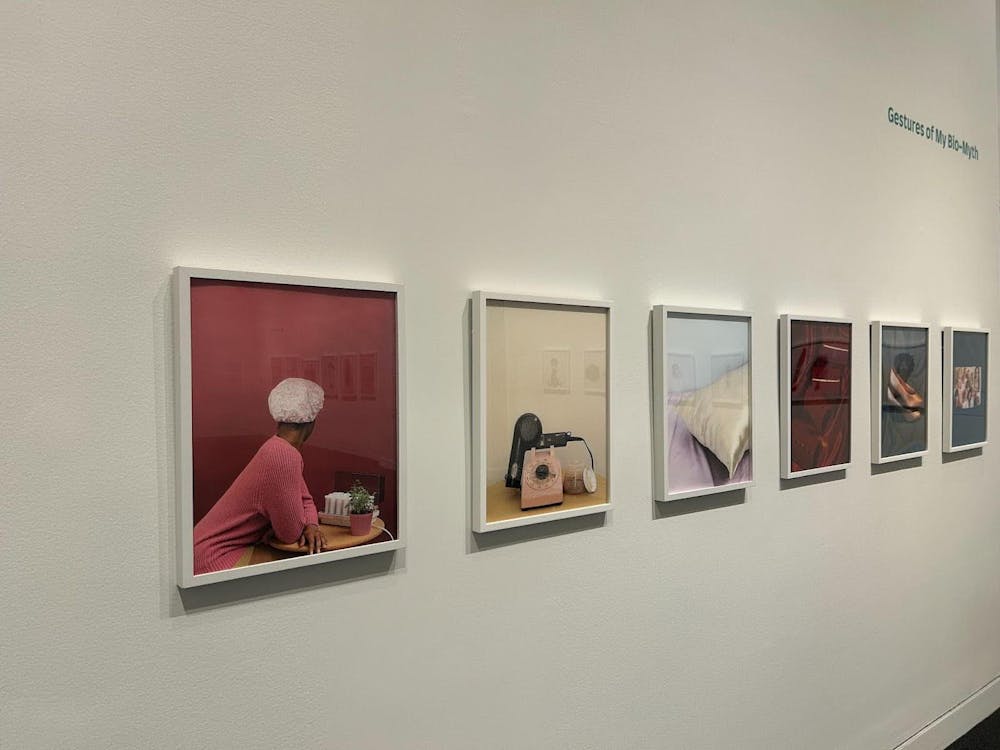
Nakeya Brown’s ‘Refutations’ is a story of identity through Black hair and history
By James Galgano | 2 days agoFor photographer Nakeya Brown, hair has always been a path of self-expression.

Baby Keem shows his hand on ‘Ca$ino’
By Victor-Jenay Cortijo Lopez | 4 days ago“Ca$ino” highlights Keem’s range as a writer and producer