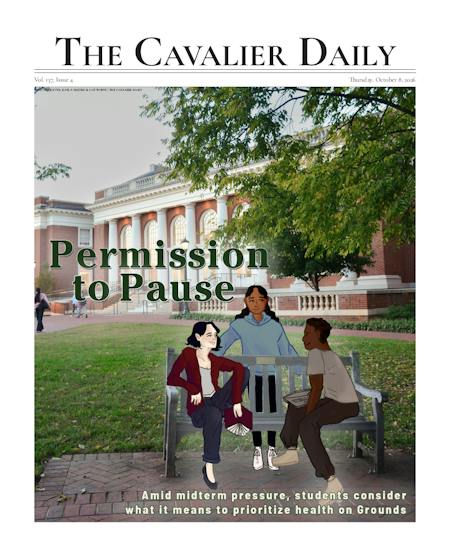
From pseudoscience expert and Health Secretary Robert F. Kennedy Jr.'s proposition of “wellness farms” for the mentally ill, to skeptical parents who believe “mental health” to be a Generation Z created hoax, there is no shortage of astute mental health advice available. Unfortunately, if it were as easy as simply touching grass or being less soft, as these sources suggest, there would not be the mental health crisis that there is — worryingly so in the younger generations. Just in the last year, almost 70 percent of college students reported some form of mental health concern. In 2024-25, 37 percent and 33 percent of college students screened positive for moderate to severe depressive and anxiety symptoms, respectively. It is quite likely these statistics are higher at the University due to its work hard, play hard culture and the intense pressures that may arise from it. Evidently, University students’ mental health, and particularly the stigmas surrounding it, deserves more discussion.
But before offering a laundry-list of places to get help, as I am sure we have all heard at orientation, the hesitations towards seeking such services must be addressed. For example, therapy is commonly viewed with an unhealthy skepticism, thought to be reserved for those with more “extreme” cases — someone more depressed or more anxious and certainly far less put-together. Such stigmas severely downplay the variety of services therapy offers — and in turn, the large number of people it can positively impact. Importantly, the benefits of psychotherapy affect not just simply those diagnosed with mental illness. In fact, according to Mayo Clinic, therapy can alleviate day-to-day stressors that affect anyone. Much like how one visits their primary care provider for annual checkups and seasonal vaccines, seeking out even a 30-minute Counseling & Psychological Services therapy session because of a particularly stressful week or getting ghosted for the umpteenth time, should thus be similarly seen as necessary maintenance for the body and mind.
In the same vein, psychiatric medications often fall victim to fear-mongering. The Make America Healthy Again movement and other medication truthers insist on dealing with the elusive “root cause” behind one’s issues — as opposed to taking the easy way out and flippantly popping some magic pill. By chalking up mental health to a matter of self-reliance and competency, many understandably become more hesitant. Such rhetoric is not only insensitive towards those who actively rely on medication to ease symptoms, but it is dangerous towards those who are struggling and would perhaps benefit from a gentle pharmaceutical push. When someone wears contacts, we do not shame them for their near-sightedness and propose they toughen up their flimsy corneas and squint through lectures instead. Thus, when someone takes, say, an anti-depressant, we should be open-minded instead of concluding incompetency. Indeed, psychiatric medication is not immune to scrutiny — and not all is harmful rhetoric. The marvels of modern medicine would not be here today without the many criticisms and concerns of the scientific community. Yet, let this criticism come from those educated to do so, instead of self-proclaimed experts and gurus.
In a school that prides itself on productivity, perfection and amassing the most LinkedIn connections possible, my complaints regarding mental health culture may seem a little tone-deaf. However, it is precisely this so-called “grind-set” that, whilst fueling work ethic and ambition, exacerbates the aforementioned stigmas and in turn discourages students from seeking help. I understand “deep self-reflection” is the last thing someone wants to type into their beloved Google Calendar, crammed with more perhaps resume-friendly activities. Nonetheless, the benefits of taking care of one’s mental health — whether that be a mind more content or more peaceful and certainly far more capable — are worth the time. Indeed, my suggestion of simply taking care of yourself may sound banal and vague. Yet, I write this not to propose some novel solution on finding inner peace and instead hope to push students to capitalize on existing reliable resources.
Namely, the many — mostly free — on-Grounds resources available right now. Counseling and Psychological Services, often known as CAPS, offers a plethora of services such as individual or group psychotherapy, psychiatric consultations and medication prescriptions. Given that financial costs and lack of insurance are a huge barrier towards receiving proper care, CAPS has clinical care managers who help students wade through murky health insurance coverage, make referrals to providers outside of the CAPS system and generally handle anything accessibility-related — as certain services do eventually require insurance. The Maxine Platzer Lynn Women’s Center, aside from also offering individual and group psychotherapy, hosts designated wellness spaces, educational mental health workshops and specialized counseling. And, despite its name, the Women’s Center is welcome to anyone. While not technically a mental health service, Well-Being Coaching can be a great unintimidating place to casually drop by between classes for an ear and advice on any stressors.
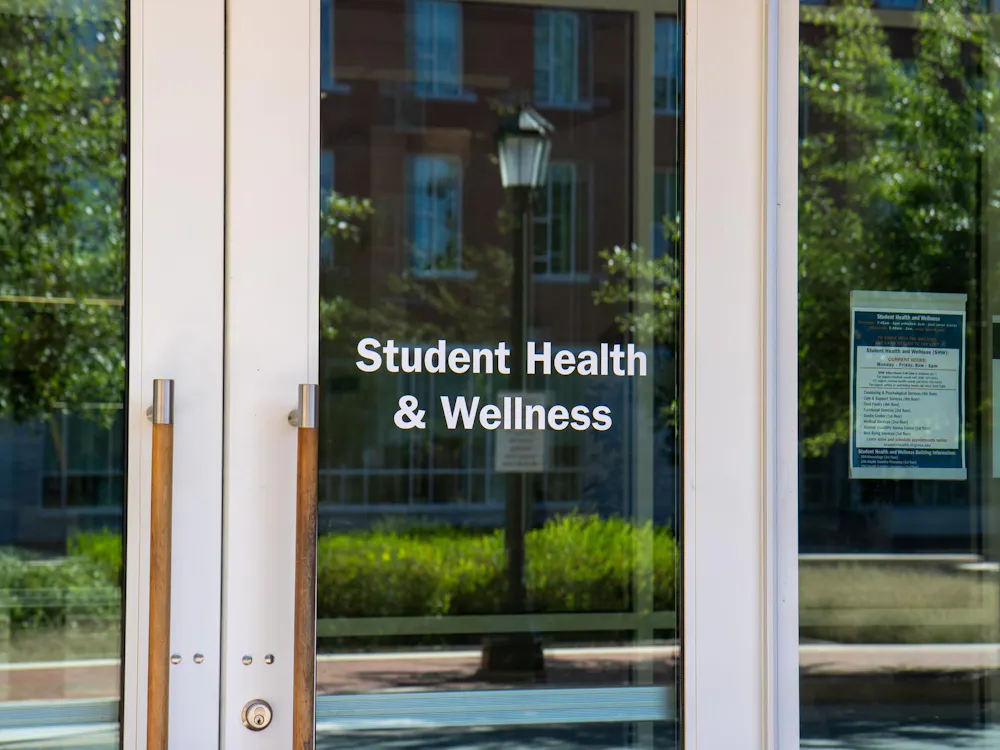
To be sure, I do not attempt to encapsulate the full range of help available in Charlottesville — or to omit Telehealth services and emergency hotlines. Rather, by offering a non-exhaustive list of easily accessible, free services, I hope to push the University’s students to consider — even briefly as they rush past Student Health and Wellness to get to class — that stopping by or scheduling an appointment might be worth it.
Zehra Hasnain is an opinion columnist who writes about politics for The Cavalier Daily. She can be reached at opinion@cavalierdaily.com.
The opinions expressed in this column are not necessarily those of The Cavalier Daily. Columns represent the views of the author alone.
Read More
EDITORIAL: Prevent drug overdose tragedy from repeating itself
By Editorial Board | YesterdayThe combination of these realities at Ole Miss — unsafe drug use leading to overdose and death, coupled with specious social media speculation — represents a microcosm that we must be cognizant of at our University, where drug use is common and drug education is not sufficiently provided.

OPINIONS: How U.Va. should respond to the changing artificial intelligence landscape
By Ishaan Satija , Miles Dyckoff , Scarlett Sullivan and Zehra Hasnain | 4 days agoFour opinion columnists write about how students, departments and the University administration could transform their relationship with AI

DUTTENHOFER: A case for 287(g) agreements
By Lucy Duttenhofer | 6 days agoICE is not going away. 287(g) agreements are not, either. Understanding and using them effectively must be a priority.