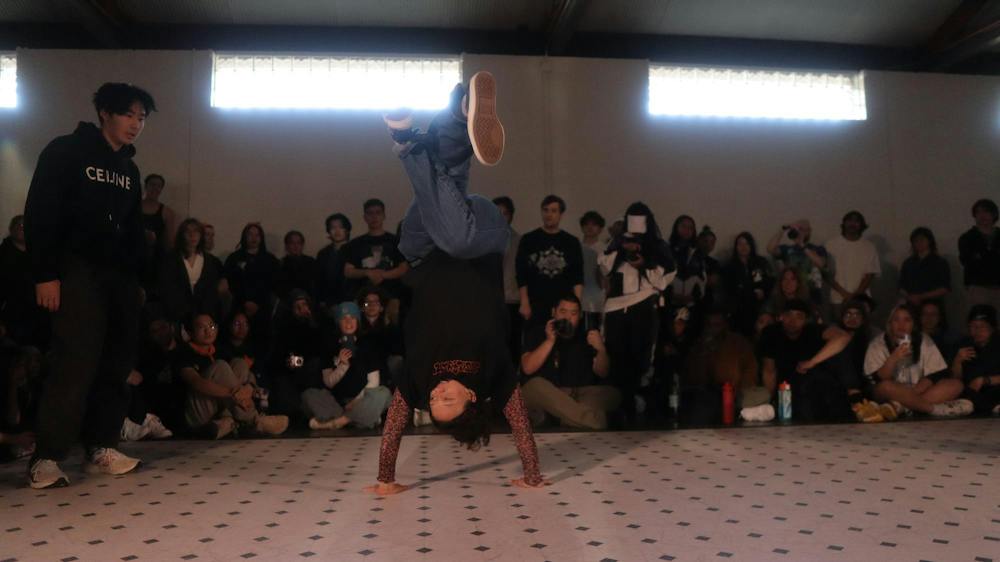
The University is home to a myriad of dance and performance-based Contracted Independent Organizations. However, only one specializes in freestyle dance, a style independent of any choreography to dictate routines. Hooligans Break(dance)ing Crew is the only specialized CIO for breakdancing, but they also welcome other styles of freestyle dance like popping, whacking and locking. Through this encouraging environment, they aim to spread the love of freestyle dancing and welcome students passionate about their craft.
Breakdancing began in the Bronx in the 1970s among African-American and Latino communities, a style in which the individual moves are improvised by dancers and take inspiration from martial arts and gymnastics. According to the organization’s description, Hooligans takes pride in the roots of breakdancing and makes sure their members are educated about the “origins, development and modern day perspectives” of their dancing.
Additionally, Hooligans does not hold auditions or require membership dues to encourage people to join and foster a welcoming community of breakers. Abby Selby, co-social chair of Hooligans and fourth-year Nursing student, said that this model also allows for people to feel less intimidated to join the club, which keeps the organization accessible to all.
“We specifically want to make sure that we're a club that's accessible to anybody,” Selby said. “We don't want to have any sort of financial barrier that's not allowing somebody to come to our practice spaces and learn something."
Hooligans is a smaller group, which allows its members to tightly bond with each other. Long Wang, treasurer of Hooligans and second-year College student, joined the crew in fall 2025 despite having no experience dancing before coming to college. He said he went to an interest meeting for Hooligans with a friend and decided to continue with the club after feeling drawn to the supportive atmosphere. Jace Oliver, co-social chair of Hooligans and second-year College student said that, like other clubs, Hooligans also hosts social events for its members, like PowerPoint nights. It was this supportive, social community of dancers that Wang said attracted him to the organization and enticed him to stay involved with Hooligans.
“I just really enjoyed the environment there,” Wang said. “That's kind of what just started the fire, clicked something in me, and I've been just going to practice ever since.”
The community created by Hooligans is welcoming, according to Wang, and he encourages anyone with a passion for breaking to join the club. Practices are laid-back and mostly self-guided, where dancers decide what specific skills they want to learn. But according to Selby, Hooligans also hosts structured workshops for foundational skills — such as how to correctly perform footwork moves — in the fall when many new dancers join.
“We provide different lessons during the fall semester to build the foundations,” Selby said. “Then in the spring semester, it's a little bit looser, where people can come and use those foundations that we taught in the fall to build on their own practice and their different styles that they want to learn.
Throughout the year, Hooligans holds several jams — a type of collaborative battle where dancers riff off of each other’s moves — to attract breakers from across Virginia and interact with other members of the breaking community. Its main event is called Breaking Grounds, which takes place annually in the spring.
Last spring saw their 10th anniversary event, called Breaking Grounds X, which featured a $600 grand prize. As a part of the process, executive members have to reach out to different DJs and judges to help with Breaking Grounds — fostering a breaking community that is not strictly limited to the University. Oliver explained that despite the degree of professionalism of an event such as Breaking Grounds, the event is open to all experience levels.
“We also ... have these things called cyphers, which is pretty much just a giant dance circle and anyone can come in and pop their own moves,” Oliver said. “It's [a] no judgment zone, except when we judge that the move looks awesome.”
Another jam that Hooligans hosts annually is Rotunda Sesh, where dancers and audiences gather at the Rotunda for a large cypher. According to Oliver, unlike Breaking Grounds, this event has no winners, but aims to promote Hooligans to the University community and beyond. Anyone can join the circle and dance alongside the members of Hooligans, or simply watch and cheer them on.
“This is completely non-competitive and really just having a fun dance event, usually behind the Rotunda, that anyone can watch over and see,” Oliver said.
This semester, Hooligans also plans to travel to different schools to dance with other breakdancing clubs. According to Selby, they currently have a trip to George Mason University planned for later this year, which allows for dancers to practice and learn from breakers outside of an isolated club space.
“We try to create opportunities for our dancers to not only learn in the practice spaces, but to also travel to different places to learn their styles, learn from others and get an experience [of] breakdance culture,” Selby said.
Looking beyond their own club events, Wang said that Hooligans hopes to maintain a collaborative relationship with other dance organizations, whether that be inside or outside the University. According to Oliver, they also aim to ensure that their members feel connected to the outside breaking community and understand breakdancing’s history.
“Every time we go to a jam, or every time we’ll break ourselves, is still another great example of the culture and community that has been spread ever since [those] starting days of dance where people were able to get together … doing something cool,” Oliver said.
It is clear that Hooligans’ unique street style stands out among other dance clubs at the University. Despite this, they do not stop at simply teaching students breaking moves, but emphasize through their teaching how to center the original values of the dance style within the club community. While all of Hooligans share a common passion for breaking, they also share a powerful bond that they wish to share with the rest of the University, starting with this year’s Rotunda Sesh event Nov. 7.
“People dancing is an expression of togetherness because ... music helps bind us, and dancing is an expression of emotion and a way of communication,” Oliver said. “That's why people do it in a dance circle.”
Read More

The Virginia Dance Company trades competition for community
By Eloise Diffley | 2 days agoThe Virginia Dance Company is composed of a tight-knit group of dancers, most of whom have danced competitively and consistently throughout childhood and high school.

Hoo’s Watching: Anatomy of a teen TV show
By Caroline Lee | 4 days ago“Crew Girl” is not reinventing the wheel, nor is it particularly interested in doing so.
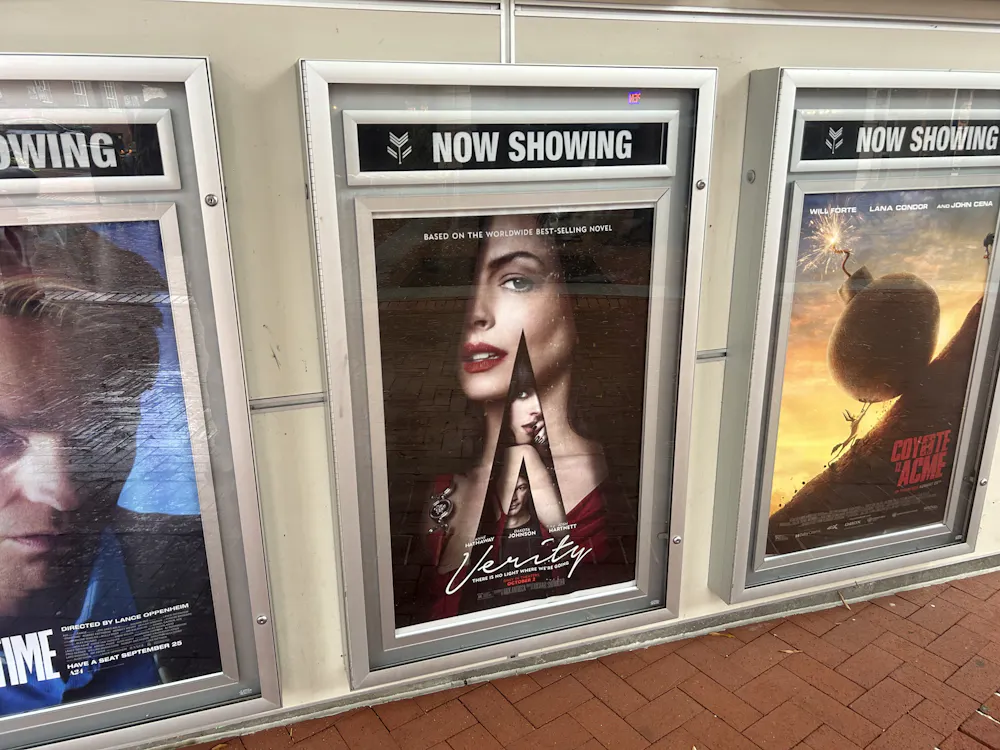
‘Verity’ falls short on its psychologically thrilling promise
By Julia Prevost | 5 days ago“Verity” is entertaining in moments, particularly when its dialogue becomes so outrageous that disbelief gives way to amusement.