Correction: A previous version of this article incorrectly stated Wilkinson’s father J. Harvie Wilkinson III as a former Fourth Circuit Judge. He is a current Fourth Circuit Court Judge. The article has been updated to reflect this change.
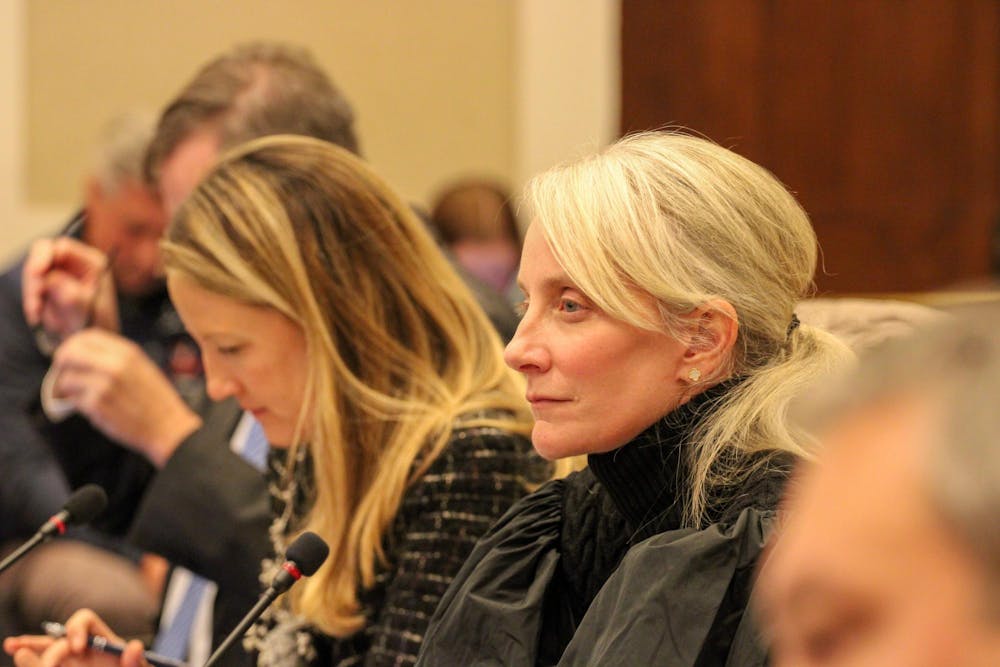
Former Rector Rachel Sheridan and former Vice Rector Porter Wilkinson resigned Friday, framing their departures as efforts to act in the University’s best interests while sharply criticizing what they described as escalating political interference in University governance, according to their resignation letters sent to former Gov. Glenn Youngkin.
The letters, sent to Youngkin Friday by Sheridan and Wilkinson, offer an articulation of how outgoing Board of Visitors members understood the internal conflicts that preceded their resignations. Both documents emphasize continuity of leadership, defense of recent Board decisions and concern that partisan dynamics have destabilized the University.
Their departures come amid a broader reconstitution of the Board, as Gov. Abigail Spanberger appointed 10 new members following her inauguration Saturday. Prior to these resignations, there were five vacancies on the Board.
In addition to Sheridan and Wilkinson, Board member Paul Manning also resigned Friday. Manning is one of the University’s largest donors as he and his wife, Diane Manning, donated $100 million in 2023 to fund the creation of a biotechnology institute for the University, which is expected to open in 2027. Manning did not publicly release a resignation letter or respond to a request for comment.
Board members Douglas Wetmore and Stephen Long also resigned Saturday, according to the Washington Post. Wetmore declined to comment on the details surrounding his resignation, and neither he nor Long publicly released resignation letters. Long did not respond to a request for comment by the time of publication.
In their resignation letters, Sheridan and Wilkinson both situate their departures within what they describe as an extended period of instability and scrutiny at the University, marked by leadership turnover, political pressure and contested governance decisions.
Neither letter disputes the significance of those challenges. Instead, both frame their resignations as efforts to prioritize stability as the University enters a new phase of leadership under an incoming gubernatorial administration.
The resignations follow a year defined by leadership transitions, beginning with the resignation of former University President Jim Ryan following pressure from the U.S. Department of Justice and continuing through a presidential search process that drew major public attention and criticism from faculty, students and the University community.
Wilkinson and Sheridan both referenced the Board’s role in navigating that transition. Each defended the decision to move forward with the presidential search despite calls from faculty, students and Spanberger to pause the process, including objections raised among stakeholders such as Wahoos4UVA and the University’s chapter of the American Association of University Professors. Additionally, nine University deans sent a letter to the Board asking them to pause the selection of the 10th president.
In December, the Board appointed Scott Beardsley as the University’s 10th president — a decision that prompted further faculty statements questioning the search’s transparency and timing.
Faculty leaders, including Faculty Senate Chair Jeri Seidman, said their input was not meaningfully considered during the process, arguing that relying on a faculty representative who was also a Board member did not satisfy expectations of shared governance or broader faculty consultation. There has also been further discussion around whether the Board was “legally constituted” or not during the entire process.
In her letter, Wilkinson characterized the search as “inclusive, transparent and rigorous” and expressed confidence in the Board’s decision to appoint Beardsley. Sheridan, while not detailing the search process at length, emphasized the importance of allowing newly appointed leaders to carry out their responsibilities without further disruption.
“We have placed incredible people in important University roles, including the 10th President and the head of the U.Va. Health System. I sincerely hope that they will be allowed to do their jobs without political interference,” Sheridan wrote.
Both letters devote significant attention to what Wilkinson and Sheridan described as the Board’s work stabilizing the University during a period of financial and operational strain.
They both described the previous 18 months as a period marked by leadership instability within the University’s Health System, financial reporting issues and increased public scrutiny of Board governance.
Wilkinson pointed to actions taken by the Board during that time, including the resolution of several material weaknesses — a significant failure in internal controls that creates a reasonable possibility of a material misstatement in the financial statements — within the University’s financial statements, preservation of the University’s AAA credit rating and the establishment of an executive-compensation committee.
Wilkinson emphasized her personal and historical ties to the University, framing her service on the Board as an obligation to preserve the University’s long-term wellbeing during a period of upheaval. To describe that responsibility, she cited a 2009 commencement address delivered by her father, Fourth Circuit Judge J. Harvie Wilkinson III.
“It’s possible to love an institution as one loves individuals. The word love should apply to both,” Wilkinson wrote, quoting the address. “Loving a place means taking responsibility for it. Protecting it. Leaving it better than you found it.”
Sheridan similarly grounded her letter in a stated commitment to the University’s mission, writing that she had been guided throughout her tenure by what she believed to be the University’s best interests. Both letters stress that their decisions to step down were not made lightly.
“From the time I took an oath when I joined the University of Virginia Board of Visitors, I have been exclusively guided by one overriding consideration: the best interests of the University,” Sheridan wrote.
Wilkinson also addressed the University’s agreement with the Department of Justice and the Trump administration which halted the federal investigations in the University, a deal that was headed by former Interim President Paul Mahoney.
“The agreement with the Department of Justice does not entail any loss of funding, intrusive external monitors, or restrictions on classrooms or curricula. It is the envy of schools across the country,” Wilkinson wrote.
While both letters acknowledge political strain, Sheridan addressed the issue more directly, writing that political conflict had increasingly shaped the Board’s ability to function.
“I have come to believe, however, that our efforts to do what is right for U.Va. have become paralyzed through purposeful political warfare that is destabilizing to the University,” Sheridan wrote.
Sheridan’s comments follow months of reporting and public records disclosures that revealed extensive communications between Board members and state officials, including text messages involving Youngkin and senior aides related to University policy and leadership.
Although Wilkinson did not reference specific communications, she similarly acknowledged heightened public scrutiny and media attention surrounding the Board’s decisions during her tenure.
Both letters emphasize what they described as efforts to maintain institutional independence and academic freedom amid competing political pressures.
“We also did our level best to maintain the University’s independence and academic freedom from political forces on all sides,” Sheridan wrote.
Sheridan referenced a recent presentation to the General Assembly, writing that the University faces significant challenges that require sustained focus from its leadership.
At the hearing, members of the Senate Finance and Appropriations Committee’s Education Subcommittee questioned University leadership about the University’s agreement with the Department of Justice to pause multiple civil rights investigations, its handling of the presidential search and concerns about the institution’s diversity initiatives.
“As President Beardsley and I presented to the General Assembly earlier this week, the University desperately needs stability and the ability to focus on the many challenges it faces,” Sheridan wrote.
Wilkinson similarly framed her resignation as an effort to minimize disruption as Spanberger prepared to appoint new members to the Board.
Each expressed hope that the University’s next phase of governance would allow recently appointed leaders — including Beardsley and new Health System leadership — to carry out their work without further political interference.
Wilkinson concluded her letter by expressing hope that present disagreements would not shape the University’s long-term future.
“My only wish is that the differences of the present moment will not impair the brightness of this great University’s future and that leadership of the University will be able to build constructively on our accomplishments,” Wilkinson wrote.
Sheridan echoed a similar sentiment, writing that she intends to continue supporting the University’s mission outside of formal governance roles.
Read More
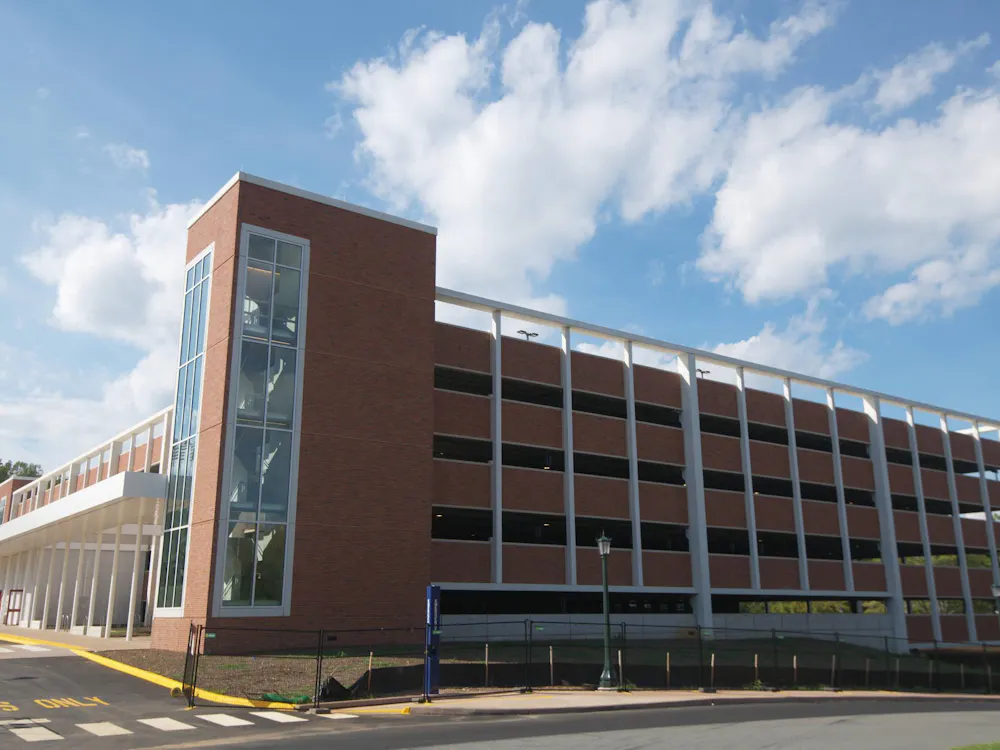
Parking on Grounds — what has changed this semester?
By Charlotte Gabriel | 12 hours agoAccording to University students interviewed by The Cavalier Daily, several expressed frustration with high parking prices on Grounds, as well as the difficulty in finding available parking in general.

Student Council connects with University’s Strategic Planning Committee
By Lucia Gambacini and Reilly Auld | 12 hours agoThe Council also heard updates from Executive Board members regarding the upcoming Fall 2026 elections and new investments in free Sexually Transmitted Infection testing kits for students.

Virginia colleges workshop three-year bachelor’s degrees
By Luca Bailey | 12 hours agoIf the effort is successful, participating schools in Virginia and Ohio will join at least 70 higher education institutions across more than 26 states that have already adopted three-year programs in some capacity.