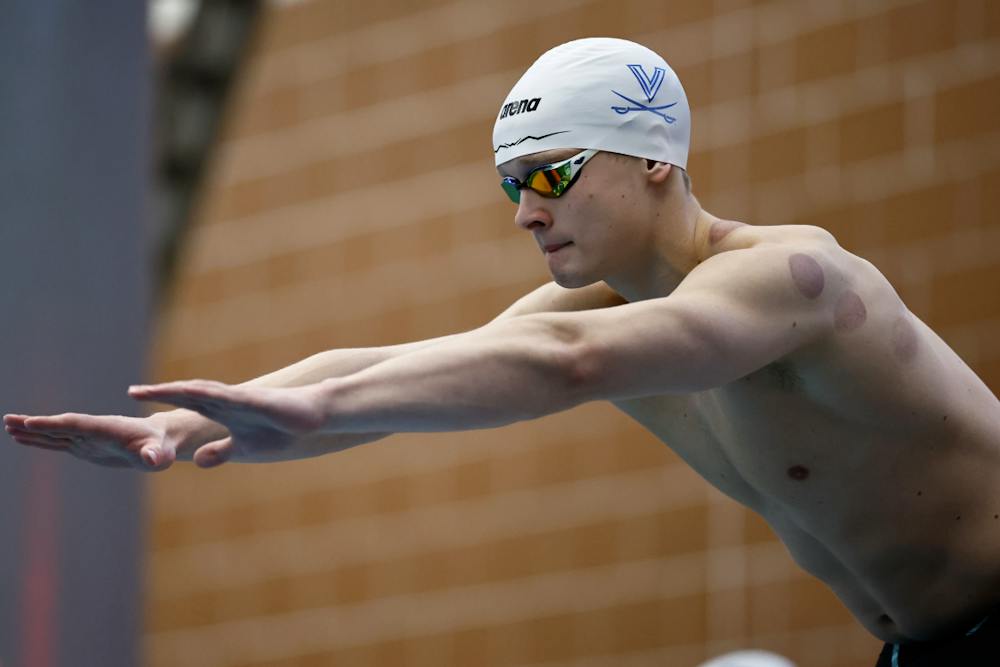
As the 2026-2027 Student-Athlete Advisory Committee President, Noah Dyer, fourth-year men’s swimmer, entered the role this fall with three objectives — facilitating internal and external connection, encouraging self-advocacy and developing citizen-athletes. Alongside Elijah Slibeck, fourth-year vice president of external communications and football team member, Dyer will represent Virginia on the ACC SAAC, interacting with the NCAA on policies and regulations that impact student-athletes.
In a post-House v. NCAA settlement world of limited resources, Olympic and revenue sports occupy vastly different situations. Revenue sports, which primarily refer to NCAA Division I football and men’s basketball, are prioritized for their profitability from media rights, ticket sales and licensing. Following the House settlement in 2021, which removed scholarship limits for teams and allowed direct revenue sharing to athletes, Virginia Athletics has shifted to relying on fundraising to help support its other 25 varsity programs that are less self-sustaining.
In helping student-athletes adjust to this new reality, Dyer hopes to formalize an organization that has typically functioned to voice smaller concerns to Virginia Athletics administration, and expand it to provide resources and guidance to student-athletes.
“We're just anchoring on [improving the student-athlete advocacy] this year at SAAC, and hoping that we can continue to improve [the] lives of athletes in a time where … NIL is changing a lot,” Dyer said.
Dyer’s leadership, particularly in Student Council after a student-athlete representative seat was created following a University Board of Elections referendum passed in 2025, has given him a unique link to the student body that continues to inform SAAC’s agenda.
“[Dyer] brings such a unique perspective,” Slibeck said. “Everyone saw him as a student, being on Student Council, and now he's been able to pull those connections into the athletic world and be able to foster relationships from that side.”
His time in Student Council led him to work closely with Kyle Montaperto, Class of 2026 alumnus, former SAAC president and wrestling team member.
As a student-athlete representative on Student Council, Dyer helped confront challenges like changes to athletic dining after the former athletic dining hall in John Paul Jones arena closed. Following Virginia’s opt-in to distributing the maximum amount of $20.5 million in payments to student-athletes, which will increase over the coming years, the dining hall’s $1.2 million annual operation quickly became apparent as a financial burden.
With Montaperto, Dyer was able to pass a Student Council resolution in January 2026 to establish a permanent athlete dining option within Newcomb Dining Hall, the PEAK station, which he says Athletics nutrition is currently working on with Aramark to determine offerings.
However, as SAAC president, marketing the organization’s resources to more student-athletes is a current problem he wants to tackle, along with lost opportunities for inter- and cross-team bonding and steady meal service the JPJ Dining Hall had offered. For Olympic sports athletes who do not have dedicated dining facilities like football or men’s and women’s basketball, Dyer is interested in finding ways to replicate that environment.
“There is no long-term plan from athletics in terms of a real capital expense into building a new dining hall,” Dyer said. “[The Olympic Sports Center has] meals multiple nights a week for different teams depending on when their seasons are, and that basically combined with just the dining stations at Aramark, particularly PEAK, is the solution now.”
For Slibeck — who served in SAAC as a student representative for the football team during his third year — changes like the dining hall closure bred differences between student-athlete experiences across programs.
After adverse reactions about the JPJ closure from peers made him consider more involvement in SAAC, Slibeck is now currently the only revenue sport athlete serving in an executive position. In his view, that distinction gives SAAC more credibility in the eyes of the administration and improves their ability to advocate for all student-athletes.
“With the new revenue sharing, all of the attention is getting put towards men's basketball and men's football … We're heard more,” Slibeck said. “Having a voice in SAAC from one of those sports, I think is really important.”
Working with Slibeck has also been impactful for Dyer in expanding SAAC’s presence for all student-athletes, as gaining traction with over 750 NCAA student-athletes at the University has been a persistent challenge.
“We're grateful for Elijah [Slibeck],” Dyer said. “The difficulty with the revenue sports is just their schedules and the level of commitment that they have. They, more so than others, potentially are operating not necessarily from a schedule side of things, but maybe just through how they're perceived … one of the biggest goals for us is to engage the revenue-generating sports.”
Dyer envisions working to level that field with SAAC’s legislative committee, which informs student-athlete members on how guidelines in the NCAA and ACC — often in flux, with drafted legislation like the potential Protect College Sports Act pending in Congress — are changing, as well as what the University’s regulations currently are and how NIL collective platforms operate.
“You just need to keep athletes informed, and you need you need them to have a voice and responsibility in the community so that they don't feel disempowered in a situation that can feel very disempowering,” Dyer said.
Although some information sessions target Olympic sports student-athletes, Dyer mentioned plans to bring in representatives from football and men’s and women’s basketball for “crash courses” on understanding University funding related to athletics. By reaching out to Athletic Director Carla Williams and other members of administration, Dyer has been encouraged by their eagerness to collaborate and add their expertise, along with marketing through U.Va. Student Athlete Success and the Virginia Athletics Foundation.
“The team with athletics that supports us is very passionate about SAAC and really [cares] about having student voices heard,” Dyer said. “Coaches do a great job in spreading [the] word.”
In discussing citizen-athlete development, Dyer and Slibeck emphasized future career readiness, with plans to launch Hoos Helping Hoos, a new platform intended to connect Virginia Athletics alumni with current student-athletes.
“You're not going to be playing sports for the rest of your life, so you need to start buying into these things so that you can take advantage of [for] your job after,” Slibeck said. “We have a ton of alumni that have been willing to buy into that.”
Committees within the organization plan Hoos Choice Awards, SAAC’s flagship event honoring student-athletes. Other top priorities for the year include further integrating student athletes into the general student body. Although their day-to-day and University experience may be far different from the average student, Dyer and Slibeck see hosting events on the Lawn as a way to increase visibility.
Dyer said he hopes the work he and the SAAC executive board takes on will outlast his tenure as president and prompt future student-athletes to advocate for themselves. Although the nature of being a student-athlete has changed rapidly in the last five years and will continue to evolve, he hopes SAAC will become self-sustaining and show student-athletes that they are stakeholders in their student experience who should be heard.
“I just want to try to leave [the University] a little bit better than I found it,” Dyer said. “I'm a very big believer in athletics as a catalyst for broad leadership growth. I think that's what drives me and fires me up about all these different involvements … because I think they point towards the same end goal of making sure athletics not only one continues, but two thrives and three serves the athletes and the future generations of athletes.”

Adair Reid is the newsletter editor for the 137th term of The Cavalier Daily, former humor editor for the 136th term and staff writer on the sports desk. She is a fourth-year College student, majoring in English and Media Studies. She is from Richmond and enjoys writing about the University’s Olympic sports teams and the changing landscape of college athletics.
Read More

Girls in pearls, guys in … jerseys
By Zoe McFarland | 1 hours agoAs University tradition continues to coexist with changing trends and tastes, game day fashion will likely continue to resist simple characterization.
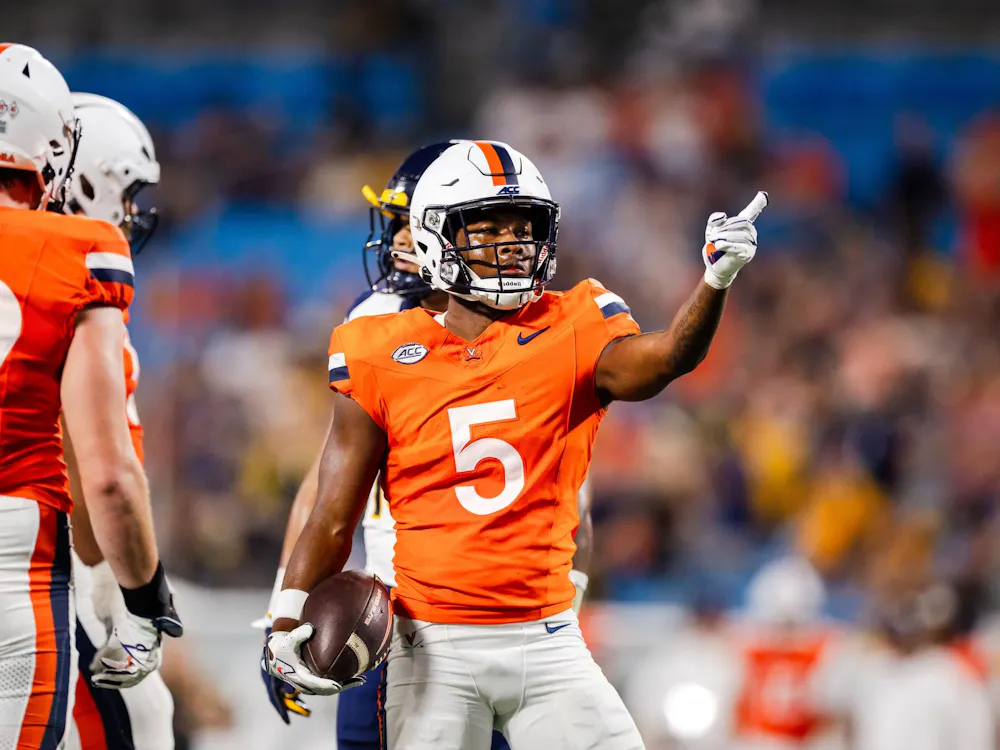
West Virginia big plays — and a lack thereof for the Cavaliers — proved a downfall
By Drew Dillman | 2 hours agoIn the Queen City, the Cavaliers failed to produce plays fit for a king — while the Mountaineers racked up big plays and took the win.

No. 9 field hockey strikes early, lands intense bounce-back win against No. 11 North Carolina
By Adair Reid | 3 days agoWith defensive finesse and an electric offense that came out swinging and kept up the pressure, Virginia put North Carolina and the conference on notice, defeating the Tar Heels at Chapel Hill for the first time in 20 years.