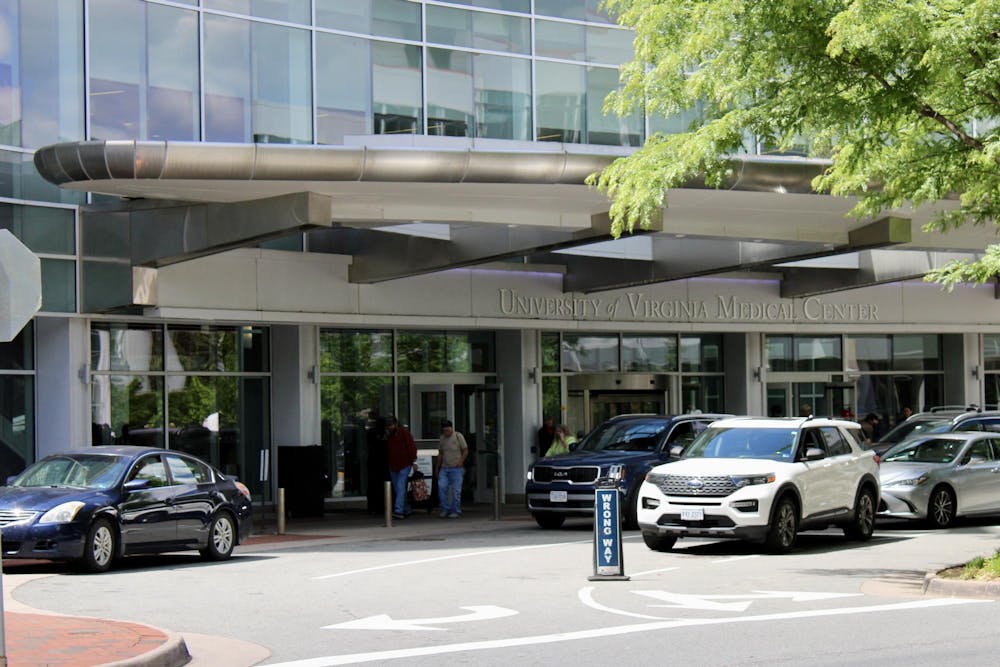
Mitch Rosner, U.Va. Health chief executive officer and executive vice president for health affairs, submitted a guest piece to The Cavalier Daily detailing how he has led the University’s health administration amidst recent executive leadership changes. Following the publishing of his guest piece, The Cavalier Daily asked Rosner follow-up questions to learn more about his experience as CEO.
Rosner is currently serving a three-year term as U.Va. Health CEO and EVP for health affairs which began in September 2025 following seven months of serving as interim EVP for health affairs.
Rosner assumed the position in the midst of turmoil for U.Va. Health — 128 anonymous physicians signed a letter of no-confidence in Craig Kent, former CEO and EVP for health affairs, and Melina Kibbe, former dean of the School of Medicine and chief health affairs officer at U.Va. Health, in September 2024, alleging the two engaged in acts of misconduct. Plaintiffs, including the spouses of two deceased patients and multiple physicians, filed a lawsuit against Kent and Kibbe in October 2024, and just a few months later, in February 2025, Kent resigned and Rosner began his seven-month interim term.
In his guest piece, Rosner outlined the importance of academic medicine at the University, highlighting various breakthroughs in research, and upcoming projects to further develop research at the University. Rosner also detailed the wide impact that U.Va. Health brings to the University community, generating nearly $8 billion of the University's nearly $12 billion annual statewide economic impact, according to Rosner.
The Cavalier Daily followed up to inquire about Rosner’s general approach to leadership in his term, how his experience has prepared him for the role of U.Va. Health’s CEO and academic medicine’s purpose at the University. The Cavalier Daily contacted Eric Swensen, U.Va. Health public information officer, with these further questions, and all responses from both Swensen and Rosner were provided via email statements.
In the guest piece, Rosner described how he is leading the administration through “real pressures,” with uncertainty in various sectors like research funding, constraints in reimbursement and rising costs.
“[The real pressures] are shaping decisions we make every day — about how we invest, how we support our teams and how we sustain our missions,” Rosner said in the guest piece.
The Cavalier Daily broadly asked Rosner, following the lawsuit and leadership changes within U.Va. Health, how he hopes to lead the administration and make an impact in his term.
“My focus now and over the last year has been on being accessible and transparent,” Rosner wrote. “People value honest and sincere conversations, even if they’re difficult.”
Rosner expanded on this idea in his email statement, writing that since the beginning of his term in September, he has spent time meeting with various people across divisions of the health system — in clinical units, labs and faculty meetings — where people can directly share their concerns with Rosner.
He also explained in his statement how U.Va. Health’s administration is in a period of “thoughtful recalibration.” Rosner said this looks like making difficult decisions in an economically constrained environment and aligning growth more closely with its core mission of “transforming health and inspiring hope for all Virginians and beyond.”
“For me, the impact of my leadership comes from creating the conditions for our teams to do their best work,” Rosner wrote. “I am excited about what we can accomplish as we move forward.”
In the guest piece, Rosner explained how through his experience at the University, his confidence “comes from what [he sees] every day” as doctors push boundaries and teams deliver care “under intense demands.” The Cavalier Daily asked him how his personal experiences at the University have shaped his work in his role as CEO.
In Rosner’s follow-up response, he explained how the strength of the University and the health system are not through any one person, but through a collection of people who choose to serve and learn there. Rosner detailed how as a patient, physician, Department of Medicine chair and now CEO, he sees how each piece of the experience works together.
“Throughout it all, I’ve seen where we are strong, and I’ve also seen where we need to improve,” Rosner wrote. “[There is] importance [in] staying grounded in our core mission, being thoughtful about how we grow and building the kind of trust that allows teams to navigate change and continue moving forward together.”
Rosner continued, noting that as a physician, he has taken care of patients while also being connected to research and teaching. As Department of Medicine chair, he worked across disciplines for many years, balancing growth and the needs of patients and faculty. As a patient himself, he said he has seen a “different perspective entirely.”
“I’ve spent more than three decades at the University of Virginia in different roles, and each one has shaped how I approach this work,” Rosner wrote. “[As a patient] you see the system not as an organization, but as a group of people taking care of you.”
Throughout the guest piece, Rosner described how the “mission” of the University is to be an institution guided by discovery, innovation and development, and he said this mission is directly expressed through the health system. He said in the guest piece that this expression is made through academic medicine.
The Cavalier Daily asked Swensen, on behalf of Rosner, what the term “academic medicine” meant in Rosner’s piece, and how it would be implemented in Rosner’s term. In his response, Swensen detailed what academic medicine meant across all academic health systems and the specific applications at the University.
“Academic medicine traditionally refers to three main missions … providing the highest-quality patient care, research breakthroughs that improve the condition and training the next generation of healthcare workers,” Swensen wrote on behalf of Rosner. “[U.Va. has] added a fourth mission — serving our communities.”
Rosner highlighted some ways that the University has already begun serving Virginia’s communities. He listed ground-breaking cancer research that awarded the U.Va. Comprehensive Cancer Center a national designation, the upcoming opening of the Paul and Diane Manning Institute of Biotechnology and high rankings in U.Va. Health’s Children’s Hospital.
Swensen elaborated on the other academic infrastructures mentioned in the guest piece, and noted the administration partners with faculty members across various offices within the University to further research that “improves the human condition.”
At the end of the guest piece, Rosner highlighted how the University health system is advancing both knowledge and serving society, creating “lasting public value” in the state of Virginia.
The Cavalier Daily concluded by asking Swensen, on behalf of Rosner, what he means by the “more complex” needs of Virginians and how the University’s health system must extend its reach to meet those needs.
“Our goal at U.Va. Health is that no Virginian should have to leave the state to receive the care they need,” Swensen wrote. “Our teams provide excellent, comprehensive care to patients across Virginia and beyond and we will continue to work to ensure we can meet the healthcare needs of all of our fellow Virginians.”
Read More

Graduation weekend unpacked — Trustees and administrative members explain planning behind graduation
By Komal Reddymachu | 2 hours agoThis year, Valedictory Exercises will be held Friday at 3 p.m. at John Paul Jones Arena. As the official kickoff to graduation weekend, the ceremony will be open to all students and their families without ticketing restrictions.

Jay Jones files emergency request to U.S. Supreme Court after redistricting ruling
By Lauren Seeliger and Nina Broderick | 2 days agoIn an emergency request Monday, Attorney General Jay Jones asked the U.S. Supreme Court to pause the Virginia Supreme Court’s Friday ruling that nullified the voter-approved redistricting amendment.
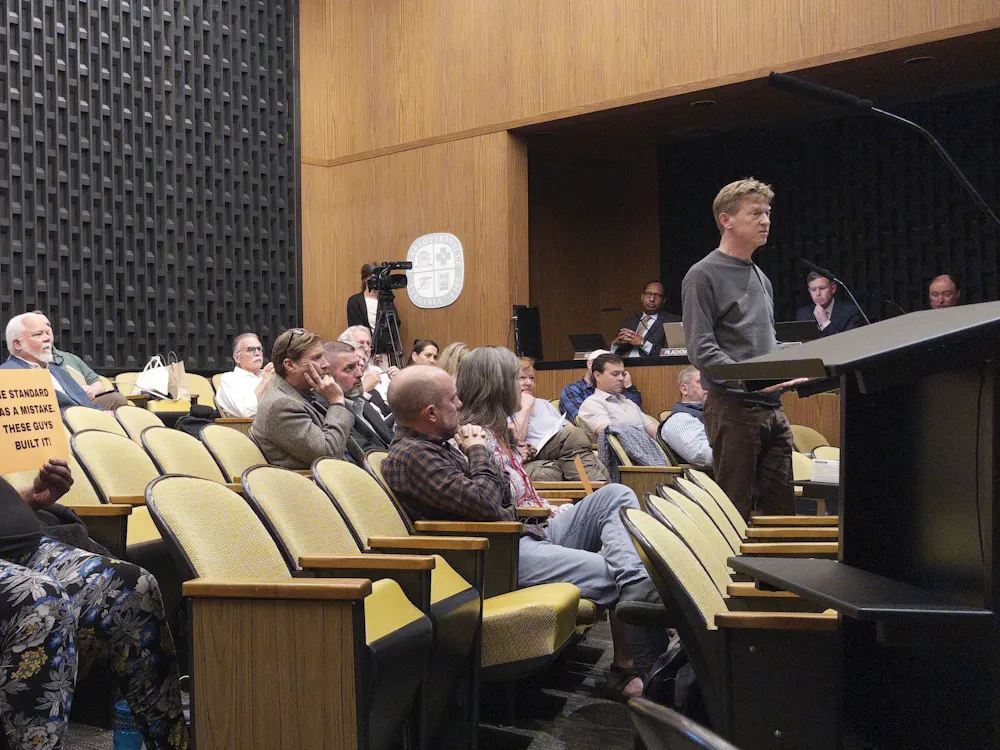
‘Vote for housing’ — City Council greenlights ‘The Mark’ at May 4 meeting
By Luca Bailey | 3 days agoIn a 3-2 vote May 4, the Charlottesville City Council reversed a December ruling by the City's Board of Architectural Review, granting “The Mark at Charlottesville” a necessary Certificate of Appropriateness for construction.